

To 'protect national interest', the US now requires all F , M and J‑visa applicants (students/exchange visitors) to make their social media profiles public.
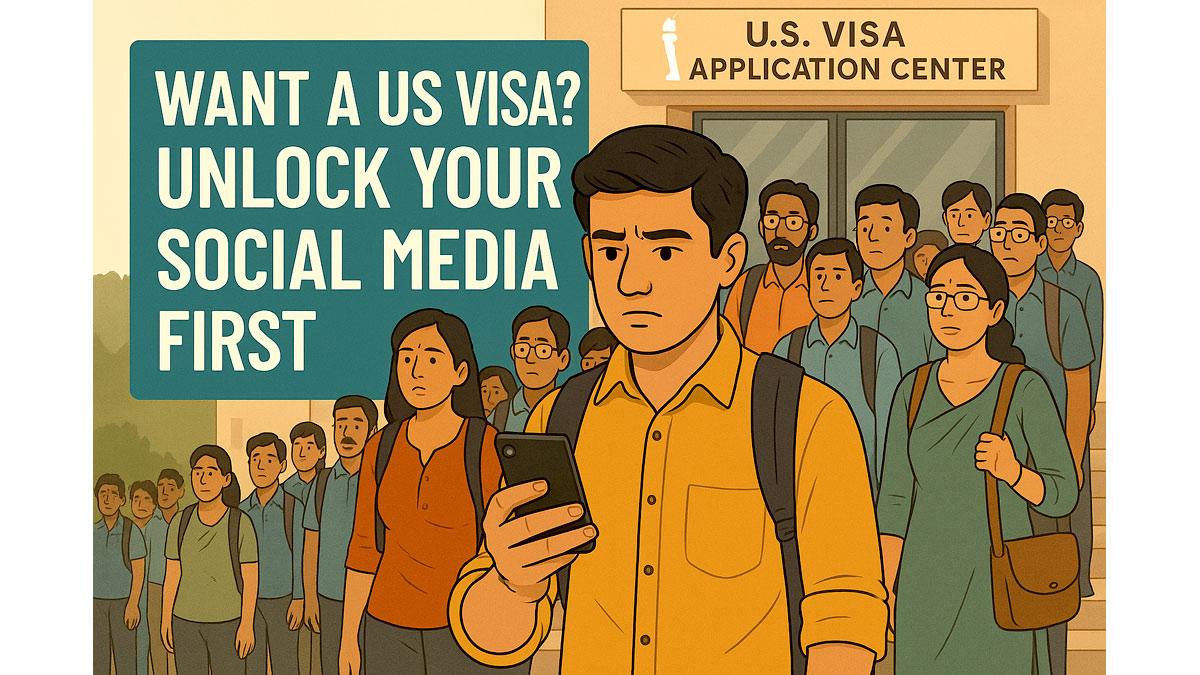
Starting June 23, 2025, all F, M and J visa applicants from India who wish to go the United States must make their social media accounts public as part of the US' expanded social media vetting process. This is meant to bolster identity checks and flag inadmissible behaviour -- including hateful or extremist views.
While intended to protect national security, the policy has sparked concerns over privacy, free speech and its impact on international students.
What just changed?
The US embassy in India has directed every applicant for F, M or J type non‑immigrant visas to set their social media privacy settings to public. This includes platforms like Facebook, Instagram, X, LinkedIn, TikTok and others.
The directive was announced via their official X (formerly Twitter) account.
What are F, M and J visas?
- F‑1 visa: For academic students enrolled full-time in US schools, colleges and universities.
- M‑1 visa: For vocational students attending trade or technical schools.
- J‑1 visa: For exchange visitors -- scholars, interns, trainees, teachers or cultural ambassadors part of approved programmes.
Why the change?
This update aims to strengthen the US' national security. Consular officers now have the permission to review an applicant's online behaviour -- looking for signs of hostility toward the US, extremist or terrorist content, antisemitism or other inadmissible activity.
Since 2019, applicants have already been required to disclose their social media identifiers on visa forms; private accounts were previously allowed but are now restricted.
What prompted this update?
In May 2025, visa processing was temporarily halted; later, a State Department cable dated June 18 revealed this was done so that the US could revamp its social media vetting guidelines.
The Trump administration policy emphasised that 'every visa adjudication is a national security decision' and instructed diplomats to scrutinise political activism -- even peaceful protests -- more thoroughly.
What if applicants don’t comply?
Failing to set profiles to public may raise suspicion that the applicant is concealing content, leading to additional scrutiny or even visa denial.
What’s the wider impact?
Student visas interviews are resuming but under stricter controls.
Critics argue this may limit freedom of expression, deter outspoken students and deter talent -- especially those active in social justice or political discourse.
Data for 2023‑24 show India -- at 3.3 lakhs -- remains the largest source of international students in the US.
What you should do
- Set all social media profiles to public before scheduling or attending your visa interview.
- Review your posts for sensitive content -- anything that may be perceived as hostile to US policies or culture.
- Be transparent: The embassy expects you to willingly comply; non‑compliance can be damaging.
- Monitor embassy/consulate updates: Appointments may be rescheduled or deprioritised if issues arise with vetting resources.



 © 2026