

These plans are suited for individuals and families with regular OPD needs -- those managing chronic illnesses and families with young children or elderly members.
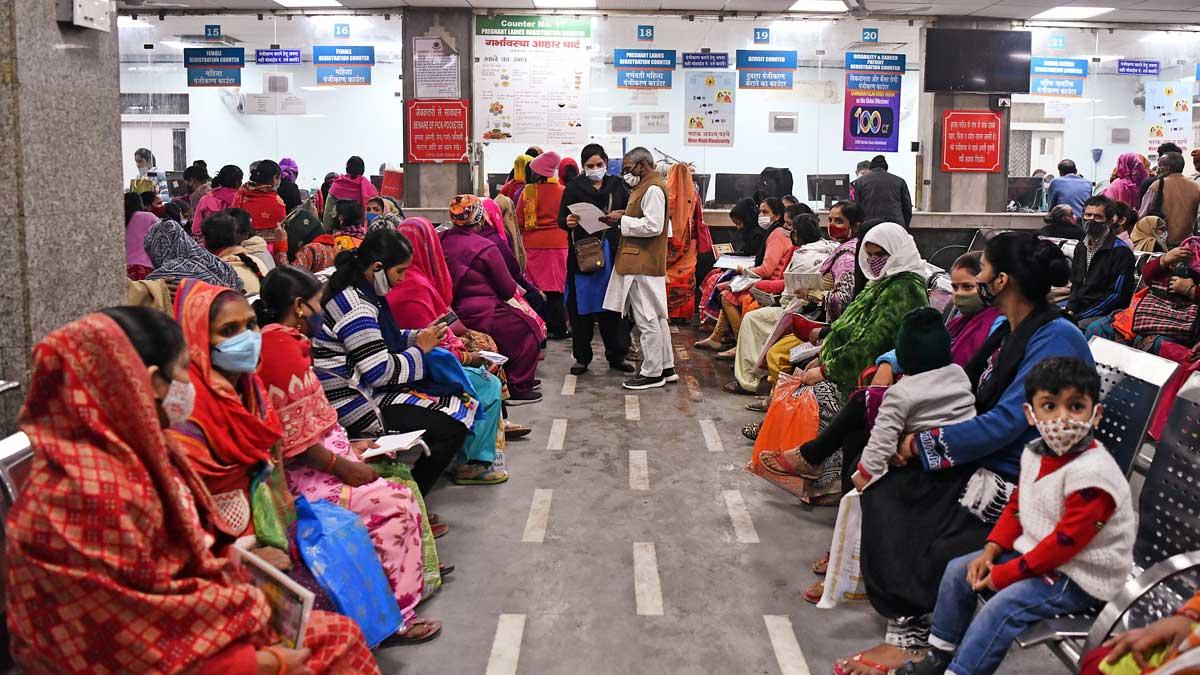
IMAGE: People wait at the Out-Patient Department at Safdarjung Hospital, New Delhi. Photograph: ANI Photo
Visit Health, a digital healthcare and outpatient department (OPD) insurance platform, in partnership with India InsurTech Association, has released a report estimating India's OPD market at $37.7 billion.
Insurance coverage in the segment, however, remains below 0.1 per cent.
The report also notes that 61 per cent of corporate employees use OPD benefits when available, indicating strong latent demand.
What OPD plans cover
OPD plans, usually offered to retail customers as an add-on to the base health insurance policy, cover medical expenses that do not require hospitalisation.
"OPD benefit covers expenses related to medicines, pharmacy, diagnostic tests, doctor consultations, etc, which are not covered in regular health insurance plans if the insured is not hospitalised," says Parthanil Ghosh, executive director (subject to Irdai approvals), HDFC ERGO General Insurance Company.
Cost-effective cover
This cover is cost-effective.
"Typically, if the sum insured on your OPD cover is Rs 100, the plan will be priced between Rs 50 and Rs 70, so it can save you money," says Kapil Mehta, co-founder, SecureNow Insurance Broker.
By offering coverage for screenings and check-ups, it promotes preventive care.
"It encourages you to prioritise your health as you are no longer worried about the bills for doctor consultations, lab tests, and pharmacy," says Ghosh.
Beware of sub-limits
Many OPD plans have sub-limits for various components of coverage. "Sub-limits are an issue in these plans," says Mehta.
The coverage varies significantly from one plan to another. Some players may, for instance, cover teleconsultations with doctors, while others may not.
Reimbursement processes also differ.
"Some insurers may offer cashless reimbursement.
"You will have to go to the pharmacies on their panel to access this facility. Others may allow reimbursement.
"Some may restrict the number of times you can make a claim annually.
"In some cases, it could be only once or twice," says Mehta.
Some insurers may not cover out-of-network expenses at all.
Should you go for them?
These plans are suited for individuals and families with regular OPD needs -- those managing chronic illnesses and families with young children or elderly members.
"Healthy individuals can also benefit from having an OPD cover as it can help in early detection of illness through preventative check-ups available as part of the cover," says Ashish Yadav, head-products and business operations, ManipalCigna Health Insurance.
Mehta observes that they are particularly useful for those with smaller sum-insured policies.
"Such policyholders are often price-sensitive. OPD plans can help them save money. For people buying a very high sum insured, these riders may be less relevant as the OPD limits are not very substantial," he says.
Points to keep in mind
Before buying, compare health insurance plans from various insurers.
"Focus on the sum insured, the range of services covered, and the strength of the provider's clinic and pharmacy network," says Yadav.
Those that you are likely to visit should be included.
Ensure that the sum insured aligns with your expected annual.
Check for sub-limits on consultations or pharmacy spends.
Review exclusions, waiting periods, and whether unused benefits can be carried forward.
Compare the premium with the amount of coverage.
"This will indicate the cost-effectiveness of the cover.
"Also, assess how likely you are to actually claim the entire sum insured," says Mehta.
Avoid over- or under-insurance.
- You can post your health insurance related questions HERE
Tips on maximising benefits
- Utilise annual health check-ups, preventive screenings, and teleconsultations to get the most out of OPD rider.
- Make timely claims each policy year.
- Use in-network services to access cashless transactions.
- Monitor usage against sub-limits to avoid depleting sum insured early.
- Submit genuine medical bills; retain medical records and bills for reference.
- Review the policy annually and stay updated on new features and changes in provider network.
- You can post your health insurance related questions HERE
Disclaimer: This article is meant for information purposes only. This article and information do not constitute a distribution, an endorsement, an investment advice, an offer to buy or sell or the solicitation of an offer to buy or sell any securities/schemes or any other financial products/investment products mentioned in this article to influence the opinion or behaviour of the investors/recipients.
Any use of the information/any investment and investment related decisions of the investors/recipients are at their sole discretion and risk. Any advice herein is made on a general basis and does not take into account the specific investment objectives of the specific person or group of persons. Opinions expressed herein are subject to change without notice.
Feature Presentation: Ashish Narsale/Rediff








 © 2026