
This festive season, Indian homes are mixing global luxury with personal touches using heirloom fabrics, handmade decor, and nostalgic menus to create celebrations that feel both grand and intimate.
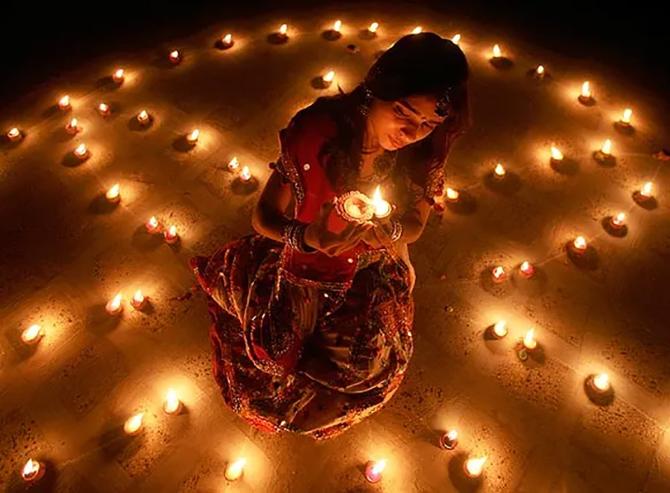
From cascading marigolds to handmade incense stations and grazing tables artfully curated with edible diyas, the mood for festive gatherings this season is one of sensory opulence.
Extravagant soirees continue to stir curiosity -- with haute couture flown in from Paris; glittering champagne fountains; food stations the size of football fields; swimming pools bedecked with tealights and petals; and live performances that cost upwards of a crore.
In the midst of it all, a quieter movement is unfolding within the homes of discerning hosts.
Think personal histories woven into heirloom silks, nostalgic playlists, and lighting installations that blur the line between ritual and theatre.
Unsurprisingly, global brands are once again turning up to be part of the festival season, right through Durga Puja, Dussehra, and Diwali.
Spanish luxury brand Lladro, for instance, has launched a celebratory candle -- a citrusy, fruity blend of bergamot, tuberose, sandalwood, and musk -- marked by a hand-engraved 'Om' on the porcelain lid.
Part of the 25-year milestone of its Spirit of India collection, which includes divinity idols, Lladro's new studio in Chanakya, New Delhi, showcases statement porcelain floor lamps, and tealight holders etc.
The pieces echo a broader design philosophy: That festive illumination must be both aesthetic and intimate, a carrier of memory as much as light.
A mehfil at home
This philosophy is reflected in the homes that are getting ready to host festival lunches, brunches and dinners.
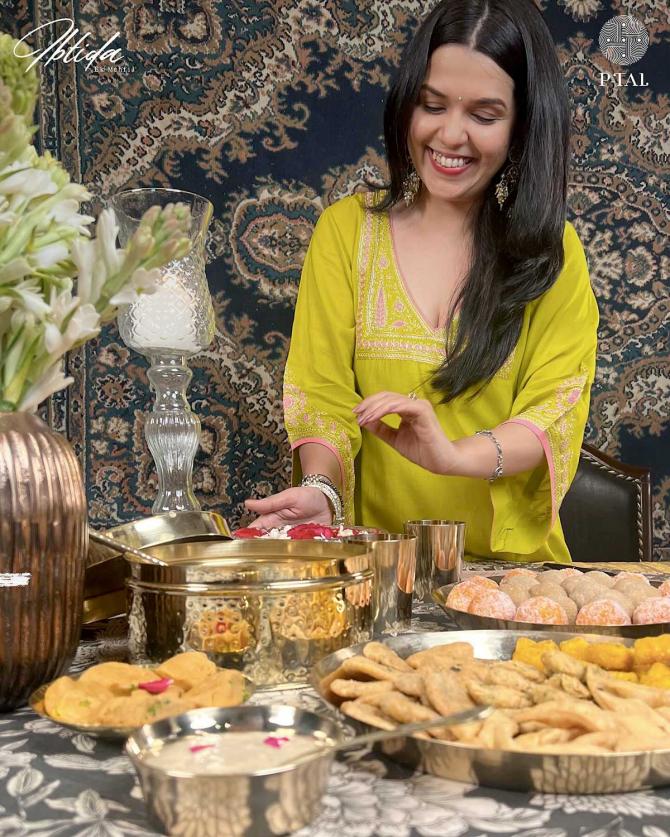
At Tanvi Singh Bhatia's home, for example, festivals unfold like intimate baithaks.
Co-founder of Ibtida: Ek Mehfil, a performing arts platform dedicated to reviving classical Indian music traditions, Bhatia designs her gatherings as sensory time capsules, bringing back elements, such as heirloom textiles, of a bygone era.
For example, her great-grandmother's threadwork and sequinned sari is now framed as a centrepiece, and her mother's vintage zardosi has been turned into table mats.
A soundtrack of Mehdi Hassan's ghazals plays as she cooks family recipes passed down from her Rajput and Punjabi roots or attends to guests.
Fresh flowers, such as jasmines, tuberoses and marigolds, sourced from flower mandis are a must at her gatherings.
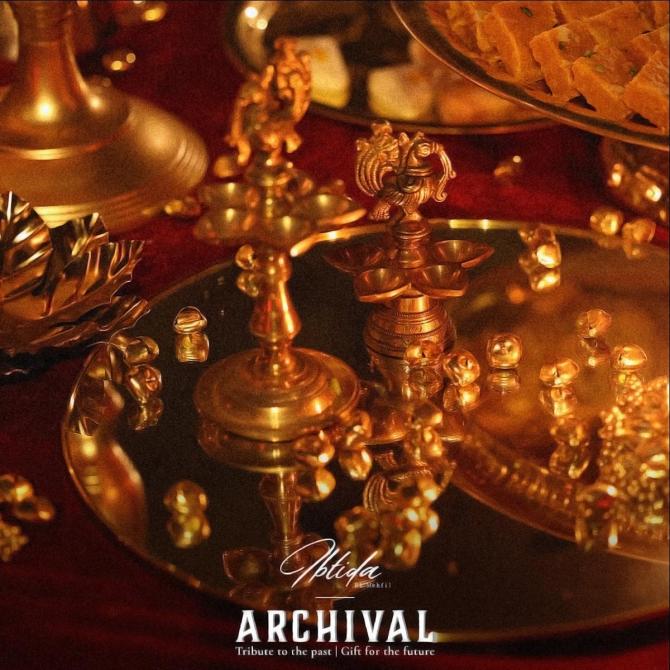
Thalis of the Indian rose, with its heady fragrance, are placed strategically across the home. Her grandmother's silver paan daan is polished and put on display.
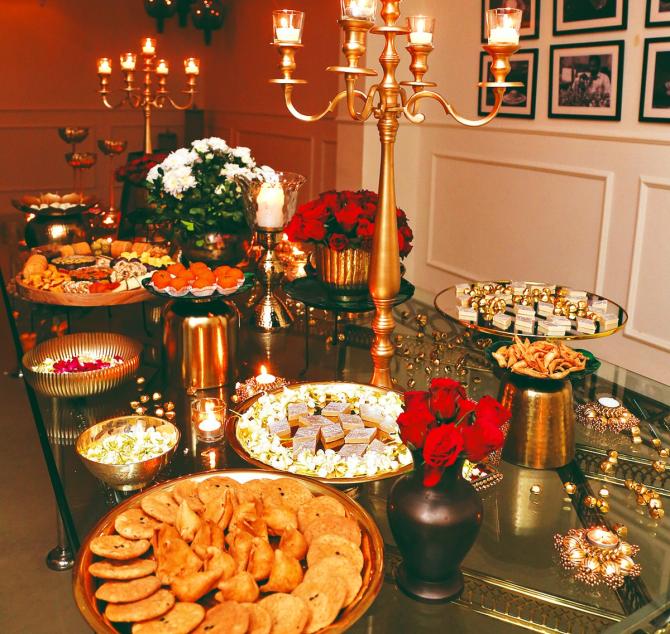
This year, she will host a mushaira and a Kathak performance at home. For home parties such as hers, Bhatia recommends setting up elaborate grazing tables with a mix of traditional sweets and savouries, arranged alongside heirloom silver and glassware.
Of menus and memory
Food, too, becomes a medium for both nostalgia and innovation. Chef Nishant Chaubey, who curates festive menus for high-profile homes across India, blends Ayurvedic principles with inventive presentation.
His creations highlight seasonal ingredients and indigenous grains. Among the ones trending at house parties are pumpkin, cauliflower and pistachio foams or a Matcha Dalgona Lassi.
He reimagines the Gujarati Undhiyu for Makar Sankranti with a contemporary twist; infuses lamb shank with liquorice for Kali Puja (which traditionally includes meat as prasad); and serves Thekua Cookies and cranberry-pecan Modaks for Chhath and Ganesh Chaturthi, respectively.
Puran Poli, another Ganesh Chaturthi favourite, is deconstructed into a Besan Halwa Mousse with date sauce, and garnished with edible flower dust.
For a recent Onam get-together, he gave a twist to the Sadya by using hyperlocal vegetables along with edamame.
His minimalist Kerala vibe -- evoked through banana leaf motifs, bamboo, coconut shells, rustic clay pots, and cinnamon oil lamps -- became a talking point.
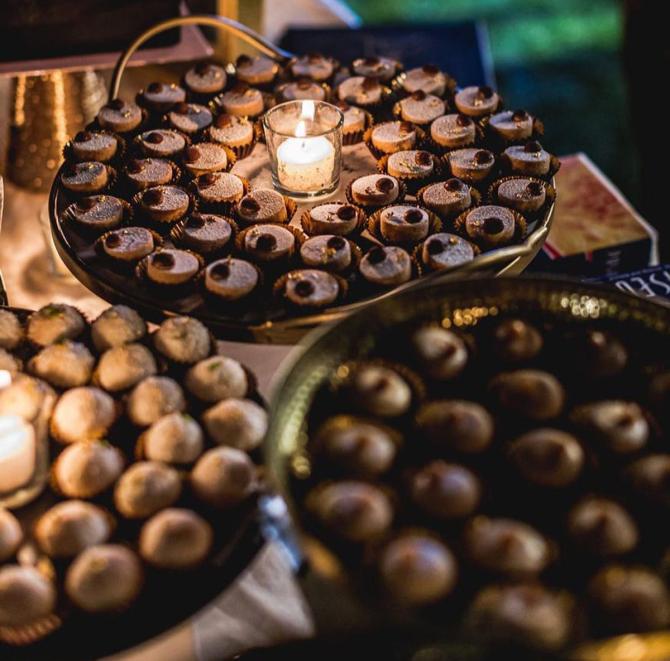
Edible diyas often crown his table settings, alongside handwritten menu cards, hibiscus and rhododendron floral accents, and rustic serveware in brass, and clay.
Even the smallest of touches, such as micro herbs, handwritten notes, or oil lamps, add emotional resonance, he says.
To add drama, he suggests placing desserts on clean stone slabs, banana leaves, or terracotta cutouts, garnished with edible flowers or micro herbs.
Mumbai-based restaurateur Mitra Walke also leans into tradition. His sit-down Pangat meal for Ganesh Chaturthi was a Malwani feast of Modaks, Karela Bhaji, chutneys, and Vadas served on banana leaves.
Guests are encouraged to eat with their hands and are welcomed with tilak upon arrival amidst the scent of hibiscus -- the flower associated with the elephant god.
Personal palettes
Priyal Bhardwaj, founder of design house Label PB and the NGO Sangini Saheli, believes in celebrations that honour craftsmanship and community.
This Diwali, her home will once again become a canvas for handwoven Indian fabrics and grassroots artisanry.
Thousands of terracotta pots -- each hand-painted in traditional geru mitti (red ochre powder) -- will line the lawn.
In the weeks leading up to the celebrations, she makes annual trips to Khurja and Moradabad in Uttar Pradesh for brass and ceramics, and to Ballimaran in Old Delhi to collect her signature home fragrances: sandalwood, jasmine, and Indian tuberose.
"I host get-togethers every year, be it Ganesh Chaturthi, Durga Puja, or Diwali," says Bhardwaj.
"It can be a lunch with prasad on a particular festival or a nice dinner to celebrate Diwali or Pujo."
This year, torans made from Maheshwari silk will hang across her doorways, and Banarasi cushions in rich jewel tones such as vermilion, mustard, emerald and pink will bring in celebratory vibrancy.
She also intends to introduce parrot-shaped string decorations, symbolic of wisdom and good luck.
A buttery-soft Ajrakh modal fabric will form the base of the dining table setup, which will be piled with regional sweets and homemade savouries.
Each guest will leave with a tulsi plant in a handmade terracotta planter.
Style it right
Interior designers are also increasingly turning to timeless, tactile elements to bedeck homes during the festive season.
Low seating arrangements with mirrorwork cushions, traditional rugs and vintage carpets often form the base for intimate hosting spaces.
Brocade, Pashmina-inspired throws, and Banarasi silks bring richness to the layering.
Amitha Madan, architect and interior designer at Treelight Design, Bengaluru, suggests reupholstering with heirloom fabrics and creating a bold colour palette with fuchsia pinks and deep festive tones.
Wall accents matter, too. Pichwai art in vegetable dyes or mirrorwork panels can make a space sing with tradition.
In Jaipur, designer Shantanu Garg recommends embracing palette-forward walls in rose pink with gold, green, teal or red accents to instantly infuse a room with festive charm.
Reshma Bhagat, director of luxury decor brand Thomas Goode India, is of the view that festive decor for house parties should put tablescaping centre stage, with emphasis on textures and materials -- from exquisite linens to finest porcelain and crystal.
The lighting to highlight it all can be subtle (think candlelight). "It's about building a narrative on your table that reflects the joy and significance of the festival," says Bhagat.
Decorative accents are key, she says. "Instead of overwhelming the space, select pieces that resonate with the occasion's spirit while maintaining your home's sophistication."
This could be a magnificent centrepiece, a pair of elegant candelabras, or beautifully arranged floral displays in a unique vase. "Each element should contribute to a cohesive, luxurious aesthetic."
Whether it's a curated playlist echoing through the courtyard, or a silver paan box passed down generations, the most unforgettable celebrations this season are the ones that sparkle with personal storytelling.
Photographs curated by Manisha Kotian/Rediff
Feature Presentation: Rajesh Alva/Rediff











 © 2025