
Wholesale price inflation (WPI) came in at (-) 0.32 per cent in November, driven by an uptick in prices of food articles like pulses and vegetables on a month-on-month basis, government data showed on Monday.

India's wholesale price inflation (WPI) increased for the fourth consecutive month in February, reaching 2.13 per cent, primarily due to rising prices of food and manufactured goods, according to government data.

India's net oil import bill could rise by $56 billion to $64 billion annually assuming global crude averages $110 to $115 per barrel in FY27.

Macroeconomic data, global geopolitical developments and rising concerns over AI-related disruptions are likely to dictate sentiment in the stock market next week, even as investors may remain cautious amid ongoing volatility, according to analysts.

If the conflict continues for a prolonged period, State-run oil companies may have to review retail fuel prices accordingly.

Analysts predict that the ongoing conflict in West Asia, crude oil price fluctuations, and the US Federal Reserve's interest rate decision will significantly influence the Indian equity market this week.

Wholesale price inflation extended upward momentum for the third straight month, at 1.81 per cent in January, driven by an uptick in prices of food, non-food articles, and manufactured items on a month-on-month basis, government data showed on Monday.

Wholesale price inflation extended upward momentum for the second straight month, recording at 0.83 per cent in December 2025, driven by an uptick in prices of food, non-food articles, and manufactured items on a month-on-month basis, government data showed on Wednesday. Wholesale Price Index (WPI)-based inflation returned to positive in December, after witnessing a deflationary trend in the previous two months.

Alliances fight wars effectively only when they share an endgame. If Israel acted without US knowledge, then the military alliance is operating without real coordination at the level of strategic targeting. Neither picture is reassuring in a war that is no longer regional in its consequences. Prem Panicker continues his must read daily blog on the Gulf War.
WPI inflation data, trading activity of foreign investors and global cues would dictate trends in the stock market this week, analysts said.
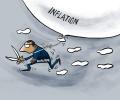
Wholesale price based inflation declined to a 3-month low of 1.89 per cent in November on cheaper food items, and experts predicted a 0.25 per cent interest rate cut by the RBI in the policy review in February. The Wholesale Price Index (WPI) based inflation was 2.36 per cent in October 2024. It was 0.39 per cent in November, last year. In August, 2024, it was 1.25 per cent.

In an event-heavy week ahead, stock markets are expected to track Q3 corporate earnings from several blue-chip firms, including TCS and Infosys, while inflation data and global trends would also dictate investors' sentiment, analysts said.

Wholesale price inflation (WPI) fell to (-) 1 .21 per cent in October, driven by a decline in prices of food articles like pulses and vegetables, as well as lower fuel and manufactured items' prices, government data showed on Friday.

Inflation data, quarterly earnings and global trends will be the major driving factors for stock markets this week, analysts said. Moreover, the trading activity of foreign investors would also influence the equity market trends.

India's new national accounts will leverage new data sources and surveys to enhance the measurement of the country's informal economy, and introduce double deflation methods across sectors, replacing the current system that relies on a single deflation mechanism in Gross Domestic Product (GDP) calculations.

From the Sensex pack, Asian Paints, Tech Mahindra, Tata Consultancy Services, Bajaj Finserv, Adani Ports, HCL Technologies, Bharti Airtel, Infosys, Trent, Reliance Industries, UltraTech Cement, Sun Pharmaceuticals, Eternal, Titan and Bajaj Finance were the gainers. On the other hand, Tata Steel, Tata Motors Passenger Vehicles, Tata Motors Commercial Vehicles, Bharat Electronics, Kotak Mahindra Bank and PowerGrid were the laggards.

Equity markets will keenly track outcome of the US Federal Reserve policy meeting this week amid heightened expectations of an interest rate cut along with WPI inflation data, analysts said. Any further development on the USndia trade front would also drive trends in the equity market, experts said.

The wholesale price-based inflation in February rose to 13.11 per cent on hardening of prices of crude oil and non-food items, even though food articles softened. After two months of mild easing, WPI inflation accelerated in February and remained in double digits for the 11th consecutive month, beginning April 2021. WPI inflation last month was 12.96 per cent, while in February last year, it was 4.83 per cent. The rise in crude oil and natural gas prices after the Russian invasion of Ukraine, beginning February 24, has put pressure on the wholesale price index, even though food articles saw softening across categories of vegetables to pulses to protein-rich items.

Wholesale price inflation (WPI) softened to 0.13 per cent in September on easing in prices of food articles and manufactured items, government data showed on Tuesday. WPI-based inflation was 0.52 per cent in August and 1.91 per cent in September last year.

The wholesale price-based inflation spiked to 12.54 per cent in October, mainly due to rise in prices of manufactured products and crude petroleum. WPI inflation has remained in double digit for the seventh consecutive month beginning April. Inflation in September this year was at 10.66 per cent, while in October 2020 it was at 1.31 per cent.

Stock markets will be driven by inflation data, trade-related news, earnings and trading activity of foreign investors in a holiday-shortened week, analysts said on Sunday. Global market trends will also influence trading sentiment this week, they added.

Snapping the two-month easing trend, WPI inflation rose in August and remained in double-digit for the fifth consecutive month. In July 2021, WPI inflation stood at 11.16 per cent. In August 2020, WPI inflation was at 0.41 per cent. "The high rate of inflation in August 2021 is primarily due to rise in prices of non-food articles, mineral oils; crude petroleum and natural gas; manufactured products like basic metals; food products; textiles; chemicals and chemical products etc as compared the corresponding month of the previous year," the commerce and industry ministry said in a statement.

The wholesale price-based inflation rose to a four-month high of 14.55 per cent in March, mainly due to hardening of crude oil and commodity prices, even though vegetables witnessed easing of price pressures. As per the government data released on Monday, WPI inflation has remained in double digits for the 12th consecutive month beginning April 2021. The last time such a level of WPI was recorded was in November 2021, when inflation was 14.87 per cent.
The wholesale price-based inflation surged to more than a decade high of 14.23 per cent in November, mainly due to hardening of prices of mineral oils, basic metals, crude petroleum and natural gas. WPI inflation has remained in double digits for eight consecutive months beginning April. Inflation in October this year was at 12.54 per cent, while in November 2020 it was at 2.29 per cent. "The high rate of inflation in November 2021, is primarily due to rise in prices of mineral oils, basic metals, crude petroleum & natural gas, chemicals and chemical products, food products etc as compared to the corresponding month of the previous year," the commerce and industry ministry said in a statement on Tuesday.
In an event-heavy week, stock investors will track quarterly earnings of several bluechip firms, the likely outcome of ongoing India-US trade talks, and inflation data for market cues, analysts said on Sunday. Moreover, global market trends and trading activity of foreign investors would also guide movement in equities, they said.

According to the report, going forward, inflationary pressures in some items may increase due to slight improvement in demand.

The wholesale price-based inflation bucked the 4-month rising trend in December 2021, and eased to 13.56 per cent, mainly on account of softening in fuel, power and manufacturing items even though food prices hardened. WPI inflation has remained in double digits for the ninth consecutive month beginning April. Inflation in November was 14.23 per cent, while in December 2020 it was 1.95 per cent.

However, WPI inflation remained in double digit for the third consecutive month in July, mainly due to a low base of last year. WPI inflation was (-) 0.25 per cent, in July 2020. "The high rate of inflation in July 2021 is primarily due to low base effect and rise in prices of crude petroleum and natural gas; mineral oils; manufactured products like basic metals; food products; textiles; chemicals and chemical products etc as compared the corresponding month of the previous year," the commerce and industry ministry said in a statement.

Wholesale price-based inflation spiked to a record high of 15.08 per cent in April on rising prices across segments from food to commodities. The WPI-based inflation was 14.55 per cent in March and 10.74 per cent in April last year. "The high rate of inflation in April 2022 was primarily due to rise in prices of mineral oils, basic metals, crude petroleum & natural gas, food articles, non-food articles, food products and chemicals & chemical products etc. as compared to the corresponding month of the previous year," the commerce and industry ministry said in a statement.

The wholesale price-based inflation eased marginally to 12.07 per cent in June as crude oil and food items witnessed some softening in prices. However, WPI inflation remained in double digit for the third consecutive month in June, mainly due to a low base of last year. WPI inflation was (-) 1.81 per cent, in June 2020. Snapping the five straight months of uptick, the wholesale price index (WPI)-based inflation in June softened as prices of food articles and crude oil eased, even though manufactured products hardened.

Wholesale price inflation eased to 2.05 per cent in March, as against 2.38 per cent in February, government data showed on Tuesday. The wholesale price index (WPI) based inflation, however, rose year-on-year.

Wholesale price inflation dropped to 0.85 per cent in April as prices of food articles, manufactured products, and fuel eased, government data showed on Wednesday. WPI-based inflation was 2.05 per cent in March. It was 1.19 per cent in April last year.

The wholesale price-based inflation shot up to an all-time high of 10.49 per cent in April, on rising prices of crude oil and manufactured items. Also, a low base of April last year contributed to the spike in inflation in April 2021. The WPI inflation was 7.39 per cent in March 2021, and (-) 1.57 per cent in April 2020. This is the fourth straight month of uptick seen in the wholesale price index (WPI)-based inflation.

The wholesale price-based inflation rose to an eight-month high of 1.48 per cent in October, as manufactured products turned costlier. The WPI inflation was 1.32 per cent in September and zero per cent in October last year. This is the highest level of wholesale price index-based (WPI) inflation since February when it was 2.26 per cent.
Stock investors will track the ongoing conflict between Iran and Israel, Brent crude oil prices, inflation data and the US Fed interest rate decision for further cues this week, analysts said. Tariff-related news would also dictate trends in the equity market, experts noted.

Wholesale price inflation marginally rose to 2.38 per cent in February due to expensive manufactured food items like vegetables oil and beverages, government data released on Monday showed. The Wholesale Price Index (WPI) based inflation was 2.31 per cent in January. It was 0.2 per cent in February 2024.

Vegetable inflation softened to 24.76 per cent in June, down from 33.15 per cent in the previous month. Inflation in potato was (-) 24.27 per cent, against (-) 23.36 per cent in May.

The wholesale price-based inflation eased for the second consecutive month in January at 12.96 per cent, even though food prices hardened, the government said on Monday. WPI inflation has remained in double digits for the tenth consecutive month beginning April 2021. Inflation in December 2021 was 13.56 per cent, while in January 2021, it was 2.51 per cent.
Wholesale price inflation (WPI) declined to a 14-month low of 0.39 per cent in May on easing prices of food articles and fuel, and experts said geopolitical tensions could push up prices.

Inflation in onion continued to rule high at 42.22 per cent and in potato at 43.25 per cent.
 © 2026 Rediff.com - Advertise with us - Disclaimer - Privacy Policy - Sitemap - Feedback - About us - Terms of use - Grievances