
Many experts, including Nobel laureate Joseph Stiglitz, also suggested that industrial groups should not be allowed to do banking business.

Pranab Mukherjee's stewardship of the economy will stand out as much for the manner in which he managed controversies as for creating quite a few of them, says A K Bhattacharya.
Key National Democratic Alliance ally Shiv Sena was tonight understood to have assured United Progressive Alliance Presidential nominee Pranab Mukherjee its support.
Even as Janata Dal-United backed Pranab Mukherjee's candidature for the President's post, party chief Sharad Yadav denied any rift in the National Democratic Alliance, saying that the JD-U's support was for the next President and not for the United Progressive Alliance.
External Affairs Minister and leader of House in Lok Sabha Pranab Mukherjee called up Leader of the Opposition L K Advani expressing willingness to re-schedule the session as suggested by the latter at an all-party meeting on Friday on account of festivals, including Diwali, and the assembly elections.
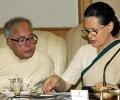
President Pranab Mukherjee talked though on the ordinance to protect convicted lawmakers as he questioned three Union ministers -- Law Minister Kapil Sibal, Parliamentary Affairs Minister Kamal Nath and Home Minister Sushilkumar Shinde. He sought minutes of the Cabinet and all party meetings after which the United Progressive Alliance withdrew the decree.

Rediff.com looks at some prominent leaders in our past who evinced an affection for the words of Shakespeare. An anniversary special.

'There is much symbolism in President Pranab Mukherjee's participation in the Victory Day celebrations in Moscow.'

Pranab Mukherjee's book The Dramatic Decade: The Indira Gandhi Years takes the readers through the economic and social unrest of the period leading up to the emergency, rise and fall of leaders, many splits within the Congress, while promising to offer more in the next two volumes of the trilogy, says Nivedita Mookerji.

'It was almost as though there was widespread relief that the defence bureaucracy, and the minister, could find someone willing to shoulder the blame for everything that had gone wrong with the services under Antony's charge -- the poor preparedness of the forces, slow acquisitions caused by indecision, cancellation of contracts and whimsical blacklisting of defence contractors over the tiniest suspicion that they may have paid speed money or kickbacks.'
 © 2026 Rediff.com - Advertise with us - Disclaimer - Privacy Policy - Sitemap - Feedback - About us - Terms of use - Grievances