
Sri Lanka's former president Mahinda Rajapaksa on Tuesday accepted defeat in the parliamentary elections even before the announcement of the final results.
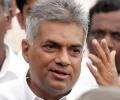
Incumbent Ranil Wickremesinghe is set to take oath as Sri Lanka's new prime minister of a unity government on Tuesday after his United National Party appeared close to a simple majority, with rival Mahinda Rajapaksa admitting defeat in the closely contested parliamentary polls.

Sri Lankan President Mahinda Rajapaksa's ruling United People's Freedom Alliance (UPFA) on Thursday won two more seats in Kandy and Trincolamee districts, but still fell short of two-thirds majority it was seeking to carry out constitutional changes.

Political analysts said Sirisena's move to install Rajapaksa as the prime minister could lead to a constitutional crisis as the 19th amendment to the Constitution would not allow the sacking of Wickremesinghe as the premier without a majority.
His cricket career on the wane, former captain Sanath Jayasuriya has taken the political plunge and will have a face off against ex-teammate Arjuna Ranatunga during election campaigns for their respective alliances for the April 8 Sri Lankan Parliamentary polls.

Over 15 million voters are eligible to vote in the election being held under electoral districts-based proportional representation system.

Sri Lanka's main Tamil party on Sunday secured a landslide win in the historic provincial council polls held after a gap of 25 years in the former Tamil Tigers-ruled northern province, an outcome expected to give limited autonomy to the Tamils after the end of decades of ethnic war.

India welcomed resolution of the political crisis in Sri Lanka and exuded confidence that relations between the two countries will continue to move on in an upward trajectory.

The president has agreed to call a parliamentary session on November 5, officials at Rajapaksa's office said.

Unlike in the presidential polls, victory might not have been complete, at least as yet, for Mahinda Rajapaksa's electoral rivals. While his one-time aide and confidant, Maithripala Sirisena, became president without any issues after defeating him, incumbent Prime Minister Ranil Wickremesinghe, who again may not command an absolute majority in the 225-member parliament, would have to count on his 'national government' concept to carry the day and the nation with him, this time round, says N Sathiya Moorthy.
'We have nothing to gain by helping any other country to become a threat to India,' former Sri Lanka president Mahinda Rajapaksa, who is on the comeback trail, tells Rediff.com in an exclusive interview.

Sri Lanka President Maithripala Sirisena sacked Prime Minister Ranil Wickremesinghe and appointed former strongman Mahinda Rajapaksa as the new premier. Sirisena's move has triggered a constitutional crisis in the country. Here are some points about the unfolding crisis and the role of key players:
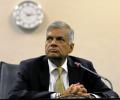
In a Sri Lankan House of 225 members, the cut-off figure comes to 113. With Wickremesinghe side touching 102 and Rajapaksa's team at 101, the three-party Tamil National Alliance with 16 members and the left-leaning Sinhala-Buddhist nationalist Janatha Vimukthi Peramuna with 6 members hold the key. But with the latter declaring that they will not support either formation in a vote count,that leaves the TNA as the deciding factor, says N Sathiya Moorthy.
 © 2026 Rediff.com - Advertise with us - Disclaimer - Privacy Policy - Sitemap - Feedback - About us - Terms of use - Grievances