
Investors with a 6 to 12 month horizon may consider them. They should align their holding period with the fund's maturity profile and prefer schemes with a lower expense ratio.

Gold prices surged by Rs 4,000 to touch an all-time high of Rs 1,37,600 per 10 grams in the national capital on Monday, tracking firm global cues, according to the All India Sarafa Association. The precious metal of 99.9 per cent purity had closed at Rs 1,33,600 per 10 grams on Friday.

'They are positioned as defensive products and can potentially give marginally higher returns than liquid funds.'

Earlier, such entities were only permitted to invest their rupee surplus balance in accounts in central government securities, including treasury bills. "It has now been decided to also permit investment of these balances in non-convertible debentures/bonds and commercial papers issued by an Indian company," the RBI said.

The Lok Sabha on Tuesday passed the Finance Bill 2025, along with 35 government amendments, including one that abolishes a 6 per cent digital tax on online advertisements.

The Indian economy could remain less affected by global trade wars than other countries because the two engines of domestic growth - consumption and investment - are likely to face a limited impact from such headwinds, according to an article on the 'State of the Economy' in the Reserve Bank of India's (RBI's) bulletin, released on Tuesday.

He said the new short-term treasury bills will be part of the government's same borrowing programme. To meet its burgeoning expenditure, necessitated by the slowing down economy, the government has pegged its market borrowing at over Rs 4.5 lakh crore (Rs 4.5 trillion) for the current fiscal, bulk of which is being raised in the first half.

Finance Minister Nirmala Sitharaman on Saturday presented Union Budget 2025-26, envisaging an expenditure of Rs 50,65,345 crore, an increase of 7.4 per cent over the current fiscal.

After effecting two back-to-back 25 basis points rate cuts, Reserve Bank Governor Sanjay Malhotra on Wednesday hinted at another reduction in key policy rate by changing the central bank's monetary stance to 'accomodative' from 'neutral', which may further lower EMIs for consumers.

The liquidity will move into deficit after advance tax payments and GST outflows. It will rebound in October because of government spending.

The ties between India and the Maldives came under severe strain since Muizzu, known for his pro-China leanings, took charge of the top office in November.

Returns of liquid funds are meant only for the short term and don't help investors create wealth over the long term, as equity funds do.

The introduction of tax deducted at source (TDS) on income from central government securities and state bonds may not lead to a significant effect on retail participation, according to market participants. The Union Budget proposed that starting October 1, 2024, investors may face a 10 per cent TDS on investments in central government securities and state development loans (SDLs). "Last Budget, TDS on interest on securities was reintroduced.

India on Monday asserted that its friendly ties with the Maldives will continue as Prime Minister Narendra Modi and President Mohamed Muizzu unveiled a blueprint for comprehensive economic and maritime cooperation, signalling a reset of the relationship that had hit a rough patch last year due to anti-New Delhi rhetoric.

Retail investors could be hesitant to invest in floating rate savings bonds, as these specific bonds tend to be profitable only in a rising rate environment, according to market participants. The Reserve Bank of India has allowed subscriptions for floating-rate savings bonds, 2020, via retail direct - an online portal that enables individual investors to purchase government securities.

The cost of deposits is on the rise, but banks can't raise interest rate on close to 60% of their loan books, points out Tamal Bandyopadhyay.

What stood out in his 15-year journey as a member of the political executive at the Centre was his glowing record as India's most successful and effective finance minister. Both as prime minister and finance minister, he understood the importance of gradualism, except when the economy or the polity was in a crisis.

The Reserve Bank of India's (RBI's) record surplus transfer to the government has raised hopes among bond traders that the government might reduce its gross borrowing for the current financial year (2024-25/FY25) by up to Rs 1 trillion. The RBI approved a dividend of Rs 2.11 trillion for the central government for 2023-24, marking an increase of roughly 141 per cent from 2022-23 (FY23). In addition, the contingency risk buffer has been raised to 6.5 per cent from the previous 6 per cent.

MMFs invest in fixed-income instruments maturing in less than one year, minimising interest-rate risk.

The country's total debt, or the total outstanding bonds which are being traded in the market, rose to $2.47 trillion (Rs 205 lakh crore) in the September quarter, according to a report. The total debt amount in the March quarter of the previous fiscal was $2.34 trillion (Rs 200 lakh crore). The central government's debt stood at $1.34 trillion, or Rs 161.1 lakh crore, in the September quarter, up from $1.06 trillion, or Rs 150.4 lakh crore, in the March quarter, Vishal Goenka, co-founder of Indiabonds.com, said, quoting data provided by the Reserve bank of India.

'India represents one of the top opportunities with robust growth, solid fundamentals, and openness to foreign investment.'

Union Finance Minister Nirmala Sitharaman, along with her team of bureaucrats, delved into the fine print of the 2024-25 Budget documents in a press conference, detailing the government's road map on bringing down the debt-to-GDP ratio and bold tax measures.

The Reserve Bank of India (RBI) on Monday did a four-day variable rate reverse repo (VRRR) auction to reduce liquidity in the banking system as the overnight money market rates fell below the repo rate, said market participants. The repo rate is 6.50 per cent. Banks parked Rs 18,750 crore at the auction against a notified amount of Rs 50,000 crore at a weighted average rate of 6.49 per cent.

These schemes are a good choice for investors contemplating a large investment in equity funds. Instead of investing all the money in one go, they can do so in a staggered manner by parking it in these schemes and then transferring it to equity mutual funds through a systematic transfer plan.
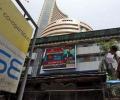
Leading bourses BSE and NSE and money markets will remain closed on Thursday on account of Eid al-Adha also known as Bakrid. Earlier, the holiday was scheduled for June 28. The markets are now open on Wednesday. The change came after the Maharashtra government declared June 29 a public holiday as the festival of Bakrid falls on this day instead of June 28 declared earlier.
Short-term government bonds fell behind longer-dated securities in demand this month so far due to a liquidity crunch in the banking system and expectations of a delay in a rate cut, said market participants. Investors have favoured longer-tenure government bonds, or g-secs, with insurance companies and pension funds leading the charge by stocking up on those with maturities of 30 years and more. Preference for longer-term securities was strengthened by the conclusion of the borrowing programme, which compelled institutional investors to fulfil their requirements in the secondary market.

'Liquid ETFs help in cash management by enabling a smooth transition between equity and cash within the same settlement cycle, as they trade in the same segment as equity.'

When he didn't respond (Mr Saver has lost count of how many relationship managers he has had in the past few years!), the gentleman landed up at his doorstep and started pleading with him to open fixed deposits with the bank, observes Tamal Bandyopadhyay.

Opinions vary, but fund managers remain bullish.

The contribution from asset management companies (AMCs) has surpassed the Rs 3,000 crore target for the creation of a Rs 33,000 crore backstop facility for debt mutual funds (MFs). The initial corpus for the Corporate Debt Market Development Fund (CDMDF) is nearly Rs 3,100 crore, according to multiple government officials and AMC executives. "The fund is operational now. "The required corpus has been raised by AMCs and the remaining part (Rs 30,000 crore) is in the form of a guarantee from the government which will be activated only in case of a credit event," explained D P Singh, joint CEO and deputy MD, SBI MF.

The banking system's liquidity slipped into deficit for the first time in the current financial year (2023-24) due to the imposition of the Incremental Cash Reserve Ratio (I-CRR) for banks and outflows from goods and services tax (GST) payments, according to dealers. Reserve Bank of India (RBI) data shows it injected Rs 23,644 crore on August 21. The last time liquidity was in deficit was on March 27, when the RBI injected Rs 45,575 crore.

For the banking system a new cycle starts in FY2024. It's fraught with fresh challenges on asset quality and profitability, warns Tamal Bandyopadhyay.

Investors need to evaluate how they stack up against other high credit quality fixed-income options before putting money in them.

State Bank of India (SBI) on Monday raised its benchmark lending rates by up to 50 basis points (or 0.5 per cent), a move that will lead to an increase in EMIs for borrowers. The increase in lending rate comes days after the Reserve Bank of India hiked its benchmark lending rate by 50 basis points to tame inflation. External Benchmark based Lending Rate (EBLR) and Repo-Linked Lending Rate (RLLR) have been raised by 50 basis points while the hike in Marginal Cost of funds-based Lending Rate (MCLR) is 20 basis points across all tenure.

'Rhetoric and chest-thumping are running high on India's recent growth record.'
'But will the giant waves developing elsewhere allow us to sail smoothly into fair winds?' asks Debashis Basu.
ICICI Bank, the second-largest private sector lender and state-owned Indian Bank on Monday raised their lending rates across all tenors in anticipation of a rate hike by the RBI later this week. The rates have been increased across all tenors under the marginal cost of funds-based lending rate (MCLR) system, a move that will make EMIs expensive for those who availed loans benchmarked against the MCLR. Under the revised rates, effective August 1, ICICI Bank's one-year MCLR has increased by 15 basis points or 0.15 per cent to 7.90 per cent, while the overnight MCLR rose to 7.65 per cent, as per information posted on the bank's website.

Those who consider the rupee as a proxy for virility have started thumping their chests and dreaming of dethroning the dollar from its coveted position, observes Tamal Bandyopadhyay.

Host of lenders led by State Bank of India (SBI) and Bank of India hiked lending rates after the Reserve Bank raised the benchmark interest rate to tame inflation. The hike has been effected in their benchmark rate linked to the repo rate, which increased by half a percentage point to 5.9 per cent. Even financial institutions like mortgage lender HDFC Ltd hiked the lending rate by 50 basis points effective Saturday.

'One way of doing this could be offering credit guarantee to the banks, say 10 per cent, for fresh loans given to micro, small and medium enterprises,' observes Tamal Bandyopadhyay.

The government will borrow Rs 5.03 lakh crore in the second half of the current fiscal to fund the revenue gap for reviving the pandemic-hit economy, the finance ministry said on Monday. During the first half, the government has raised Rs 7.02 lakh crore by issuing bonds, the ministry said in a statement. "Out of gross market borrowing of Rs 12.05 lakh crore projected for FY 2021-22 in the Union Budget, Rs 7.24 lakh crore (60 per cent) was planned to be borrowed in first half (H1).
 © 2026 Rediff.com - Advertise with us - Disclaimer - Privacy Policy - Sitemap - Feedback - About us - Terms of use - Grievances