
The amendments passed by the government will ensure that no Information Commissioner shall be free from interference and signalling by the Modi government, she said in a statement.

The former information commissioner, who is known for his pro-transparency orders in several high-profile cases, said the proposed changes "seriously undermine" the autonomy of information commissions.

Retired civil servant and social activist Arun Bhatia has filed the PIL.

Watch all the debates and discussions in Parliament.

It is sad that the legislative pre-consultation on such an important bill is being done in a very biased manner, notes Shailesh Gandhi, former Central Information Commissioner, recounting his experience with Minister Rajeev Chandrashekhar.

"What the RTI Act did was to make available to citizens any information that could be provided, that the government was obliged to provide to a Member of Parliament (MP). In theory, that channel remains open to us," says prominent economist and RTI activist Reetika Khera about how Indian citizens could still have access to information that they want

The bill which seeks to keep political parties out of the ambit of the transparency law will be sent to a standing committee for wider consultations, government informed the Lok Sabha on Thursday.

'This is not Ahmedabad Gymkhana but people's house'
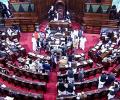
This after high drama in the House over what opposition charged was "intimidation" by the treasury benches to get the motion for sending the amendment to the RTI Act to the select committee rejected.

Various opposition parties like the Congress, the Trinamool Congress, the Dravida Munnetra Kazhagam, the Nationalist Congress Party, the Rashtriya Janata Dal, the Communist Party of India, and the Communist Party of India-Marxist raised vociferous protests in the upper house while opposing the resolution and the bill.
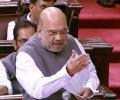
Opposition parties slammed the amendment, saying the new law was "draconian" and could be misused against anyone opposed to the ruling establishment.

Taking a cue from the prevailing public mood against the political class, the Congress leadership -- Sonia Gandhi and Rahul Gandhi -- are said to have clinched the argument in favour of deferring the amendment to the Right to Information Act which seeks to keep political parties out of the ambit of the transparency law.

While Congressmen may try and give Rahul Gandhi credit for the withdrawal of the controversial ordinance on convicted lawmakers, it was the President's timely intervention that saved the day for the Congress, says Anita Katyal.
