
Several non-banking financial companies (NBFCs) are observing an increase in early-stage delinquencies within their micro, small and medium enterprises (MSME) loan portfolios, primarily driven by supply chain disruptions and escalating raw material costs exacerbated by the ongoing conflict in West Asia.

CRISIL Ratings predicts that the share of bank loans in NBFCs' overall borrowings will increase to 44-45 per cent by FY27, driven by elevated bond yields and softening bank lending rates.

The Indian banking sector is projected to experience a steady 9-13 per cent industrial credit growth in the first half of 2026, driven by capital expenditure, infrastructure development, and sectoral demand recovery, according to a Ficci-IBA survey.

If Tata Sons is listed, the special veto rights of Tata Trusts, under Article 121A, may have to go away.

Non-banking financial companies (NBFCs) such as Bajaj Finance, Shriram Finance, Muthoot Finance, and IIFL Finance have regained their growth momentum after losing market share to banks in the post-Covid period. The growth surge is being led by diversified lenders and gold-loan companies while development-finance institutions such as Power Finance Corporation (PFC), REC, and Housing & Urban Development Corporation (Hudco) continue to grow at a slower pace.

Loans against gold jewellery in India surged by an impressive 128 per cent year-on-year to nearly 4.28 trillion in February 2026, according to the latest Reserve Bank of India (RBI) data, significantly outpacing overall retail loan growth.

The Central Bureau of Investigation (CBI) is investigating the Reliance Anil Ambani Group for alleged bank loan frauds totalling 73,000 crore across seven cases. The Supreme Court is monitoring the investigation, which also involves the Enforcement Directorate (ED).

A government mandate requiring central public sector enterprises to use the Trade Receivables Discounting System (TReDS) for settling small business invoices is expected to significantly increase volumes on these platforms.

Indian bank credit expanded by 16.08 per cent year-on-year in FY26, marking its fastest pace since FY24, while deposits grew by 13.47 per cent, according to RBI data. Experts caution that year-end figures may be inflated due to reporting date changes, but acknowledge strong momentum in corporate, MSME, and retail segments.

Over the past three years, the appointments of 20 candidates selected through the Institute of Banking Personnel Selection were cancelled or offers were withdrawn due to poor credit history.
Ahead of the Reserve Bank of India's (RBI's) monetary policy review in the first week of December, major public sector non-banking financial companies (NBFCs) - the National Bank for Agriculture and Rural Development (Nabard), Small Industries Development Bank of India (Sidbi), Power Finance Corporation (PFC), and Indian Railway Finance Corporation (IRFC) - plan to raise up to Rs 24,000 crore together through bond issuancesk.

What is the reason behind this drying up of talent for the top post in private banks?

'The next phase of India's IPO cycle will be defined by quality, pricing discipline and investor selectivity.'

Brokerage firm Jefferies maintains a 'Buy' rating for Paytm, citing its dominant merchant payments platform and projected revenue growth.

Fexo, an AI intelligence platform focused on the BFSI sector, has launched its AI decisioning engine for business loans, designed to help financial institutions accelerate AI adoption and improve decision-making processes.

Banks and NBFCs are launching festival offers, including lower loan rates, cashback, EMI schemes and GST-linked benefits to tap rising demand ahead of Diwali

Benchmark lending rates unchanged with repo rate at 5.25%
The gold loan portfolio across the system has nearly doubled to Rs 15.6 lakh crore in two years to November 2025, as a spike in prices of the precious commodity encouraged lenders to increase their exposures to the safer segment, a report said on Wednesday.

'There is a challenge in repositioning yourself, maybe reinventing yourself.'
Asset quality within the non-banking financial sector (NBFCs) deteriorated with the share of stressed assets rising to 5.9 per cent in March 2025 from 3.9 per cent in September 2024, according to the Reserve Bank of India's Financial Stability Report (FSR). Slippage ratios among upper layer NBFCs have been rising, along with an upward trend in loan write-offs.

Reserve Bank of India (RBI) Deputy Governor Swaminathan J criticised some non-banking financial companies (NBFCs) for lax loan appraisal practices and charging excessive interest rates, even as he acknowledged the sector's rapid expansion over the past decade, especially in recent years. "Unfortunately, some NBFCs seem to believe they can operate with weak underwriting in the pursuit of fast growth while levying excessive and unsustainable interest rates - sometimes disguised as upfront or processing fees - followed by aggressive recovery methods in case of default," Swaminathan said at the conference of NBFCs in Chennai last month.

India's high cost of capital due to relatively shallow corporate bond markets, limited institutional investor depth, sovereign risk premia, and regulatory restrictions on capital flows, is a constraint on private investment and long-run growth, the Economic Survey, authored by Chief Economic Advisor (CEA) V Anantha Nageswaran, said.

'The trade deficit in some sectors is huge and that is an area of opportunity to localise.'

The Reserve Bank of India (RBI) on Friday allowed multiple entities in a bank group to undertake the same business as long as they cater to different client segments, while mandating board approval to ensure that any overlap in business has proper rationale and justification.

Months after picking up 24.21 per cent stake in private sector lender Yes Bank, Japan's Sumitomo Mitsui Banking Corporation (SMBC) has received the Reserve Bank of India's (RBI's) in-principle approval for setting up a wholly owned subsidiary (WOS) in India.

Banks are witnessing a surge in hiring for sales staff in secured segments such as home, vehicle and gold loans as compared to the recovery category, driven by a boost in business growth, and a host of regulatory measures aimed at improving ease of doing business, according to industry experts.

'When markets go into a budget with excessive optimism, the risk of disappointment is higher.'

The Reserve Bank of India (RBI), in its Financial Stability Report (FSR), cautioned that stress tests indicate two scheduled commercial banks (SCBs) may have to dip into their capital conservation buffers (CCBs), unless stakeholders infuse capital, under a scenario involving a gradual slowdown in domestic GDP growth and a moderate rise in inflation, with limited policy easing space available to the central bank.
The Reserve Bank of India's (RBI's) draft guidelines on gold loans, if implemented in their current form, are expected to impact non-banking financial companies (NBFCs) and mid-tier banks in the near term, more significantly than larger banks, according to analysts.

India's first maritime lender, state-owned Sagarmala Finance Corporation Ltd (SMFCL) hit the ground running with a Rs 4,300 crore disbursement announcement last Tuesday, within months of being registered as a non-banking financial company (NBFC) in June 2025.

The banking sector could see better loan growth in the third quarter of financial year 2026 (Q3FY26) with improved net interest margins (NIMs), though the full impact of latest rate cuts will be largely felt in the fourth quarter. There may be lower slippage in unsecured loans and microfinance institutions (MFIs) along with steady recovery trends, which should lower credit cost.

Over 50 per cent, or 660 stocks, from the BSE 1000 index recorded negative returns during CY25.
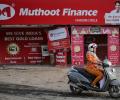
Shares of gold finance companies Muthoot Finance and Manappuram Finance hit their respective all-time highs, gaining on the BSE during Wednesday on expectation of healthy earnings. In comparison, the benchmark BSE Sensex was down 0.14 per cent, closing at 85,408.

Trai has ordered BFSI firms to move service and transaction calls to the 1600 series from 2026 to reduce spam, financial fraud, and rising digital arrest scams.

From the Sensex firms, State Bank of India, Bajaj Finserv, Bajaj Finance, Maruti, HCL Tech, Larsen & Toubro, Mahindra & Mahindra and Infosys were among the major winners. However, Hindustan Unilever, Eternal, Tata Motors Passenger Vehicles, and Sun Pharma were among the laggards.

The Securities and Exchange Board of India (Sebi) on Wednesday overhauled the cost framework for the 80 trillion domestic mutual fund (MF) industry, introducing a simplified structure aimed at improving transparency for investors while balancing the impact on asset managers.

Sanjay Malhotra has made structural changes to banking regulation to bring down costs and increase efficiency. Plus, he kicked off a benign interest regime. But there are challenges ahead.

Sectoral funds, focused exclusively on public sector banks (PSBs), have delivered the strongest returns among domestic mutual fund (MF) categories over the past six months. However, active banking funds have significantly lagged because of their heavy tilt towards private lenders.

Sebi has proposed allowing depositories to mark such pledged shares as 'non-transferable' for the duration of the lock-in period, based on instructions from the issuer.

The size or turnover of a company, or even the salary package offered, no longer prevents employees from quitting, notices rediffGURU Pradeep Pramanik.
 © 2026 Rediff.com - Advertise with us - Disclaimer - Privacy Policy - Sitemap - Feedback - About us - Terms of use - Grievances