
A Delhi court has convicted a man and his father for the murder of a youth in 2021, stemming from a dispute over a Rs 5,000 loan in the Welcome area of northeast Delhi.

The European Union's (EU's) offer to slash tariffs on 97.5 per cent of Indian chemical exports to zero is set to give India's pharmaceutical and medical device firms preferential access to the European markets.

Concerns over weakening demand for Indian pharmaceutical (pharma) drugs in the US - their largest export market - have weighed heavily on investor sentiment this year. While the Nifty 50 has gained 6.02 per cent year - to - date (as on September 15), the Nifty Pharma index has declined 5.18 per cent, National Stock Exchange data shows.
Analysts are expecting pharmaceutical companies to post sales growth of 10-11 per cent in the second quarter this financial year while the Ebitda (earnings before interest, tax, depreciation, and amortisation) margins are anticipated to improve by about 110 basis points. Ebitda improvement will be led by lower input costs because prices of active pharmaceutical ingredients (APIs) are 5-15 per cent lower year-on-year (Y-o-Y). Axis Capital said sales growth would be around 10 per cent, of which growth in the India market would be 11 per cent or so.
The tailwind of low price erosion in the US generics market, seen by domestic pharmaceutical companies in calendar year 2023 (CY23), may be reversing slowly, caution analysts. According to the latest data from US-based Centers for Medicare and Medicaid Services (CMMS), price erosion in calendar year 2024 (CY24) on a year-to-date (YTD) basis stood at a high of 15 per cent in the oral solid dosage (OSD) segment compared to a low of 1 per cent in CY23. This erosion, according to a report by Antique Stock Broking, was the highest in the last three years.
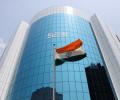
The market regulator's newly proposed selection criteria for the over Rs 400-trillion-a-day futures and options (F&O) market could pave the way for the entry of popular stocks such as Life Insurance Corporation (LIC) of India, Jio Financial Services, Zomato, Paytm, DMart, and Adani Energy into the derivatives segment. The Indian derivatives market, which accounts for most of the trading volumes, could see big churn with over two dozen exits from the current list of 182 stocks due to an upward revision in the eligibility thresholds.
Indian pharma companies are focussing on flagship products or mother brands under which they launch various new combinations to ensure robust revenue growth as well as therapy leadership. An analysis by market research firm Pharmarack showed how such flagship brands have posted strong growth CAGR in the last five years, with some even doubling sales. Sheetal Sapale, vice-president, commercial at Pharmarack, said, "Mother brands are analogous to an aggressive player who has put in a lot of effort during the prime years of life but now continues to silently nurture the brand family to collectively cross newer benchmarks of success."

'We expect the bull-market phase to still persist, but now led by large-caps which offer better valuation and benefit from FII inflows.'
'We expect continued pressure on midcaps, but any sharp correction looks unlikely from here on.'

Some of the popular brands that would be impacted include Phensedyl (Abbott), Tixylix (Abbott), Gluconorm PG (Lupin), Ascoril D (Glenmark), Solvin Cold (Ipca), D Cold Total (Paras Pharma).

India's K Jennitha Anto was crowned the new World Chess Champion for disabled after winning the 13th IPCA World Women's Individual Chess Championship.

Alkem Labs was issued drug alerts twice last year -- in June and July -- for its drug Glimekem.

Half of the nation's 100 richest saw gains rising a collective 14% to $517.5 billion, says Forbes. Forbes released 2020's top 100 richest Indians on Thursday, which included newcomers, Sanjeev Bikhchandani, co-founder of Info Edge (India), who owns popular job and property websites; siblings Nithin and Nikhil Kamath, co-founders of discount stock brokerage Zerodha Broking, and three specialty chemicals producers - Vinod Saraf, founder of Vinati Organics, Arun Bharat Ram, the patriarch of SRF, and brothers Chandrakant and Rajendra Gogri of Aarti Industries. Other newcomers included Delhi-based brothers Ramesh Kumar and Mukand Lal Dua of Relaxo Footwears, which owns affordable footwear brands; dairyman, R G Chandramogan of Hatsun Agro; Premchand Godha, who chairs IPCA Laboratories, manufacturing formulations, bulk drugs and drug intermediates; G Rajendran, founder of jewellery chain, GRT Jewellers.
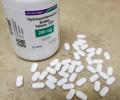
Indian Council of Medical Research had also recommended the use of hydroxychloroquine for treating healthcare workers handling suspected or confirmed coronavirus cases and also the asymptomatic household contacts of the lab-confirmed cases.

The issue of pollution caused due to the non-degradable material is keeping consumer goods majors - from ITC and Dabur to Nestl and PepsiCo - on their toes.

Indian government has extended price caps to 39 more medicines ranging from commonly used diabetes drugs to antibiotics.
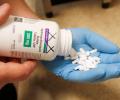
Once touted as a 'wonder drug', HCQ has been battling global controversies around its safety and efficacy as a prophylactic against the new coronavirus SARS-CoV-2.
Expectations of strong results, consistent performance and investors preference for stocks in the defensive space help the sector outshine broader markets.
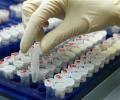
A senior official at the health ministry told ANI: "For HCQ, we have placed orders for about 11.45 crore tablets to two Indian firms -- IPCA laboratories and Zydus Cadila. So far, we have received 6.64 crore HCQ drugs and remaining will arrive by May 16."

Markets

Fabiflu sales have grown by 62 per cent in July. It was launched in June. This drug is being used by doctors for mild-to-moderate Covid patients even if they are in home isolation.

India will export anti-malarial drug hydroxychloroquine, high in demand globally, only to foreign governments and not to private companies, as the product is under prohibited or banned category of exports, sources said. Although exports of this medicine is completely banned, India has decided to export this anti-malarial drug in sync with its global commitment to deal with the coronavirus pandemic.
Asian Paints, Cipla, Bharat Forge, Dabur India, Nicholas Piramal and Satyam Computer Services are among the 20 Indian corporate entities that have found place in Forbes' list of 'Best Small Asian Companies'.

'India is a pharma dada. We can manufacture enough for our people and for the world.'
Leading IT companies i-flex Software and Satyam Computers have made their way to Forbes Global's list of 100 'best under a billion' companies in Asia Pacific.
The Sensex closed at 12,009.59 up 37 points. The Nifty gained 7 points to close at 3,479.
The markets opened in green tracking its Asian peers

Better-than-expected financial results in Q3 due to higher revenue growth and margins in key markets fuel the rally
Researchers at Northwell Health in New York are testing the effects on Famotidine (used in high intravenous doses) on Covid-19 patients as a potential treatment. After the hospital announced its clinical trials, it led to a drug shortage in the US. Back home, however, there has not been any surge in the demand for Famotidine yet.

FIPB has deferred 18 proposals.

A key lesson for the pharmaceutical sector in this case is to not downplay the significant impact that regulatory non-compliance can have on operations.

Ajit Mishra, vice president, Research, Religare Broking, answers your queries.

Ajit Mishra, vice president, Research, Religare Broking, answers your queries.

Pharma was the top losing index amid worries about their earnings outlook with Lupin down over 4%
.jpg)
The move is expected to delay the introduction of low-priced medicines in the market.

Index heavyweights ITC was the top gainer along with RIL and HDFC

Ajit Mishra, vice president, Research, Religare Broking, answers your queries.

While gold returned 12 per cent annual gain in 10 years, Nifty didn't exceed 9 per cent.
