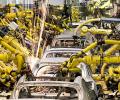
Passenger vehicle sales in India reached a record high of 4.7 million units in FY26, boosted by strong performances from major automakers and the implementation of GST 2.0.

Electric vehicle (EV) penetration in the luxury car segment has seen a drop by nearly 3 percentage points in the GST 2.0 era with the internal combustion engine versions offering better total cost of ownership, according to industry players. While the trend is also visible in the mass market segment, it is the entry luxury segment that is witnessing a more marked shift towards internal combustion engine (ICE) vehicles as price difference between EV and ICE widened under the new GST rates.

India's luxury auto market is rebounding after a slow start to 2025, with GST 2.0 emerging as the main catalyst.

India's auto retail sector achieved record-breaking sales of 2,96,71,064 units in FY26, a 13.3% increase, primarily driven by the implementation of GST 2.0 which reduced the tax burden on mass-segment vehicles, according to the Federation of Automobile Dealers Associations (FADA).

While GST on ICE vehicles was brought down significantly, for electric cars it remained at 5 per cent.

Maruti Suzuki has discontinued its Ignis hatchback due to weak sales and a shift towards SUVs, while simultaneously facing supply chain issues for its popular S-Presso and WagonR models, leading to booking halts at some dealerships.
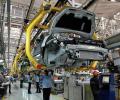
India's passenger vehicle (PV) industry is projected to experience moderated growth in FY27, following a strong rebound in H2FY26, primarily due to the high base effect, absorbed pent-up demand, and the lingering impact of geopolitical tensions in West Asia.

India's rapidly ageing truck fleet, with 42% of vehicles over 12 years old, is set to trigger a replacement-driven growth of 3-5% annually over the next five years.

Festivals also contribute to the rise in overall automobile retail sales, says dealers association.
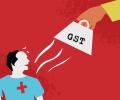
'It will support our growth aspirations. It's very positive as it helps expand the market in a segment that really needs it.'

GST 2.0 may cushion consumers against US tariffs, but like the 2019 corporate tax cut, it risks being another tactical fix rather than a structural growth strategy, expects Debashis Basu.

Domestic automobile retail sales in India experienced a significant surge of 26 per cent year-on-year in February, driven by improved affordability and market confidence across various segments, according to FADA.

Hiring demand strongest in ecommerce, tech startups, healthcare, and energy sectors, with Bengaluru, Hyderabad, and Pune leading.

Daily essentials and food products will be cheaper from Monday, as leading FMCG companies have slashed prices, extending GST cut benefits to consumers.

The reduction in the goods and services tax (GST) rates has increased the momentum in India's economic activity both on the supply and demand sides, while robust agricultural activity - reflected in the strong onset of rabi sowing and adequate reservoir levels - has reinforced the outlook for food supply and rural incomes, the finance ministry said on Thursday.

A NielsenIQ report indicates that the FMCG industry's sales growth moderated to 7.8% in the December quarter of 2025, with volume growth also dipping due to GST rationalisation and a high base from the previous year's festival season.

Since items in the 12% category account for only about 5% of total GST, the additional boost to consumption may not be significant, points out M Govinda Rao.

As lower GST rates take effect on Monday, sales of air-conditioners, TV sets surged dramatically with buyers rushing to grab cheaper deals offered by retailers at the beginning of the Navratra festival.

Retail sales of vehicles across categories in India in 2025 grew by 7.71 per cent at 2,81,61,228 units as compared to 2,61,45,445 in 2024, with GST 2.0 helping overcome a subdued start to the year, Federation of Automobile Dealers Associations said on Tuesday.

Automobile retail sales rose nearly 18 per cent year-on-year to over 27 lakh units in January, led by continued post-GST momentum, healthy rural cash flows on the back of harvest and weddings, and sustained demand visibility across freight, dealer's body FADA said on Tuesday.

'The government is putting insurance in the same category as food, which is essential for life.' 'Now this is an opportunity for the sector to focus on the consumer.'

Renault India on Saturday said it will reduce prices of its vehicles by up to Rs 96,395 to pass on full benefit of the recent GST rate cut to buyers. The GST Council, earlier this week, approved limiting slabs to 5 per cent and 18 per cent, effective from September 22.

'In the last one year, we have added more than Rs 1.7 trillion, and we are on track.'

Rural India outpaced urban centres in passenger vehicle sales in 2025, recording a growth of 12 per cent compared with 8 per cent in cities.

Simplifying GST rates, removing exemptions, easing disputes, and speeding up refunds can boost investment in India and offer the best reply to Trump's tariffs, observes V S Krishnan, former member, Central Board of Indirect Taxes and Customs.

The GST Council on Wednesday approved a two-tier rate structure of 5 and 18 per cent, which will be implemented from September 22.

Following Axis Max Life Insurance's second-quarter results for 2025-26, Sumit Madan, managing director and chief executive officer of the company, speaks to Aathira Varier and Subrata Panda/Business Standard about growth aspirations, strategies to offset the impact of the input tax credit (ITC) withdrawal, reverse merger plans, and more.

Passenger vehicle dispatches from companies to dealers raced to the highest ever sales mark in a calendar year in 2025 as a reduction in prices due to GST reforms led to robust sales in the festive season, industry body SIAM said on Tuesday.

Maruti Suzuki India plans to localise battery production and other critical components over the next few years as part of strengthening the overall EV ecosystem in the country. The company, which plans to launch its first electric vehicle - e VITARA in the domestic market next year, is looking to instill confidence in the buyers as it looks to strengthen the overall EV ecosystem.

Dabur's business update for Q3FY26 indicated mid-single digit consolidated revenue growth. The guidance is that growth in operating and net profits will beat revenue growth. In the domestic business, home and personal care (HPC) revenue grew in double digits, while healthcare is likely to post a sequential growth in low-single digits.

Some of the key names include: Maruti, M&M, Ashok Leyland, Britannia, Ultratech, JK Cement, Havells, Voltas, Amber, Metro, Trent, LemonTree, Indian Hotels, Niva Bupa, HDFC Life, IGL, Acme Solar, Suzlon, Swiggy, Delhivery, ICICI Bank, HDFC Bank, Bajaj Finance, Shriram Finance," according to a report by Motilal Oswal Financial Services.

Automobile retail sales across the domestic market witnessed a 21 per cent year-on-year increase in the 42-day festive season led by record registrations of passenger vehicles and two-wheelers aided by GST rejig enabled drop in prices across segments, dealer' body FADA said on Friday.

Shares of tyre manufacturers have outperformed broader equity benchmarks, buoyed by multiple tailwinds. Softer raw material prices, an uptick in demand from automakers following the reduction of the goods and services tax (GST) rates, and steady replacement demand have lifted sentiment toward the sector.

After a record-breaking year, India's automobile industry is entering 2026 on a relatively strong footing, with sales growth expected in the 6-8 per cent range. The outlook is underpinned by policy support, including GST rationalisation, easing monetary conditions, and income tax relief, which together are likely to improve affordability and sustain consumer demand across vehicle segments.

Passenger vehicle dispatches from companies to dealers increased 19 per cent year-on-year in November as demand remained robust post festive period, industry body SIAM said on Friday.

Mahindra & Mahindra on Saturday said it has reduced prices of its passenger vehicle range by up to Rs 1.56 lakh with immediate effect in order to pass on GST rate cut benefit to customers. The price cut follows the announcement of revamped GST at the 56th GST Council meeting held on September 3, 2025, the Mumbai-based auto major said in a statement.

Tata Motors Passenger Vehicles Ltd expects contribution of SUVs to its overall sales to go beyond 70 per cent with it making foray into the fast growing mid-sized segment with a premium positioning of its Sierra model, according to its Managing Director & CEO, Shailesh Chandra.

To ensure a glitch-free rollout of the next-generation GST with reduced rates and lesser slabs, Finance Minister Nirmala Sitharaman chaired three separate meetings to assess GSTN's preparedness and the time it would take to implement technological changes required in the software systems.

'The market is still very bullish. The demand is so strong that for eight models, we have no units in our factories to dispatch to dealers,' said Partho Banerjee, senior executive officer, marketing & sales, Maruti Suzuki India (MSIL).

Starting January, the market is expected to welcome models like the Tata Punch 2025 which is expected to be around 6 lakh, Mahindra BE 07 EV around 29 lakh, Maruti WagonR Electric around 8.5 lakh, Toyota 3-Row SUV around 14 lakh, and Volkswagen Tera to be around 8 lakh.
 © 2026 Rediff.com - Advertise with us - Disclaimer - Privacy Policy - Sitemap - Feedback - About us - Terms of use - Grievances