
'It has also outlived its initial purpose of reducing physical gold imports.'


India's inclusion in JP Morgan's bond index can channel billions of dollars into India. How will the government securities market handle it?

While there has been an improvement in the overall demand environment, the other reason expected to trigger this growth is the absence of a bench strength in most companies

Mr Modi might have questions to ask himself on the most formidable strategic challenge before India that he inherited from the United Progressive Alliance: The triangulation between China and Pakistan. The failure to break out of it, or even loosen it a bit, is something to reflect on, notes Shekhar Gupta.

'Indian families' needs and expectations have gone through a revolution across economic demographics.' 'As this latest Modi-Sitharaman Budget demonstrated, politicians have understood this change. They are responding to it,' points out Shekhar Gupta.
Retail lending in India is slated to grow by 33 per cent to $36.88 billion in 2003-04 and the competition may result in banks pushing loans without proper credit assessments and appraisals of borrowers

'We are primarily a domestic consumption story. We are less exposed to global forces.'
The 48-odd million employees covered by the Employees Provident Fund Organisation (EPFO) may be touched that the finance ministry is actually considering a proposal to extend the organisation a fiscal helping hand to offer a rate of interest comparable with other savings instruments.
The Fisc and savings-investment gap lie at the heart of policy responses.

The total employee strength of the company stood at 2,14,770 at the end of the September quarter.


The company had posted a net profit of Rs 465.36 crore (Rs 4.65 billion) for the same quarter last fiscal, Maruti Suzuki India said.

The commerce ministry must talk to the Reserve Bank of India and see how India's view can be represented and exporters' interests best protected.

"The loss in the second quarter of 2009 resulted from exceptional charges amounting to $1.2 billion primarily related to write-downs of inventory ($0.9 billion) and provisions for workforce reductions ($0.3 billion)," L N Mittal-promoted company said.

"Manufacturing sector has come back to the stream...Infrastructure, mainly power, is coming back in a big way...my belief is that we will see a growth of 7-7.5 per cent (in the current fiscal)," ICICI Bank, Chairman, K V Kamath told a conference on Monday.
Union Budget 2009-10 comes at an opportune time for the New Government. The stake holders expects the New government to spell out its priorities -- be it to spur the economy from the current sluggishness, or to promote inclusive growth, or to contain the alarmingly high and rising fiscal deficit, or perhaps a good blend of all these!
While retaining its forecast for inflation at five per cent this fiscal, RBI has lowered its objective of inflation to three per cent in the "medium term" against 4-4.5 per cent as announced in the last quarterly review in July. "So far as prices are concerned, inflationary development is on track. We expect inflation will end at the level of five per cent, subject to the caveat that oil prices are ruling high and a pass-through may occur," RBI Governor Y V Reddy said.
With India emerging as one of the most preferred investment destinations globally, World Bank's private equity arm, International Finance Corporation, aims to cross $500 million mark in new investments by June.

Pragmatism and flexibility is a virtue. An untethered and short-term approach to policymaking is a flaw, argues Mihir S Sharma.

Net capital gains from the sector over a full cycle may be more than the gains logged by cyclical sectors.
Despite concerns over the progress of monsoon, the Centre for Monitoring Indian Economy on Thursday said the Indian economy would grow at 6.3 per cent in 2004-05.
Bank of Baroda will complete 50 years of operations in African nations, Kenya and Uganda, in December, even as it plans to foray into China and Malaysia.

Indian indices have hit all-time highs in the New Year and the sentiment remains strong. All valuations are also at extremely high levels, cautions Devangshu Datta

High frequency indicators suggest that a growth recovery is underway, but very tentatively and with weak legs, says Saugata Bhattacharya.

'The Budget will have to be substantially re-cast as soon as a new government takes charge after the elections.' 'Both revenue and expenditure numbers will have to be trimmed -- and then may better reflect the deceleration of economic activity caused by slowing consumption trends,' points out T N Ninan.

This is the BJP's first full-year Budget.

The Modi government has handled inflation far better than any government in the past two decades. Both the stock market and currency indices have begun to show confidence in the economy, despite the mounting global headwinds of trade.
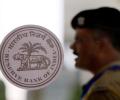
The windfall from RBI may be used to trim borrowing, help fund Rs 3.3 lakh crore capex plan, capitalise banks and provide fiscal stimulus to some stressed sectors, experts and economists said.

'By holding forth on Swadeshi economics, Bhagwat is showing his intent to fight back,' says Shekhar Gupta.

The labour force fell from 43.97 crore in 2016-17 to 42.61 crore in 2017-18

Even a doomsayer like Nouriel Roubini says India is in a sweet spot. If only we'd live up to the promise, says Shekhar Gupta.

'If anything, he is a fiscal hawk.' 'He has avoided fiscal profligacy completely for the past four years.' 'The fiscal deficits since 2014 are clear proof of this.' 'The point is not that it is not 3 per cent yet; it is that it is not 6, 7 or 8 per cent, which it could easily have been.' 'For this he needs to be congratulated.' 'He has recognised it no longer pays to spend other people's money to win elections,' points out T C A Srinivasa-Raghavan.

The stock market, the Survey felt, had run away from underlying real economy indicators and asked if this indicated rational confidence or irrational exuberance.

An asset swap can simultaneously boost public investment, reduce the fiscal deficit and keep fiscal policy from being pro-cyclical.

The failure to reform has meant that there is no buzz about job opportunities, or about urban opportunities enticing young people off the farms. And it is this failure that has contributed to the widespread disappointment that threatens to make the next general elections closer than expected, says Mihir S Sharma.

We should brace ourselves for more bad news in the coming quarters -- on economic output and growth, strains on the fiscal deficit, export slowdown, small and micro enterprises in distress, and further accumulation of NPAs in the banking sector, says Rahul Khullar.
 © 2026 Rediff.com - Advertise with us - Disclaimer - Privacy Policy - Sitemap - Feedback - About us - Terms of use - Grievances