
The government on Monday tabled the much-awaited Direct Taxes Code Bill in the Lok Sabha which proposed to raise the exemption limit on income tax from the current Rs 1,60,000 to Rs 200,000.

After the Cabinet approved the Direct Taxes Code Bill, Finance Minister Pranab Mukherjee had yesterday said the corporate tax rate is sought to be retained at the present level of 30 per cent, but there will not be any surcharge or cesses on it.

The proposed Direct Tax Code Bill is likely to be a legislation by the monsoon session of the Parliament, 2010, a senior government official said.
However, BJP has not given any assurance of support and conveyed to the Finance Minister that the matter will be discussed within the party and take a call, sources said.

At a press conference on Monday, Finance Minister P Chidambaram said when the final version of the Bill was tabled in Parliament, the government would abide by the recommendations of the parliamentary standing committee on DTC.

Stimulus was given in phases after Chidambaram had left the finance ministry to head the home ministry in December 2008.
Finance Minister P Chidambaram on Monday said he is reviewing the Direct Taxes Code (DTC) Bill and it will be introduced in Parliament after taking into account the recommendations of the Parliamentary panel.
The government also informed the apex court that it has completed negotiations for Tax Informations Exchange Agreement with 10 countries where the money is believed to have been stashed.

Apart from developers of special economic zones and units operating out of them, the proposal will also affect companies in power, infrastructure, food processing, hotel and hospital sectors, among others.
The Standing Committee on Finance, which met under the chairmanship of senior BJP leader Yashwant Sinha, has decided to finalise its report by March 2, enabling Parliament to consider the ambitious reforms in direct tax regime.
Members of the All India Muslim Personal Law Board were miffed with the government on specific clauses in the Right To Education (RTE) Act, the Direct Taxes Code Bill and the Wakf Amendment Bill of 2010
Suggests far more generous provisions than proposed in Direct Taxes Code
Suggests far more generous provisions than proposed in Direct Taxes Code
Wants investment limit for tax savings schemes be increased to Rs 320,000
The Direct Taxes Code Bill, introduced in Parliament on August 30 last year, proposes to replace the 50-year-old Income Tax Act.

As per the SEZ Act, 2005, and SEZ Rules, 2006, SEZ units are entitled to exemption from duty of customs and excise, exemption from service tax and VAT, exemption from stamp duty and registration fees and exemption from electricity duty, besides income tax exemption on export profits.
The long awaited direct tax code bill (DTC) proposes to simplify Indian taxation system. Here's how it will affect and benefit the salaried class.
If the Direct Taxes Code Bill does not undergo further changes, employees in the lower tax bracket will get more retirement benefits, provided they opt for a higher basic salary.

The Direct Taxes Code Bill tabled in the Lok Sabha is likely to negatively impact the life insurance industry on many counts, if implemented in the present form.

Individual taxpayers may see a slight dent in their profits earned on investments in mutual funds or life insurers' investment offering.

It is undoubted that writing a new law based on learning from the experience of half a century is a Herculean task and the taxpayer and tax collector alike require time to acclimatise with a new code.

The direct taxes code Bill, which was approved by the Union Cabinet on Thursday, has made further concessions from what was originally proposed.

The proposed Direct Taxes Code Bill, 2009, should change our tax liability as well as the way we invest.

Salaried taxpayers may have less kitty for holidays from April 2012, with the government proposing to scrap tax incentives on leave travel allowance in the new direct tax regime DTC.

The government will lose over Rs 53,000 crore (Rs 530 billion) in tax revenue on account of the increase in exemption limits and tweaking of slabs in the Direct Taxes Code Bill, which will come into effect from April 1, 2012, a year behind the previous deadline.

Let's take a quick look at how the salaried class will be affected post the implementation of the New Direct Taxes Code in its latest avatar.

What does the proposed Direct Taxes Code hold for the common man? A look at visible effects and implications of the proposals on our monies.
The government on Monday promised to come out with a framework for the Direct Taxes Code that will simplify tax structure within 45 days.

The biggest impact of the new tax system is the significant widening of income slabs. According to this, people with annual income not exceeding 1.6 lakh (Rs 160,000) will not have to pay any tax.
The Direct Taxes Code Bill, 2009, could soon set the tone for all our future wealth-creation decisions. If enacted, the bill will not only change the amount of tax you pay, but also transform how you invest, borrow and spend your money.
The Direct Taxes Code Bill, 2009, could soon set the tone for all our future wealth-creation decisions. If enacted, the bill will not only change the amount of tax you pay, but also transform how you invest, borrow and spend your money.

The proposal to levy a minimum tax based on assets undoes most of the good that the code seeks to do and will discourage capital-intensive industries.

The Direct Tax Code Bill, which was tabled in the Lok Sabha on Monday, has been delayed by a year. The Bill will now come into effect from April 1, 2012.

A decision on the 26-day session was taken by the Cabinet Committee on Paliamentary Affairs headed by Defence Minister A K Antony on Monday.
.jpg)
The Direct Taxes Code bill was introduced in Lok Sabha in 2010 and Standing Committee on Finance has given a report after its scrutiny.

Outcome of Assembly polls in five states will set the tone for the winter session of Parliament beginning on Thursday though the government has listed a heavy legislative agenda and opposition is demanding extension of the 12-day sitting.
.jpg)
Cabinet likely to pave way for the 'super-rich' tax today.

A heavy agenda including the ordinance on the Food Security Bill awaits the Monsoon session of Parliament beginning on Monday amid expectations that the short sitting will be more businesslike and smooth as compared to the din and dust in the last few sessions.
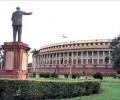
From 1952 to 1967, each of the three Lok Sabhas sat for an average of 600 days and more than 3,700 hours. In comparison, the 15th Lok Sabha -- from 2009 till 2013 -- has met for just 345 days and 1,331 hours, says Shreya Singh

'Let us also not expect that there will be a clean break with the past, much though the new government might like to think about it. In a functional democracy that is neither feasible nor desirable. But basic change it must be,' says Shreekant Sambrani.
 © 2026 Rediff.com - Advertise with us - Disclaimer - Privacy Policy - Sitemap - Feedback - About us - Terms of use - Grievances