
Gold prices surged in futures trading due to escalating US-Iran tensions, driving demand for the safe-haven asset.
New investors should enter gradually and with a long horizon. 'Staggered investment through systematic purchase plans is advisable rather than lump-sum buying.'

The Indian rupee, swaying through multiple headwinds, tiding over global trade disruptions and massive foreign fund outlfows, is unlikely to arrest its descent until tariff impact overhangs, notwithstanding robust domestic macroeconomic tailwinds. The Reserve Bank of India (RBI), which sees the rupee's depreciation as a silver bullet to offset the tariff shock, expects the currency to find its stable course once India reaches a trade deal with its largest trading partner, the US.

Gold prices rallied for the third straight day and gained Rs 2,600 to hit a fresh lifetime high of Rs 1,26,600 per 10 grams in the national capital on Wednesday in line with strong global trends amid looming geopolitical uncertainties triggered by the prolonged shutdown of the US government.

Gold prices surged Rs 2,200 to hit a fresh peak of Rs 116,200 per 10 grams in the national capital on Monday buoyed by strong global cues as investors awaited key commentary from US Fed officials for policy direction. According to the All India Sarafa Association, the precious metal of 99.9 per cent purity had closed at Rs 1,14,000 per 10 grams on Friday.

Gold prices on Tuesday surged Rs 723 to touch an all-time high of Rs 110,312 per 10 grams in the domestic futures market, tracking strong global cues amid growing expectations of a US Federal Reserve interest rate cut next week. Traders said weak US labour market data has strengthened the case for monetary policy easing, putting pressure on the dollar and boosting demand for the safe-haven asset.
Rising for the sixth consecutive session, gold prices rallied Rs 1,000 to hit yet another record high of Rs 105,670 per 10 grams in the national capital on Monday, lifted by expectations of a rate cut by the US Federal Reserve this month and robust demand in overseas markets.

Gold prices rose by Rs 70 to hit yet another record high of Rs 98,170 per 10 grams in the national capital on Thursday amid firm global demand, according to the All India Sarafa Association. On Wednesday, the precious metal of 99.9 per cent purity soared by Rs 1,650 to hit an all-time high of Rs 98,100 per 10 grams.

Gold prices inched closer to the psychological mark of Rs 1 lakh per 10 grams as the bullion rates surged Rs 1,650 in the national capital on Monday on weak dollar and uncertainties over US-China trade war driving demand. According to the All India Sarafa Association, the yellow metal of 99.9 per cent purity reached Rs 99,800 per 10 grams on Monday. Its value had declined Rs 20 to close at Rs 98,150 on Friday.
Gold future prices sustained upward trend for the fourth straight session by surging Rs 2,048 to hit a fresh record high of Rs 100,000 per 10 grams as investors rushed to safe havens after US President Donald Trump indicated plans to overhaul Federal Reserve amid continuing global trade war jitters. On the Multi Commodity Exchange (MCX), the August delivery contract of the yellow metal bounced by Rs 2,048 or 2.1 per cent to hit a fresh peak of Rs 100,000 per 10 grams in the mid-session trade.
Gold, a safe-haven bet, is likely to continue its record-smashing journey in the New Year, rising to Rs 85,000 per 10 grams and even Rs 90,000 level in domestic markets if geopolitical tensions and global economic uncertainties continue.

Goldman Sachs expects gold to reach $3,150 per ounce in the international market by December 2025, up around 19.1 per cent from its current level of $2,645, according to a recent report in Business Standard. Domestically, gold is trading at Rs 76,018 per 10 grams after delivering a remarkable 21.9 per cent return in the past year.

New investors should gradually build a 5 to 10 per cent allocation to gold.

'Higher interest rates make gold less attractive as it doesn't generate yield.' 'However, with rates set to fall, the tables are turning for gold.'

Gold price declined Rs 305 to Rs 56,035 per 10 grams in the national capital on Thursday amid a fall in rates of precious metal in the overseas markets, according to HDFC Securities. The yellow metal had settled at Rs 56,340 per 10 grams in the previous trade. Silver also plummeted Rs 805 to Rs 65,095 per kg.

Jeera July futures in NCDEX touched a record high of Rs. 58,085 per quintal on Monday, before coming down to around Rs. 55,500 on Tuesday. This was due to profit booking and extension of additional surveillance margin of 2.5 per cent till July 18, including on all contracts to be launched in the future. The softening, according to some reports, is also because of fears of regulatory action on jeera traders over allegations of excessive speculation.

IndusInd Bank was the biggest loser in the Sensex pack, shedding 7.46 per cent, followed by SBI, Tata Motors, M&M, Bajaj Finserv, Axis Bank and Infosys. In contrast, Tech Mahindra was the only winner.

In the coming few weeks, agriculture markets in North and Central India will be full of wheat, mustard, and chana - the three main rabi crops grown in these parts. Not only will the price trajectory of these determine the course of food inflation in the months to come, but it could also have a wider impact on the rural economy in the main growing states for these crops. Wheat and chana are largely grown in Madhya Pradesh (MP).

A yellow glow is likely to stand out amid grey geopolitical clouds in 2023, with gold price projected to touch Rs 60,000 per 10 grams in the Indian market as more investors veer towards safe-haven assets. In a year where volatility was more a norm than an exception, gold prices in the international market oscillated from a peak of $2,070 per ounce in March to a low of $1,616 per ounce in November and is steadily recovering since then, according to market experts. At the beginning of 2022, gold prices were around $1,800 an ounce.
Gold prices are struggling and are down 18 per cent from their March highs. But stock prices have fallen even more. As a result, the precious metal has begun to outperform equities - both in the domestic market and international markets. Gold prices are up 2.6 per cent in the domestic market in the current calendar year (CY22) so far, according to the World Gold Council (WGC), compared to a 1.7 per cent decline in the Sensex year-to-date (YTD).
Gold, which lost its sheen to some extent in the second half of 2021, is likely to regain the glitter in the New Year and cross the Rs 55,000-per-10-grams level amid pandemic woes, inflation worries and stronger US dollar. After a stellar run up in 2020 when the yellow metal touched a record high of Rs 56,200 on the MCX in August, the prices are near Rs 48,000 per 10 grams now. This is roughly 14 per cent lower from the all-time highs and 4 per cent lesser compared to January 2021 levels.
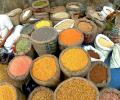
On a day when several mandis across the country are closed in protest against the recent Centre's decision to impose stringent stock-holding limit on pulses, the government clarified that limits have been defined as retail prices are still higher than last year though there is some moderation in the last few weeks. It said the same logic also holds true for edible oils, the import duties on which was slashed few days back and curbs lifted on import of refined oils. The decision on edible oil and pulses have caused massive resentment among the trading community as it came just ahead of the kharif sowing season, when prices were off their peaks due to multiple steps announced previously. Sources said trading activity in some of the major mandis dealing in pulses such as Sholapur, Amravati and Latur in Maharashtra, Indore and Dewas in Madhya Pradesh along with Kanpur in Uttar Pradesh was impacted as traders went on a flash strike in protest against the decision to impose stock limits.

'Gold could benefit from the resulting risk aversion, as happened last year.'
Akshay Tritiya could be a good reason to invest. Purchase jewellery only for immediate consumption.

Gold-silver ratio indicates more upsurge possible for the white metal.

Gold, which was hovering around $1,321 an ounce in January 2019, has already breached $1,600 per ounce in the past few sessions to a seven-year high.
Merrill Lynch warned that oil prices could fall as low as $25 a barrel next year if the recession affecting the US, Europe and Japan extended to China, the main driver of demand growth in commodity markets in recent years.
Mandatory hallmarking of gold would be a positive in making the gold market more organised. Mandatory hallmarking would come into effect from January 15, 2020, with a one-year transition period for trade to sell existing inventories. Experts also expect more policy measures next year to bring in more transparency in terms of gold as an asset class.
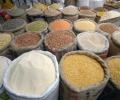
Back-to-back droughts in India, the world's largest importer of edible oils and pulses, has boosted prices and made pulses attractive to Canadian farmers.

Import is returning to the normal prevailing three years ago

'Gold could return 10% to 12% in the next two-three years.'

Oil edged up on Tuesday, steadying after a 5 per cent plunge in the previous session that saw prices touch fresh 5-1/2-year lows in an oversupplied market.

Canada is the top supplier of pulses to India, which is expected to import 1 million tonnes more this year.

Prices moved up sharply in recent months.

Banks have swung into action as gold prices continue to slide. Reduced loan-to-value ratio (LTV), cautious lending, and a close monitoring of the gold loan portfolio have prompted them to hedge their loan books against the reduction in prices.
Analysts forecast the fuel at $85 a barrel in 2015 and $90 a barrel in 2016; politics, demand-supply to pressure crude.

India's gold import bill, estimated at $3 billion in May, is seen falling further this month

Demand to remain high with festive season ahead and ongoing price fall

Oil imports are a third of India's total import bill.

Though the summer is expected to be hotter, global and domestic forecasts point to good rains.
 © 2026 Rediff.com - Investor Information - Advertise with us - Disclaimer - Privacy Policy - Sitemap - Feedback - About us - Terms of use - Grievances