Trade ministers of key WTO member countries, including India would meet on the sidelines of the Organisation for Economic Cooperation and Development meeting in Paris in the last week of May.
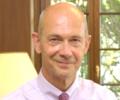
On Monday, media giant Thomson Reuters said 'it has appointed Pascal Lamy, director general of the World Trade Organization, to join its board of directors.' Lamy, who has started his second term at WTO that will last till 2013, will act as a trustee of the Thomson Reuters Trust Principles, which govern the way the company carries out business in an ethical manner.

The body is form to restore health of oceans.

WTO Director-General Pascal Lamy said his meetings with the US, China, India, and Brazil over the last fortnight revealed that the gaps in positions among members are too wide
Success of the Ministerial meeting depends on the WTO members putting together the broad contours of a deal by August.
Duty-free and quota-free access in favour of LDCs is a commitment undertaken by WTO members at the launch of the Doha Round in 2001.

Lamy said that increasing use of non-tariff measures by different countries are impacting trade.
Lamy said the international trade body will continue to keep a close watch on protectionist measures that impede international free trade.
The meeting, convened by Switzerland, will take place on the sidelines of the annual World Economic Forum meeting.

No one expects the US to sign up on any real deal till the next presidential elections are over.
India on Friday stood its ground against attempts to dilute the triggers in the Special Safeguard Mechanism to check unforeseen rise in imports of farm goods
World Trade Organization chief Pascal Lamy on Thursday faced serious charges of creating darkness at noon in the crucial Doha modalities negotiations when several trade ministers complained about their exclusion from the hard bargains he is conducting among seven members that also include India.
On July 21, trade ministers from nearly 50 countries will converge at Geneva to finalise proposals on agriculture and non-agricultural market access (Nama) which are part of the Doha Round of world trade talks. World Trade Organisation Director General Pascal Lamy tells Business Standard why the ministerial is crucial.
World Trade Organisation director-general Pascal Lamy now maintains that it is rather early to set the dates for a ministerial meeting to finalise the modalities for cutting agricultural subsidies and import as well as industrial tariffs, trade envoys said.
Director General of the World Trade Organisation had stated early this month that the current food crisis can be solved through a successful outcome of the Doha Round of negotiations for a multi-lateral trade deal among 151 countries. Biswajit Dhar, head of the Centre for WTO Studies, Indian Institute of Foreign Trade, felt that if an agreement is reached it would provide certainty in terms of policy regime for the farmers in developing countries.
India's chief trade negotiator Rahul Khullar yesterday warned that the much-planned ministerial meeting, which the World Trade Organisation Director General Pascal Lamy wants to convene soon, can succeed only if there was a revised Doha Rules text reflecting the concerns of all the members and an immediate resolution of TRIPS-CBD issue.
Rapid industrialisation has helped India speed up its economic progress said WTO chief Pascal Lamy.

The G-20 leaders at their last meeting at London had asked Lamy to explore ways to improve the political engagements for resolving differences on the much-delayed Doha Round of negotiations, which were meant to culminate into a multilateral trade liberalising agreement in 2005.
It is only through a trade-opening global pact that issues like distorting subsidies or generating market access can be addressed, the WTO chief emphasised.
The secretariat of the Geneva-based global trade body planned to increase Lamy's annual pay by 20 to 30 per cent from around 500,000 Swiss francs ($468,000) at present and proposed the raise at an informal committee meeting in early July to discuss budgetary and other issues, Kyodo news agency quoted trade sources as saying.
Several developing countries are expected to oppose a proposal by World Trade Organization chief Pascal Lamy to "freeze" the issues on which there is convergence within the Doha Development Agenda and resolve the outstanding issues, Business Standard was told.
For developing countries, the key to both food security and livelihood security is the ability to protect small and marginal farmers from unfair competition and the policy space within which they can develop an agricultural policy centered on small-farmers and the maximisation of employment growth.
India has consistently demanded that about 8 per cent of farm tariff lines to be exempted from the tariff reduction commitments while 12 per cent of tariff lines to be subjected to a minimum cut below 10 per cent. The United States, Australia, Uruguay, Thailand and Malaysia, however, vehemently opposed India's demands during what are called the Walk in Woods meetings convened by the chair for Doha agriculture negotiations Ambassador Crawford Falconer last week.
India has made it clear that it will not relinquish the leverage on agriculture and NAMA until a services deal is finalised by the WTO.
Ahead of his meeting with WTO Director General Pascal Lamy in Beijing on Tuesday, Commerce Minister Kamal Nath said on Monday that India and China were working together to create a new 'architecture and pattern' of multilateral negotiations. The mutual cooperation in WTO was reviewed at a meeting between Nath and his Chinese counterpart Chen Deming.

Brazilian External Affairs Minister Celso Amorim, who is among the 35 trade ministers at the Delhi informal ministerial meeting said, "In the game of chess, sometimes the end game is much longer over the middle game. The fact that we are in the middle game does not mean it (Doha Round) will finish."
World Trade Organization Chief Pascal Lamy wants to have second term in office. He has now decided to throw his hat in the race in which he will be the first candidate to file papers.
Even as World Trade Organization director general Pascal Lamy has claimed that a successful Doha Round will lead to rich nations undertaking steeper tariff cuts than developing and poor nations, an analysis of the proposals shows the opposite may be true.
WTO chief's two-day visit to India beginning Tuesday will also see him holding discussions with Commerce and Industry Minister Kamal Nath, as well as representatives of the industry, sources said. His visit comes days after the WTO mini-ministerial meeting in Geneva collapsed on the issue of safeguard for farmers from the developing countries against import surges.
Commerce and Industry Minister Kamal Nath said he talked to WTO Director General Pascal Lamy and told him that this was not a text of convergence, but nevertheless forms the basis for further intensive negotiations to restart in September.
WTO has released a draft text on the contentious issues of agriculture and industrial tariffs but it appears that not much headway has been made with wide differences persisting among member nations.
WTO chief Pascal Lamy has asked India to give increased market access for agricultural products and contribute toward advancement of the contentious Doha Round of global trade talks.
The Director General of World Trade Organisation, Pascal Lamy, today urged to speed up the negotiations on the Doha Round as the Trade Promotion Authority in United States is expiring in June.
The prospects for ministers pushing through an outline deal in the so-called Doha round of trade talks hang in the balance, with the US struggling with scepticism from Congress and its business and farm lobbies.
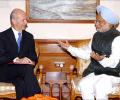
WTO Director General Pascal Lamy met Prime Minister Manmohan Singh on Friday and sought concessions from India to revive the stalled Doha Round of negotiations.
"We have always said if the WTO Director General feels there is a chance for (another) opening, then we will be prepared to come again to Geneva," Commerce Secretary G K Pillai told reporters on the sidelines of a Ficci-CUTS conference in New Delhi. A marathon meeting of 30 trade ministers failed to reach a common ground when they met in Geneva between July 21-29 on an issue of the level of protection for developing countries in case of import surge.
"If the basis of the round (Doha negotiations) has to see a change in its very objectives, it would be tough going for global trade integration," said Commerce and Industry Minister Kamal Nath. "Revival of the weakest" and "not survival of the fittest" should form the core of the negotiations, he added. Otherwise, a renewed attempt being made by WTO Director General Pascal Lamy to bring the talks back on rail could meet the fate of the recently abandoned talks in Geneva.
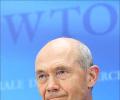
Not the one to give up hope, WTO Director General Pascal Lamy is visiting India next week to find ways for picking up the threads from last month's failed trade talks in Geneva.
India on Tuesday said it was making a last ditch effort to revive the collapsed WTO talks but made it clear that it would not allow industrialised nations to trample developing countries' interest, especially in the sensitive farm sector.
 © 2026 Rediff.com - Advertise with us - Disclaimer - Privacy Policy - Sitemap - Feedback - About us - Terms of use - Grievances