
'We realised that partnering with a strong local player like the JSW Group would create far greater value than going it alone.'

'It can position itself as a China Plus One solution, fulfilling the demands of developed economies.'

'The retail business was somewhat slow initially, but it has picked up over the past seven to eight days. Following Makar Sankranti, there is a renewed sense of positivity.'

'Expect India to keep doing well irrespective of geopolitics.'

'Israel would make Iran and its proxies pay. They, along with Qatar, fund terror all over the world.'
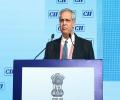
'The quality of a leader should be such that even if the leader is not there, the institution carries on.'

When there are two wills produced before the court, which one will be executed?

'Election funding needs a little more transparency.'

'Banks make money because they take the right credit calls. So they need to focus on risk mitigation rather than risk avoidance.'

Corporate India is starting to step up its capital expenditure plans amid government incentives and signs of rising demand, company executives and analysts have indicated. This coincides with the Reserve Bank of India (RBI) recently citing a double-digit growth in private capital expenditure. Healthy balance sheets of banks and corporates, along with increasing capacity utilisation and improving business sentiment, are contributing to a favourable environment for sustained growth in private sector investments, the RBI said in its policy last week.
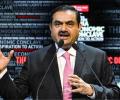
The Adani group will be generating almost 90 percent of its Ebitda (earnings before interest, tax, depreciation, and amortisation) from infrastructure business by 2025 as compared to 83 per cent generated from these businesses currently, top company officials told bankers recently. Of the infrastructure business, 49 per cent of the profits are currently contributed by energy and utility, another 25 per cent by transport and rest by cement and logistics businesses. This will go up substantially as several new projects like Navi Mumbai airport and other projects get commissioned and contribute to the overall Ebitda pie, bankers were told.

If the war in the Israel-Gaza region escalates into a larger West Asian conflict, it could pose problems.
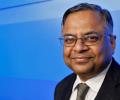
Tata Sons chairman Natarajan Chandrasekaran was paid Rs. 113 crore as remuneration for 2022-23 (FY23), including Rs. 100 crore as commission on profit. Chandrasekaran, 60, often referred to as Chandra, received a remuneration of Rs. 109 crore in 2021-22 (FY22). With this, Chandra has emerged as one of the highest-paid chief executive officers (CEO) in Corporate India for FY23.

'Interim Budget has ignited the entrepreneurial spirit.'

Lenders have postponed the second auction to sell bankrupt Reliance Capital's assets by a week to April 11, even as the Torrent group, the highest bidder in the first round, pursues litigation in the Supreme Court. Lenders are expecting the Hinduja group and Torrent to participate in the second auction and maximise the value of the assets. American financial services major, Oakteee may also join the race, said a source.

Many CEOs said they plan to give special leave to women employees so as to encourage their participation in the workforce.

Indian companies are planning to increase investments in the new year to expand capacity, acquire companies, and go on a hiring spree, a survey of top executives showed. They, however, cited rising costs, weak consumer demand, and increasing interest rates as major concerns for 2023 which may impact their plans.
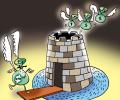
As the Indian currency hovers around its lowest versus the US greenback, several smaller and mid-sized companies are expected to face rough weather as almost 44 per cent of the foreign loans taken by Indian companies remained unhedged. According to the data sourced from the Reserve Bank of India, Indian companies raised around $38.2 billion in the financial year ended in March. Of this, only 56 per cent of the loans are hedged while the rest of the foreign loans remain unhedged, thus risking the companies to forex volatility.

CEOs expect to finish the ongoing March quarter with positive growth as the corporates get back to work in full strength.

Interview with chairman, Vedanta.

Debt-ridden Adani Group struggles to overcome its biggest challenges.


One of Mumbai's biggest real estate redevelopment projects of Bombay Development Directorate's (BDD's) chawls (large buildings divided into many separate tenements, offering cheap, basic accommodation) has taken off in Central Mumbai, opening up a Rs 20,000-crore opportunity for real estate companies. It is expected to drive down real estate prices in Central Mumbai by up to 25 per cent, forecast real estate experts. Spread over 92 acres in Central Mumbai's prime localities of Worli, Lower Parel, and Dadar and consisting 195 four-storey houses, the BDD chawls were constructed in the 1920s.

83% of the CEOS plan to hire more in the new year.

Some buyers are insisting on a clause in the agreement that the whole deal hinges on physical verification at a later date with some part of payment kept in escrow.
With this, we are getting a global footprint in 29 countries and take our employee strength to 100,000.
The group began to outperform the broader market only with the onset of the pandemic in March 2020 while earlier it was largely keeping pace with the Sensex. The group's market cap is up 164.4 per cent since the end of March 2020 against a 105 per cent rally in the Sensex.
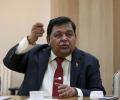
Larsen & Toubro (L&T), India's largest construction and engineering player, has lost as many as 14 large orders in the country because companies that don't possess adequate technical expertise and experience, of late, have won the projects by bidding lower, claimed A M Naik, non-executive chairman of L&T. But the company has made up for the losses by winning projects overseas, where it has acquired a sizeable market share amid tough competition from large global players, he said.

UV Asset Reconstruction Company Ltd has made the highest bid of Rs 16,000 crore to buy Anil Ambani group's Reliance Communications and Reliance Telecom, which are in the National Company Law Tribunal (NCLT). Last year it was the highest bidder for taking over Aircel's assets for an upfront payment of Rs 150 crore. Surajeet Das Gupta and Dev Chatterjee dig deeper to find out more about this little known company.

'We are working in association with the state government and other transmission companies to make sure that the city never experiences blackouts'

Mumbai, India's financial capital, is set for a mega transformation with a massive patch of land opening up for redevelopment; a new metro railway ready to start services by the year-end; and the country's oldest railway station, the Chhatrapati Shivaji Terminus, going for modernisation with private sector participation. Work on Mumbai's second airport will start from next month, while construction of the sea link connecting central Mumbai to Navi Mumbai has already moved into a fast lane despite Covid-induced lockdowns. Also, a coastal road project, connecting Nariman Point to Worli, is under way and will help decongest the city to quite an extent. Of all these mega infrastructure projects, the one that has a huge potential to change the city's skyline is the Eastern Waterfront project - to be built on the Mumbai Port Trust (MbPT) land.

The recent report in the New York Times that China had brought India's financial capital - Mumbai - to a halt by hacking the electricity supply grid has not come as a surprise to the CTOs (chief technology officers) and cyber security experts. Indian companies, including critical infrastructure providers such as power grids, ports and radar systems, lack the IT infrastructure to prevent hacking from hostile state actors like China and North Korea, warn security experts. Recently, the United States government warned of yet another breach of critical systems tied to Microsoft Exchange email systems that the company has blamed on China. The breach has impacted thousands of organisations in the US and its impact on India is still unknown.

'The hackers' objectives were centred around smearing India's reputation, causing productivity loss, creating operational damage and seeking financial gains.'

With the Jaypee acquisition, the Suraksha group, which made lenders an offer of Rs 7,736 crore, will be able to expand its footprint in north India after making inroads in Mumbai's real estate market over the past year. Sudhir Valia, the promoter, was a co-founder and executive director of India's biggest pharmaceutical firm, Sun Pharmaceuticals, and is a close relative of Dilip Shanghvi.

Some sectors like aviation, hospitality, travel and tourism, and automobile have witnessed zero cash flow since the lockdown began.

'The competition between the two is definitely going to be of great interest to the Indian market.'

Independent directors were supposed to safeguard the interest of all stakeholders.

When the third round of bids was opened, Oaktree's offer was the highest, but with several riders. While Piramal offered higher upfront cash and offered to merge its financial business with DHFL, Adani was ranked third in the race, reports Dev Chatterjee.

Chief executives in the real estate, consumer products, automobiles, construction, and textile sectors said they were all expecting workers to re-join in the next 45-60 days, which would help them ramp-up production from July.

Dina Wadia, Jinnah's only daughter and Nusli Wadia's late mother, moved the high court in 2007 to regain control of the estate.
 © 2026 Rediff.com - Advertise with us - Disclaimer - Privacy Policy - Sitemap - Feedback - About us - Terms of use - Grievances