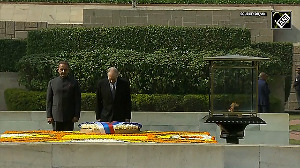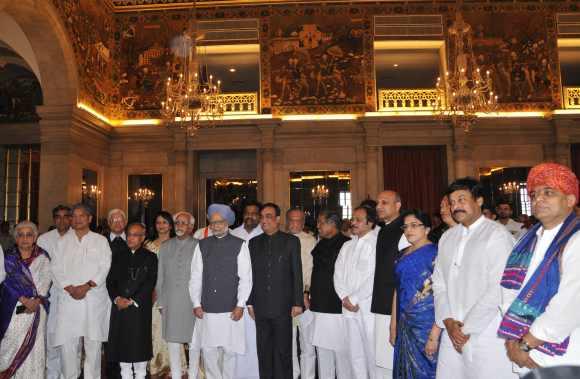
Political needs of the Congress largely drove the reshuffle of ministers
Eventually, the reshuffle of the Union Council of Ministers was a far larger exercise than anyone expected. Seven ministers resigned in advance, allowing the leadership of the United Progressive Alliance enough space to substantially rework its team in what the prime minister said would likely be the last reshuffle of portfolios before the next general elections.
Those hoping for a single, coherent narrative from such a large exercise are likely to be disappointed; as always, the final moves will have been a product of some peculiar combination of political necessity, regional balancing, reward for loyalty and punishment for non-performance.
...

Even so, some broad themes are immediately evident. Politically, the Congress has identified Andhra Pradesh, its bulwark in the last two general elections, as central to its hopes of re-election.
Five new ministers were inducted from the southern state, with one big promotion to Cabinet rank. Eleven MPs from Andhra Pradesh are now in the Council of Ministers. It is an open question whether this creation of "leaders" by central fiat will succeed in reviving the Congress' waning fortunes in what once used to be its bastion.
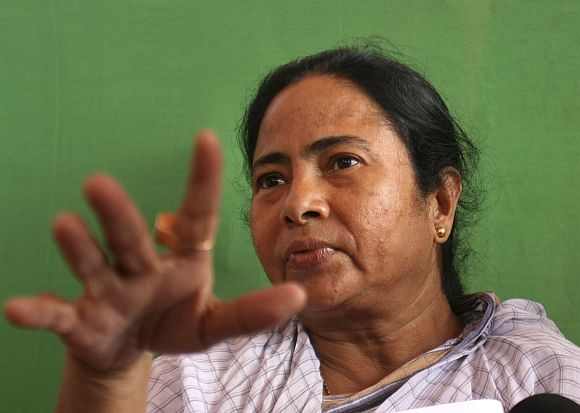
In addition, the break with the Trinamool Congress has been reasserted and made permanent, with the inclusion in the ministry of Trinamool leader Mamata Banerjee's harshest critics in the Congress.
The Congress clearly hopes to prevent whatever anti-Trinamool sentiment builds up in West Bengal from transferring itself wholesale to the Left.
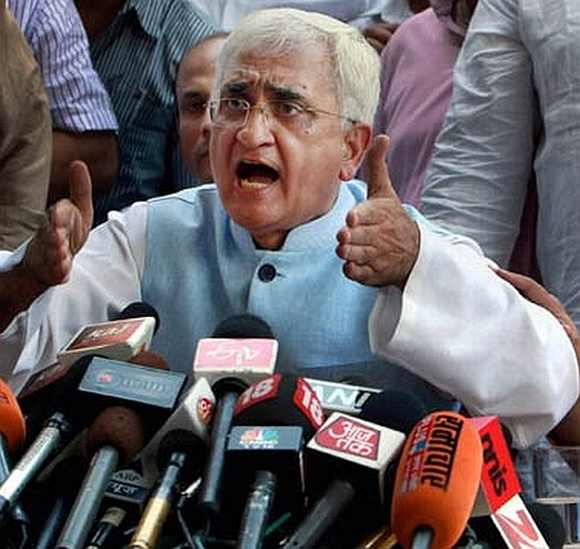
Finally, the elevation of Salman Khurshid to the foreign ministry strongly suggests that the Congress will not avoid confrontation in its response to allegations of corruption.
Note, however, that taking Khurshid out of the law ministry means that he will not be put in the situation of considering whether to permit an investigation into his own dealings, as some were worrying.
These political realities apart, the two biggest consequences of the reshuffle have been the raising of the profile of several younger Congress leaders and the replacement, in effect, of the second rung of India's economic team.
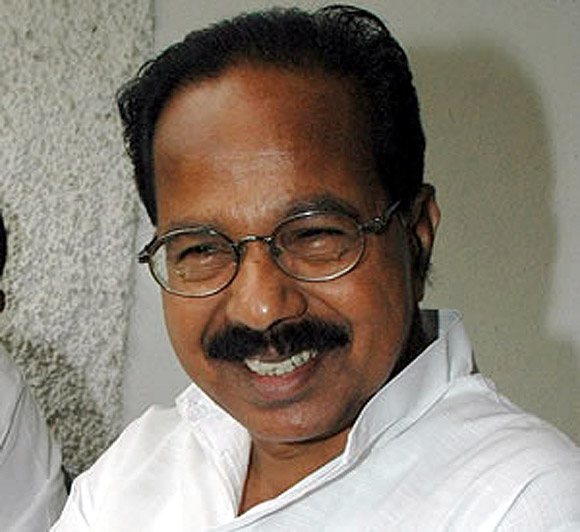
Several economic ministries have new leadership, including Ajay Maken, who takes over at the housing ministry, and Veerappa Moily at the petroleum ministry.
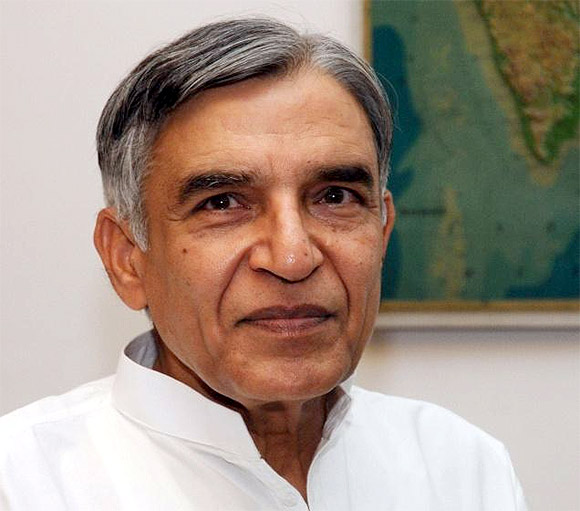
The broad trend of the reshuffle could have been described as reformist were it not for the fact that the troubled railways -- back now with a major national party after a decade and a half with populist politicians from regional parties -- has been assigned to an essentially political appointee with an undistinguished policy record, Pawan Kumar Bansal.
Bansal must accept as soon as possible that financial responsibility is crucial to ensuring the Railways' future, and should not give in to populism of the sort that is pushing a once-great institution into the red.
As to whether the reshuffle can be said to have operated on the principle of accountability, different pieces of evidence pull in different directions.
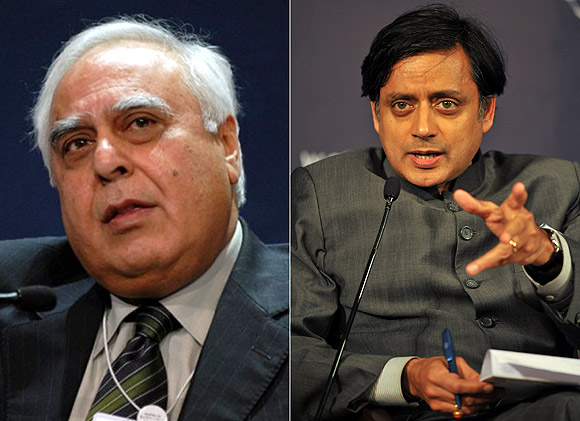
On the one hand, Kapil Sibal has been deservedly divested of the human resources development ministry, which has gone to two Congressmen with a reputation for efficiency, M M Pallam Raju and Shashi Tharoor.
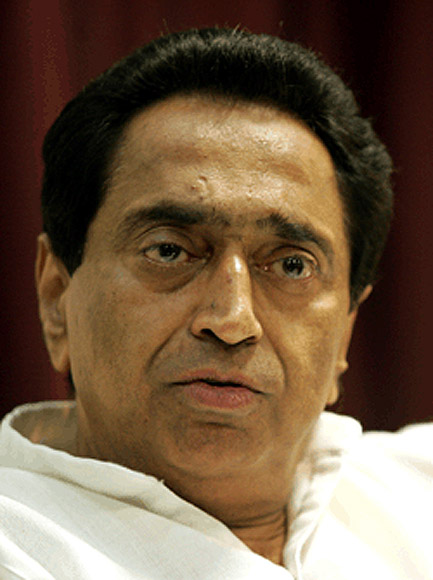
Maken's elevation follows a sensible tenure in the sports ministry, where his talents were increasingly wasted. But giving Urban Development Minister Kamal Nath additional charge of the crucial parliamentary affairs portfolio, at a time when crucial legislation is held up in Parliament, runs counter to the general principle of rationalisation.
And moving Jaipal Reddy away from petroleum and natural gas, where he ended the ministry's reputation for being riddled by corporate lobbying (though he was seen to be moving slowly on petroleum sector reforms), sends out a very problematic signal -- especially since science and technology, his new portfolio, cannot be called a promotion.
All in all, the reshuffle indicates that the Congress recognises the dire political situation it faces in several major states.
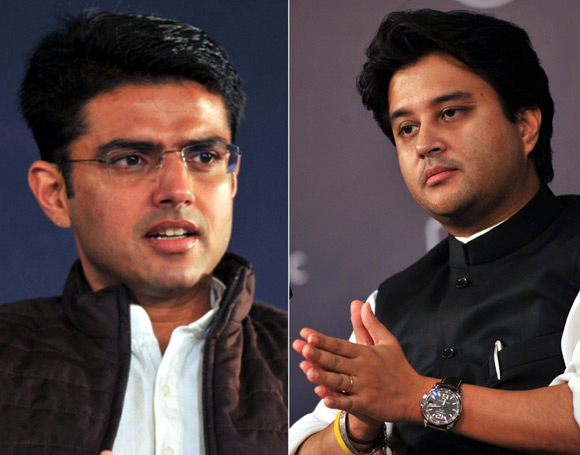
The optimist will see some reformists in key ministries and younger leaders given more prominence, with Jyotiraditya Scindia and Sachin Pilot getting independent charge as ministers of state for power and corporate affairs, respectively. Pessimists will note that the issue of corruption has been largely side stepped.
The UPA-II will emerge only marginally stronger, especially as the Congress' powerful general secretary, Rahul Gandhi, continues to avoid joining the government, as the prime minister has said he would like him to.
...

 © 2025 Rediff.com - Investor Information - Advertise with us - Disclaimer - Privacy Policy - Feedback - About us - Terms of use - Grievances