
EVMs can't be used in presidential, vice-presidential, or Rajya Sabha polls because they only count simple votes, not the preference-based system needed for these elections.
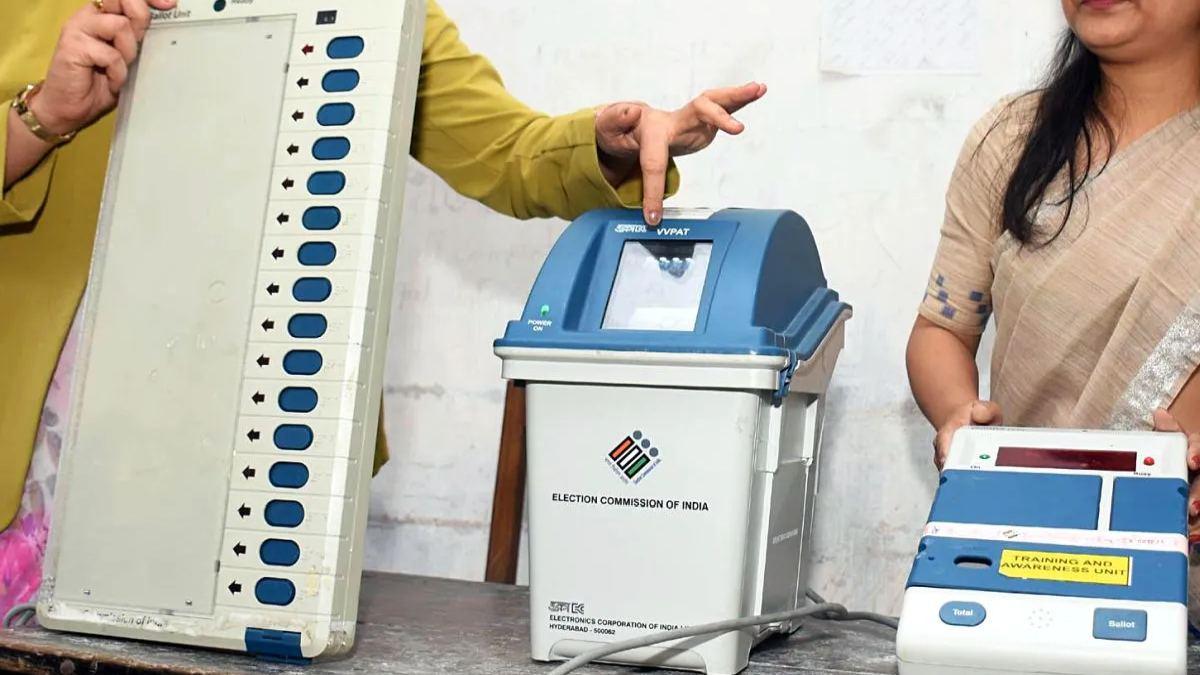
Electronic voting machines (EVMs), which have so far been used in five Lok Sabha and over 130 assembly polls, cannot be used in presidential, vice presidential, Rajya Sabha and state legislative council elections.
Why? Because the machines, in use since 2004, are designed to work as vote aggregators in direct elections such as the Lok Sabha and state assemblies.
Voters press the button against the name of the candidate of their choice and the one who bags the maximum number of votes is declared elected. But the presidential and vice presidential elections are held in accordance with the system of proportional representation by means of single transferable vote.
Under the system of proportional representation by means of single transferable vote, every elector can mark as many preferences as there are candidates contesting the election.
These preferences for the candidates are to be marked by the elector, by placing the figures 1, 2, 3, 4, 5 and so on, against the names of the candidates in order of preference in the space provided in column 2 of the ballot paper.
National Democratic Alliance candidate C P Radhakrishnan and Opposition nominee Justice P Sudershan Reddy are in the fray for the September 9 vice presidential election, necessitated by Jagdeep Dhankhar's surprise resignation on July 21.
Like the Rajya Sabha elections, voting and counting are held on the same day in the election to the office of the vice president.
The EVMs, officials explained, are not designed to register this system of voting.
The EVM is an aggregator of votes and under the system of proportional representation, the machine will have to compute votes based on preference and it requires an altogether different technology. In other words, a different type of EVM would be needed.
According to the Election Commission website, the EVM was first conceived in 1977 in the poll body and the Electronics Corporation of India Ltd, Hyderabad, was tasked with designing and developing it.
In 1979, a prototype was developed, which was demonstrated by the Election Commission before representatives of political parties on August 6, 1980.
Bharat Electronics Ltd, Bengaluru, another public-sector undertaking, was co-opted along with ECIL to manufacture EVMs once a broad consensus was reached on their introduction.
The machines were first used in the Kerala assembly elections in May 1982. However, the absence of a specific law prescribing its use led to the Supreme Court striking down that election.
Subsequently, in 1989, Parliament amended the Representation of the People Act, 1951, to create a provision for the use of EVMs in elections.
A general consensus on the introduction of EVMs could be reached only in 1998 and they were used in 25 assembly constituencies spread across Madhya Pradesh, Rajasthan and Delhi.
In the assembly elections held in May 2001 in Tamil Nadu, Kerala, Puducherry and West Bengal, the EVMs were used in all the assembly constituencies. Since then, the Election Commission has used the EVMs for every state election.
Feature Presentation: Rajesh Alva/Rediff








 © 2025