
The BJP-led government's decision to grant Kunbi status to individuals from the Maratha community has opened a Pandora's box.
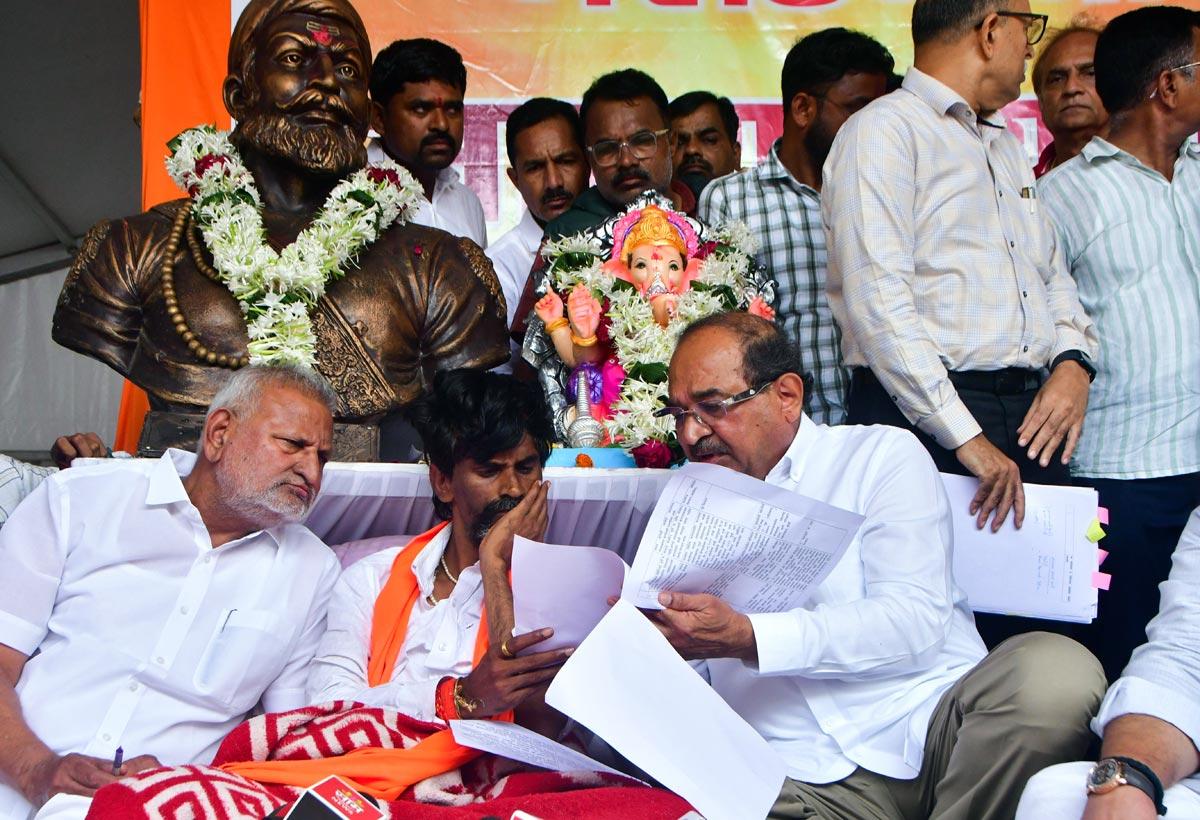
On July 29, Maratha quota activist Manoj Jarange-Patil urged members of his community to wind up their farming activities and prepare to march to Mumbai.
Addressing a gathering at Antarwali Sarathi village in Jalna district, a part of the Marathwada region, he alleged the government had reneged on its promises to the Marathas, and threatened to launch a massive protest.
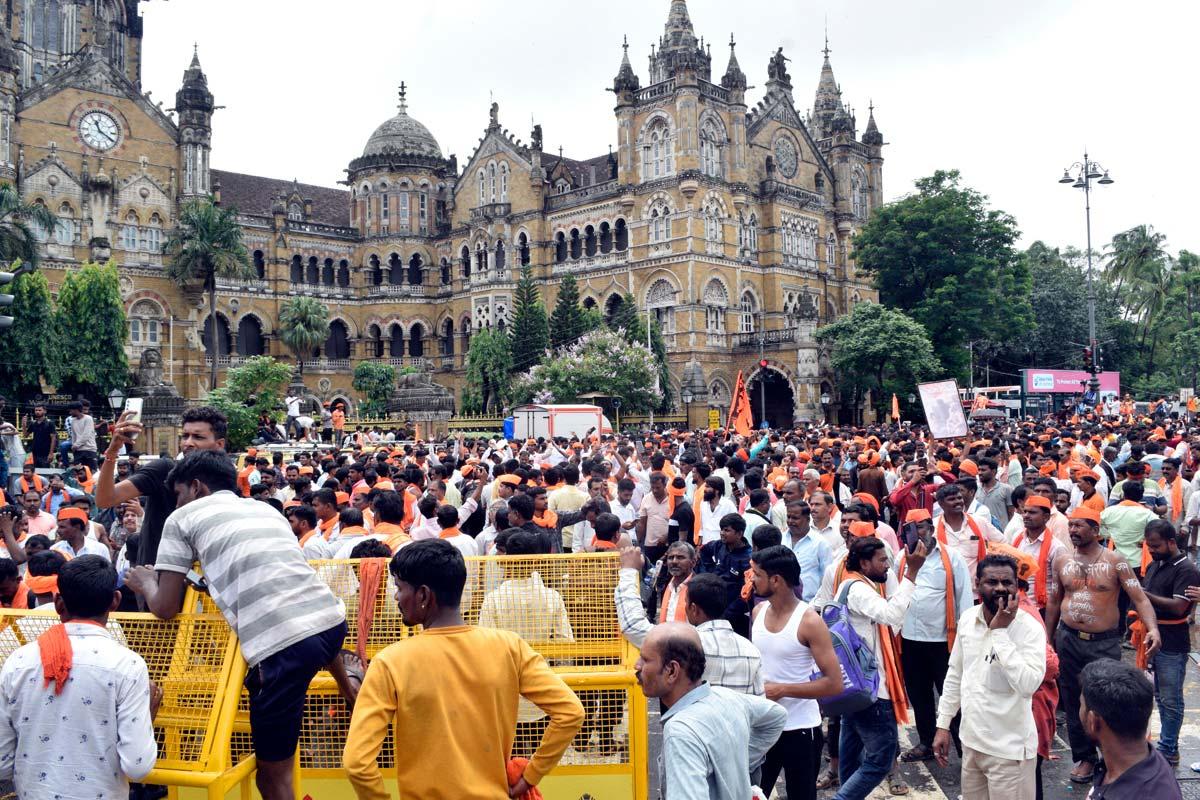
Exactly a month later, Jarange executed his threat with precision. On August 29, the lean and feisty activist began an indefinite strike at the iconic Azad Maidan in south Mumbai, the business hub of India's financial capital.
Addressing thousands of his supporters, the 43-year-old announced: 'I will not go back until our demands are met. Even if I am shot dead, I will not retreat.'
Jarange had been demanding that the Maratha community be recognised as Kunbis, an agrarian caste included in the Other Backward Classes (OBC) category -- making them eligible for reservation in government jobs and educational institutions.
He particularly insisted on the implementation of historical records of the Bombay, Satara, and Nizam-era Hyderabad gazettes, claiming they provide evidence on the classification of Marathas as Kunbis.
Marathwada, an arid land-locked region, was under the rule of the erstwhile nizam of Hyderabad, till its liberation in 1948.
Three days into the protest, as scores of Jarange's followers from across Maharashtra kept pouring into Mumbai and the activist threatened that he would stop drinking water, the Devendra Fadnavis-led state government blinked.
It issued a resolution on the Hyderabad Gazette and announced the formation of village-level committees in Marathwada to issue Kunbi caste certificates to individuals from the Maratha community, provided they could furnish historical evidence of their Kunbi lineage.
Jarange ended his five-day stir on September 2. The very next day, Maharashtra Minister and prominent OBC leader Chhagan Bhujbal skipped a cabinet meeting.
Although the government has assured that existing reservation for OBCs would remain untouched, several organisations representing backward classes have expressed anxiety over the possibility of their share in the quota pie shrinking.
The move to issue a government resolution (GR) seems to have opened a Pandora's box.
"The Hyderabad Gazette has become a new Google-like search engine for Kunbis among Marathas," an OBC activist said, requesting anonymity, adding that the non-agrarian and landless castes felt cornered in the quota space, crowded by land-owning communities.
For example, after the state government agreed to Jarange's demands, the Banjara community has started demanding reservation under the scheduled tribes category, citing records in the the Hyderabad Gazette.
Maratha quota activists, meanwhile, remain steadfast in their stance, citing "historical evidence".
"Marathas and Kunbis are not separate. The Shinde committee has already submitted 5.8 million Kunbi records to the government. These are all government records and historical evidence that can't be disputed. Now, it is the government's responsibility to ensure the implementation of the GR," Advocate Shreerang Lale said.
He has been studying the Marathas' reservation demand, which can be traced back to the early 1980s.
In 2023, the government under then chief minister Eknath Shinde had formed a panel under Justice Sandeep Shinde to scrutinise Kunbi records of the Maratha community.
Behind the Marathas' insistence to be categorised as OBCs, some political observers say, are the terms laid down by the Supreme Court in its landmark verdict in the Indra Sawhney vs Union of India case of 1992.
The court had introduced a ceiling on reservations, ruling that quotas for the scheduled castes, STs and backward classes cannot exceed 50 per cent.
Moves by state governments to breach this ceiling have rarely succeeded.
In 2023, the Bihar government raised the quota slab in the state to 65 per cent -- a decision that was set aside by the Patna high court. The Supreme Court too refused to stay the high court order.
"Agrarian castes like Marathas and Kunbis should be given a separate 16 per cent quota. Even if this breaches the 50 per cent ceiling, the Centre should ensure a Constitutional amendment to secure this. Like it was done in the case of Tamil Nadu, the enacted law should be placed under the Ninth Schedule of the Constitution," Champat Boddewar, research fellow at The Unique Foundation in Pune, said.
Under certain conditions, the Ninth Schedule shields laws inserted into it from judicial scrutiny.
Boddewar added that courts have to be convinced that an additional set of parameters needs to be considered while determining backwardness of some communities, especially after the changes brought about post-liberalisation.
There are millions among land-holding communities, like the Marathas and Jats, who face acute economic distress, he said.
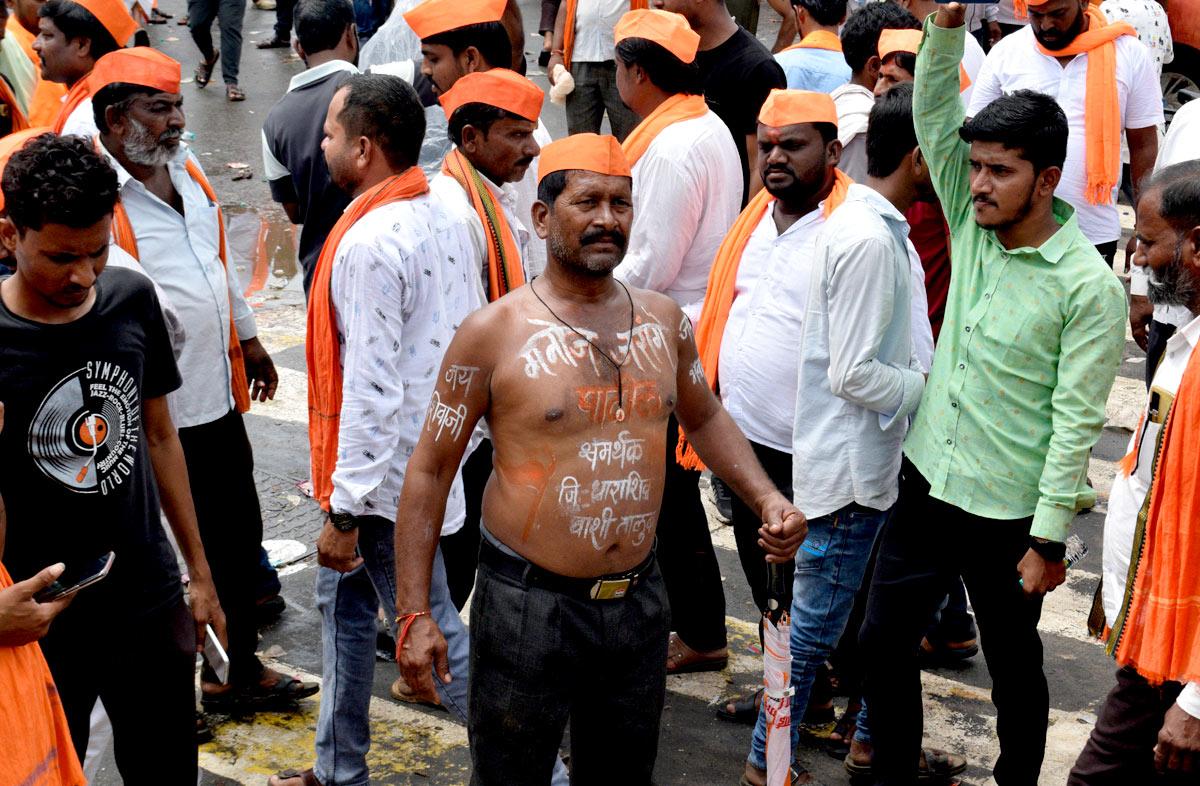
According to Bhausaheb Ajabe, general secretary, Maharashtra Pradesh Congress Committee, caste-based agitations primarily focus on seeking reservation.
However, he suggested that an umbrella identity of farmers in the state must be forged to address underlying structural issues like rural distress.
"BJP is deliberately playing 'divide and rule' politics by creating a rift between OBCs and Marathas that is leading to the collapse of social cohesion in Maharashtra," Ajabe said.
Even as the culturally dominant Maratha community, which makes up almost 28 per cent of Maharashtra's population, has been demanding reservation for decades, attempts towards a solution have failed.
Almost a decade-and-a-half back, during his stint as the Union minister for heavy industries and public enterprises, Maratha stalwart and former CM Vilasrao Deshmukh had made a proposition that raised eyebrows.
'If economic criterion is considered for granting benefits, then people won't search for their caste. Today everyone thinks how their caste identity may bring in some benefits... A consensus at the national level has to be evolved on this so that there are no conflicts in the future,' Deshmukh had said at a public gathering.
Sharing the stage with him and patiently listening were former CM and Shiv Sena leader Manohar Joshi, a Brahmin; the BJP's Gopinath Munde, one of Maharashtra's tallest OBC leaders; and the Nationalist Congress Party's R R Patil, a Maratha.
No leader of this quartet could live long enough to witness Jarange's protests. The 'consensus' that Deshmukh had called for never emerged, but his warning seems to have come true.
Feature Presentation: Aslam Hunani/Rediff









 © 2025