
What makes the Gen Z Mada movement in Madagascar significant is not only their use of digital tools but their ability to unify a disillusioned population around a shared vision of justice, transparency, and reform.
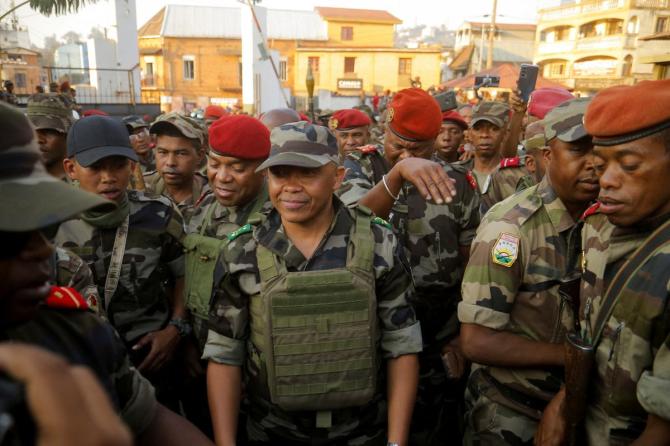
The Gen Z Mada movement began as an online call to action against failing institutions, rising poverty and political repression in Madagascar, the world's fourth largest island nation located in the Indian Ocean.
Sparked by the arrest of Opposition leaders and daily power outages, the protests gained momentum on social media platforms like TikTok, Discord and Telegram.
Young people organised protests, documented abuses, and demanded accountability from a government many viewed as illegitimate following the 2023 elections -- where President Andry Rajoelina was re-elected amid a historically low voter turnout of just 46%.
What makes Gen Z Mada significant is not only their use of digital tools but their ability to unify a disillusioned population around a shared vision of justice, transparency, and reform.
Their determination echoes other global youth movements that have challenged entrenched systems -- from the Arab Spring in 2011 to the overthrow of the Oli government in Nepal last month.
Here's a quick recount of the political crisis in Madagascar and how Generation Z became a powerful voice in a country long silenced by political instability.
1. Where is Madagascar and what is its significance?
Madagascar is an island nation in the Indian Ocean located off the southeast coast of Africa.
It is the fourth-largest island in the world and is rich in natural gas, rare earth minerals, chromite. It is the world's largest producer of vanilla and sapphires.
2. When did Madagascar gain independence?
Madagascar gained independence from France in 1960.
3. What happened in Madagascar's 2008-2009 political crisis?
In 2008-2009, Andry Rajoelina, then the mayor of the capital city Antananarivo, led protests against then president Marc Ravalomanana. Backed by the military, Rajoelina took power in a coup and led a transitional government until 2013.
4. What happened after Rajoelina's transitional rule ended?
In 2013, Rajoelina stepped down after being defeated. He returned to politics and won the presidential election in 2018.
5. Was Rajoelina re-elected?
Andry Rajoelina was re-elected in December 2023, winning 59 percent of the vote.
6. Why was the 2023 election controversial?
The voter turnout was just 46 percent, the lowest in Madagascar's history. Ten presidential candidates called for a boycott, leading to questions about the election's legitimacy and fairness.
7. Who were Rajoelina's rivals in the 2023 election?
His challengers were former president Marc Ravalomanana and Siteny Randrianasoloniaiko.
8. What triggered protests after the 2023 election?
Several factors contributed:
- Public anger over perceived election manipulation
- Arrest of two Opposition leaders seen as an attempt to silence dissent
- Daily hours-long power outages caused by failures in the State-run utility Jirama
- Widespread poverty and lack of essential services
- The rise of a youth-led protest movement called Gen Z Mada
9. Who are Gen Z Mada?
Gen Z Mada is a youth-led protest movement made up of Generation Z (born between 1997 and 2012). They used social media platforms like TikTok, Instagram, Discord and Telegram to organise protests and spread awareness.
10. When did the Gen Z protests begin?
The movement began gaining traction around September 25, 2024, particularly in the capital city, Antananarivo.
11. What role did the military play during the protests?
An elite army unit known as Campsat refused to act against the protesters and instead supported them. This same unit had previously backed Rajoelina in ousting Ravalomanana in 2009.
12. What was the government's response to the protests?
The government arrested Opposition leaders and downplayed reports of violence. Rajoelina later said he was forced to flee for his safety, though he did not formally resign.
13. Were there casualties during the protests?
According to the United Nations, at least 22 people were killed and more than 100 were injured. The government denied these figures, calling them rumours and misinformation.
14. What are the deeper issues behind the unrest?
Madagascar faces several long-term challenges:
- 75% of the population lives below the poverty line
- Only 46% have access to clean drinking water
- Only 15% have access to adequate sanitation
- Urban poverty is rising due to a weak economy, poor infrastructure, and limited investment in health and education.
15. Is youth-led activism becoming a global force?
Youth movements have historically played a crucial role in global change -- from the 1968 student protests in France to the Arab Spring. Gen Z activists, including in Madagascar, are continuing this tradition, often using digital platforms to organise and challenge authority.





 © 2025