
Delhi Chief Minister Rekha Gupta on Thursday said the city is set to witness its first-ever artificial rain through cloud seeding as preparations for the ambitious pollution-control initiative have been completed.
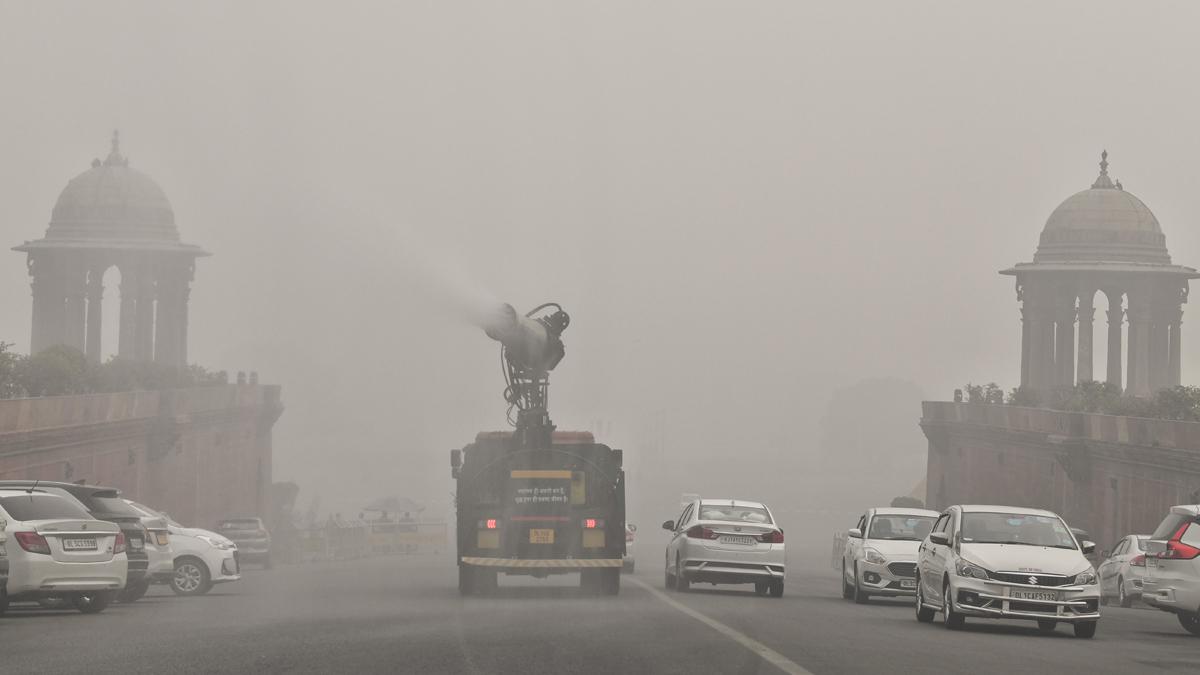
A successful trial of the project was conducted earlier in the day in the Burari area, Gupta said in a post on X.
"For the first time in Delhi, preparations have been completed to induce artificial rain through cloud seeding, marking a significant technological milestone in the capital's fight against air pollution. Experts on Thursday successfully conducted a trial test in the Burari area.
"According to the weather department, cloudy conditions are expected on October 28, 29, and 30. If the weather remains favourable, Delhi is likely to witness its first artificial rain on October 29," her post read.
"This initiative is not only technologically historic but also establishes a scientific approach to combating pollution in Delhi. The government aims to clean the capital's air and balance its environment through this innovation," Gupta said.
Officials said that during the trial in Burari, small amounts of silver iodide and sodium chloride, used to induce artificial rain, were released from an aircraft, but there was limited moisture in the air -- less than 20 per cent.
Cloud seeding typically requires a moisture level of around 50 per cent, which meant no rainfall occurred in the area.
In its report on the test run, IIT-Kanpur said, "This flight served as a proving mission to assess the capabilities for cloud seeding, the readiness and endurance of the aircraft, the functionality of the seeding equipment and flares, and the coordination among all involved agencies."
"There is no evidence of any precipitation, as the cloud cover was minimal and the moisture content was well below 15 per cent," the report added, noting that specially designed flares were used to release both silver iodide and sodium chloride.
Delhi Environment Minister Manjinder Singh Sirsa thanked Gupta and Prime Minister Narendra Modi for their support in ensuring timely approvals for the project.
"Today, a trial seeding flight was conducted from IIT Kanpur to the Delhi area via Meerut, Khekra, Burari, Sadakpur, Bhojpur, Aligarh, and back to IIT Kanpur. Cloud seeding flares were fired between Khekra and Burari and over the Badli area using pyrotechnics," Sirsa said in a post on X.
He added that the flight served as a proving mission to assess the cloud-seeding system's capabilities, aircraft endurance and coordination among all participating agencies.
The cloud-seeding project, jointly developed by IIT-Kanpur and the Delhi government, aims to explore artificial rainfall as a method to reduce particulate-pollution levels in the city during the post-Diwali smog season.
Delhi's much-awaited artificial rain experiment was supposed to be conducted on July 4, but was postponed.
Last month, the Delhi government signed a memorandum of understanding (MoU) with IIT-Kanpur for five cloud-seeding trials, which are expected to be conducted in northwest Delhi.
The project, approved by 23 departments, including the Directorate General of Civil Aviation (DGCA), aims to explore whether artificial rain can be a viable solution to tackle rising pollution levels during the winter.
Funds have already been transferred to the IIT-Kanpur, which will deploy its own aircraft for the operation. According to a DGCA order, the activity will be carried out under visual flight rules, and only after obtaining clearances from state and local authorities.
The cloud-seeding operations are authorised between October 1 and November 30, and will follow strict safety, security and air traffic control guidelines.
Permission has been granted under rule 26(2) of the Aircraft Rules, 1937, allowing the IIT-Kanpur's Department of Aerospace Engineering to conduct the activity using a Cessna 206-H aircraft (VT-IIT).
The project is being conducted in coordination with experts from the Indian Institute of Tropical Meteorology (IITM), Pune, and the India Meteorological Department (IMD).
The Delhi Cabinet approved a proposal on May 7 to conduct five cloud-seeding trials at a total cost of Rs 3.21 crore.
However, the exercise faced repeated delays due to unfavourable weather conditions and the onset of the southwest monsoon, with deadlines pushed back from May-end and early June to August, September, and most recently, the second week of October.







 © 2025