
'Archaeological sites like Keeladi, having remained buried for 2,500 years, have come out and speak now.'
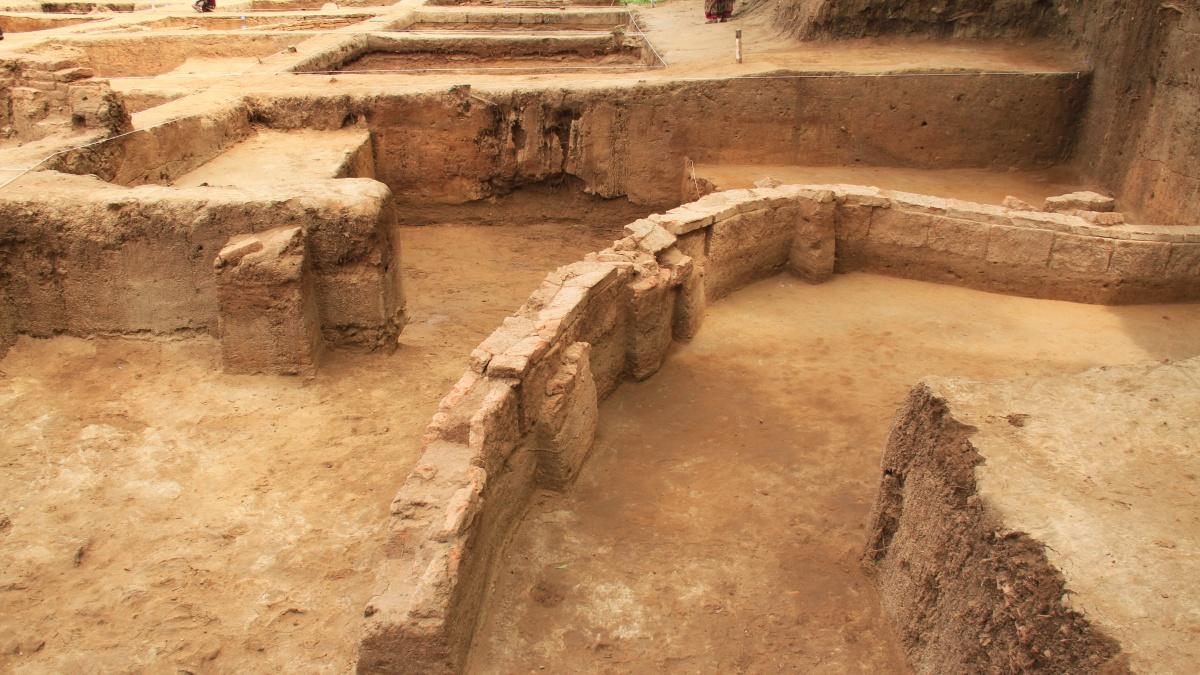
Many people may wonder what is so special about Keeladi (also spelt as Keezhadi) to be discussed so much in India now?
Keeladi is a small town located about 12 km southeast of Madurai in Sivaganga district on the banks of the river Vaigai.
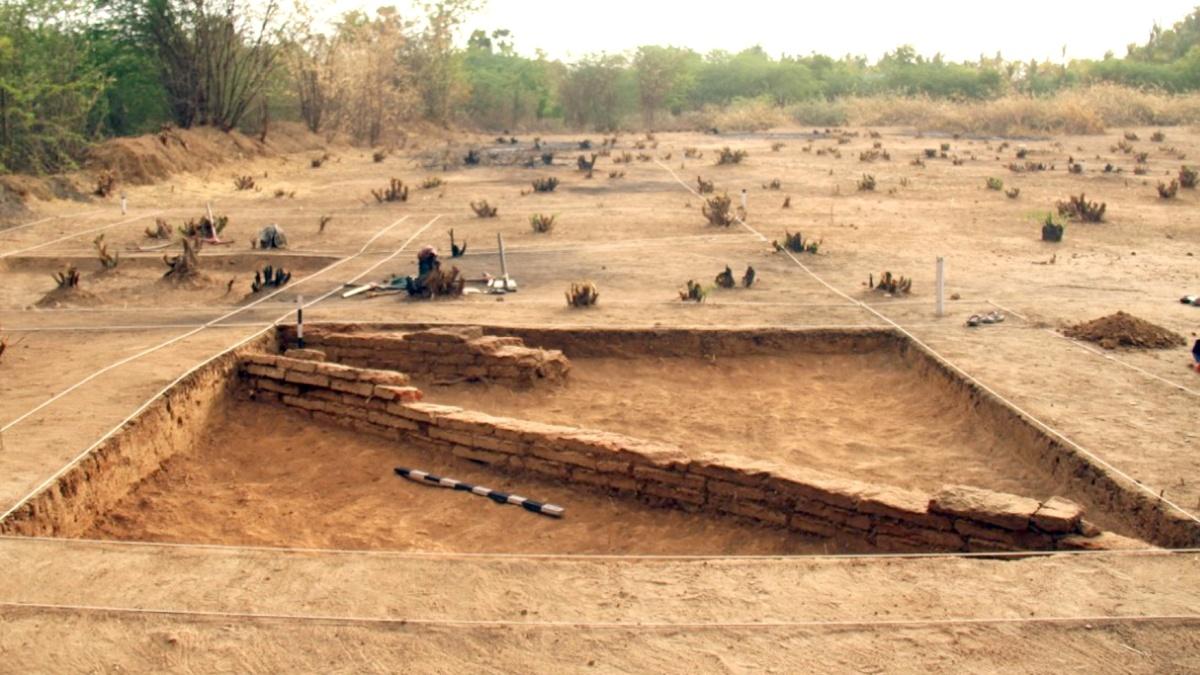
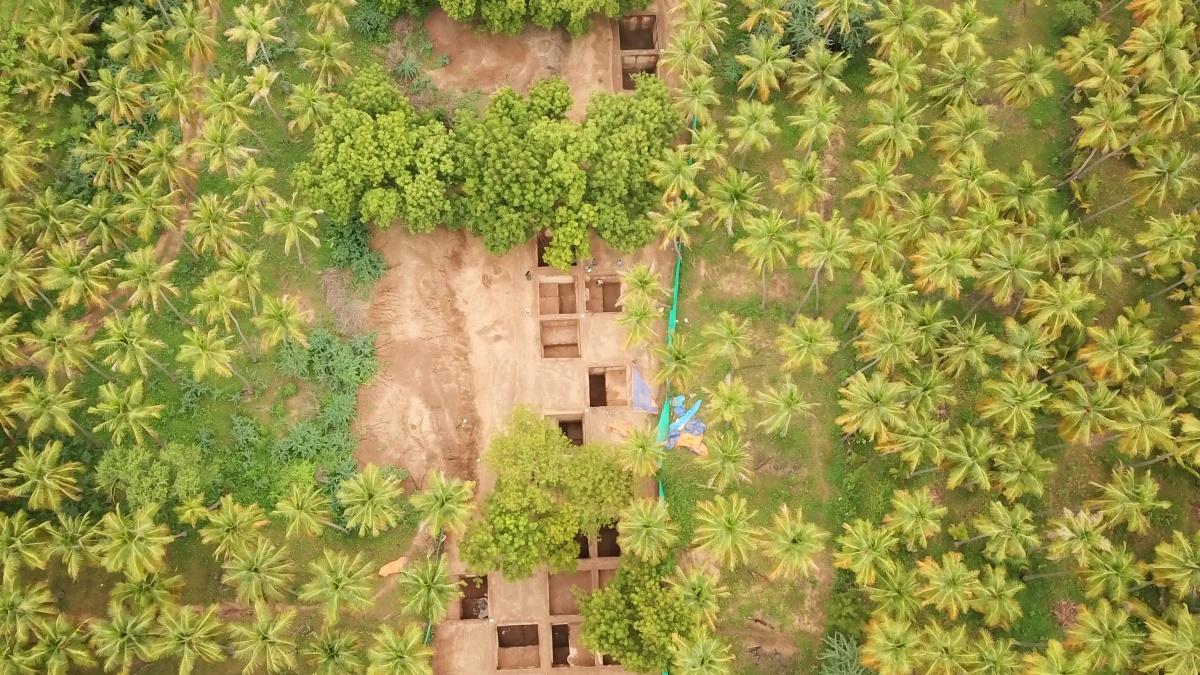
After an archaeological study in 2013 by the Archaeological Survey of India (ASI), 293 sites, including Keeladi, located on both the sides of Vaigai river were identified to be potential for archaeological excavations.
At Keeladi, the area chosen for the study was originally a coconut grove spanning 100 acres.
The first three phases of excavation at Keeladi were conducted by the Archaeological Survey of India, while the seven phases after that were conducted by the Tamil Nadu archaeology department.
Between 2014 and 2016, ASI's then Superintending Archaeologist Amarnath Ramakrishna and his team unearthed over 7,500 ancient artifacts which clearly showed that a sophisticated urban society thrived in the region.
The carbon dating of the artefacts excavated revealed that they were over 2,160 years old.
It is relevant to note that carbon dating of the subsequent phases of excavations at Keeladi have yielded a time line of 6th century BCE (580 BCE).
The excavators found that an urban civilisation existed at Keeladi that has strong similarities with the Indus Valley civilisation.
This was a fascinating discovery which excited not just historians but also the Tamil Nadu government.
But not the central government.
When Amarnath Ramakrishna submitted a 980 page report, the ASI asked him to revise the report. When he refused to do so, he was transferred from the department.
Following a high court order in 2017, the Tamil Nadu government stepped in and conducted subsequent excavations.
The Tamil Nadu government has now taken a strong position in favour of the Keeladi report, demanding its acceptance and release immediately.
What does the new carbon mapping that pushed the Sangam period back significantly, mean?
In what way does the Keeladi excavation connect the Sangam period and the Indus Valley civilisation?
Why does the Centre want to downplay this?
R Balakrishnan, a former civil servant of the Odisha cadre, is the author of Journey of a Civilization: Indus to Vaigai.
"S K Chatterjee gave the first academic voice suggesting a Dravidian affiliation of the Harappan civilisation. Keeladi has come out as a phenomenal discovery that endorses this long-held view. I am not saying the urban life archeologically revealed and scientifically dated was contemporaneous to the Indus Valley Civilisation. One does not know what future archaeology is going to reveal," R Balakrishnan tells Rediff's Shobha Warrier. The first of a two-part interview:
What excited you the most about the Keeladi excavation findings? Was it the news that the timeline given to the artefacts pushes the Sangam period even further back?
I would consider the very geographical location of Keeladi as a significant fact in this context.
Madurai as a city has a long history. It is associated with the Tamil language and again the river Vaigai is identified with the antiquity of Tamil and even called 'Tamil Vaigai'.
Keeladi is located just about 12 km south-east of Madurai along the Vaigai river.
Sangam literature is a multi-layered corpus and the life described in detail are essentially landscape centric, pragmatic, fun loving and materialistic.
When it comes to life in ancient towns, Sangam literature stands out as urban literature par excellence.
The emergence of evidence of urban life at Keeladi has to be evaluated in this context.
We need to follow the paths shown by verifiable data and evidences without any preconceived notions.
Keeladi and Sangam literature jointly make this statement, and that is the main takeaway!
How strong is the connection between Sangam literature and Keeladi?
Sangam literature and Keeladi complement each other.
I have never come across anywhere in India where a two-millennium old classical corpus of literature getting such a solid archaeological endorsement as in Keeladi.
I wish admirers of evidence-based history visit the Keeladi site museum with a copy of Sangam texts! It can even be accessed through smartphones -- even an English translation.
Would you say the Keeladi excavation adds strength to what Sangam literature talked about? Does it say anything more?
Certainly, much more.
It is not about material culture or spiritual aspects alone.
It is about the level of literacy that gives clues to understand the early writing system of India.
We come across pottery on which the names of individuals are engraved in Tamili (Tamil-Brahmi). For example the name Aadhan.
The same name has been attested in Sangam texts in multiple contexts.
Carbon dating of samples from the associated layer pushes back the date of Tamili writing system to the 6th century BCE.
Who would have engraved such names on pottery? Either the pot-maker or the pot-user. Either way it can be taken as reasonable evidence for the spread of literacy at the grassroot level.
Who had access to education is a more relevant question from the social history point of view.
Parallelly, a Sangam poem composed by a Pandya king (again having Madurai as capital) strongly articulates the primacy of education; education not based on birth, and expresses his government's support for a knowledge-based society.
Archaeological sites like Keeladi, having remained buried for 2,500 years, have come out and speak now.
How do you connect the far away Indus Valley Civilisation and the Dravidian Civilisation? Do you think these two are contemporaneous?
Drawing parallels between the carried forward memories embedded in the Sangam corpus with the Indus Civilisation is not a new one.
The Dravidian hypothesis of the Indus Valley Civilisation is as old as the discovery and formal announcement about the Indus Valley Civilisation in 1924 by Sir John Marshall.
It was immediately followed up by the well-known linguist S K Chatterjee who gave the first academic voice suggesting a Dravidian affiliation of the Harappan civilisation.
Keeladi has come out as a phenomenal discovery that endorses this long-held view.
I am not saying the urban life archeologically revealed and scientifically dated was contemporaneous to the Indus Valley Civilisation. One does not know what future archaeology is going to reveal.
There could be a spatial temporal gap between the Harappan Civilisation and the Vaigai- Porunai civilisations. But it does not in any way diminish the importance of Keeladi.
I am talking about the literature in which you can read the legacy markers of the Indus Valley Civilisation and the archaeological site that simultaneously vouch for that legacy while endorsing the credibility of an ancient classical text.
New scientific reports about the antiquity of the use of iron in Tamil Nadu and the metallurgical skills associated with that adds a new dimension of understanding.
What can we understand from the similarities in the script of the Indus Valley Civilisation and Tamil-Brahmi? Was one civilisation influenced by the other?
As of now, the best probable answer to this question has been documented and released in January 2025 by the department of archaeology.
Indus signs and graffiti marks of Tamil Nadu: A morphological study is authored by K Rajan and R Sivanantham.
Let me quote Dr Rajan: 'Dravidian Hypothesis of Indus Valley civilisation is advanced relying on four broad fields namely -- material culture especially black-and red ware culture; literature linked linguistic studies; place name studies and astronomical-linked religious studies'.
The present study of graffiti adds a fifth dimension.
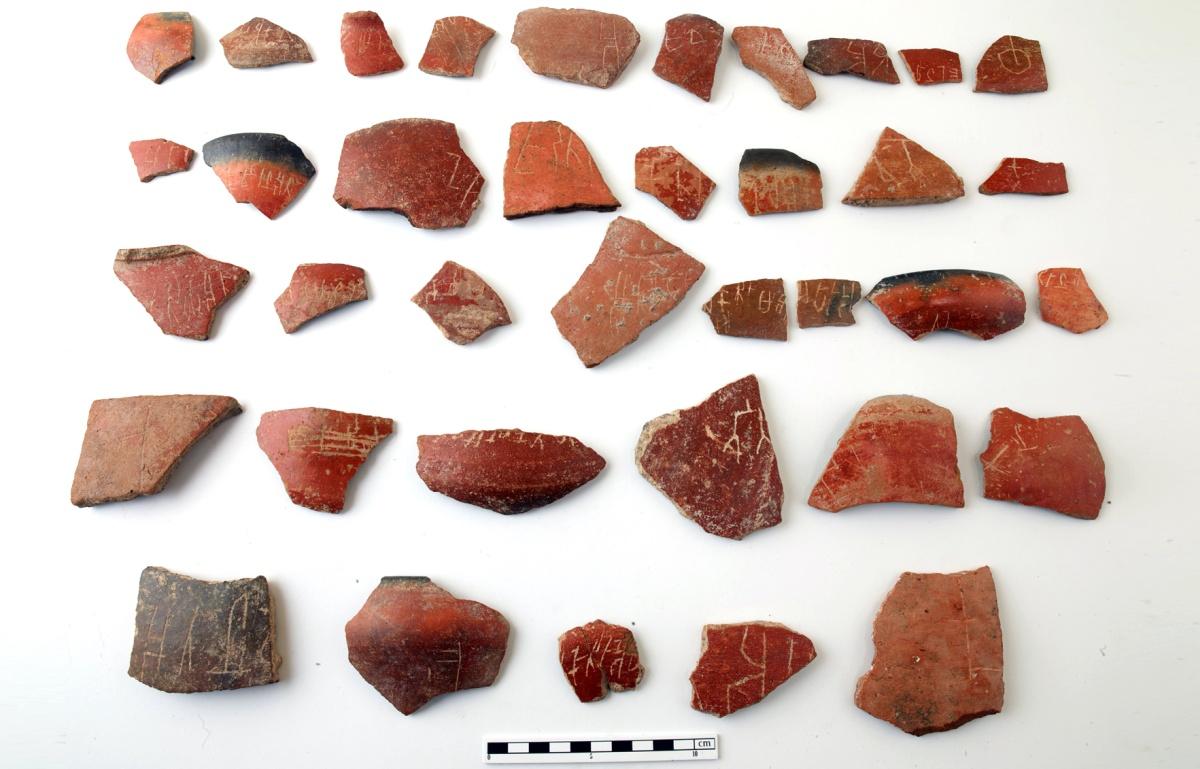
The significance of black and red ware and graffiti marks deserve a concurrent review because 70% of the graffiti marks and Tamili (Brahmi) inscriptions are found engraved on black and red ware.
This is also not a new articulation. Way back in the 1960s, B B Lal wrote about tracing back the graffiti, and how these marks are relevant even in the context of Harappan.
Out of 42 base graffiti signs, 60% have their parallels in the Indus script.
Quite interestingly, more than 90% of the graffiti marks of South India and the graffiti marks of the Indus Valley had parallels. More specifically, several signs encountered in Tamil Nadu had exact parallels found in the Indus scripts.
What else one needs at this point to make a comparison?
Of course, the fact remains that the Indus script still remains undeciphered.
Similarly, no one knows the meaning of these graffiti marks.
But the parallels between the two are very obvious to be ignored.
- Part II of the Interview: 'Dravidian South Was Cradle Of Early Urban Modernity'
Feature Presentation: Rajesh Alva/Rediff








 © 2025