
'Everyone at Guru Dutt Productions would get monthly salaries.
Waheedadidi would get Rs 2,500 per month. And that was the reason why she left.'
Celebrating Guru Dutt's birth centenary on July 9 with this must-read excerpt from the books, Kagaz Ke Phool and Sahib Bibi Aur Ghulam: The Original Screenplay by Dinesh Raheja and J Kothari.
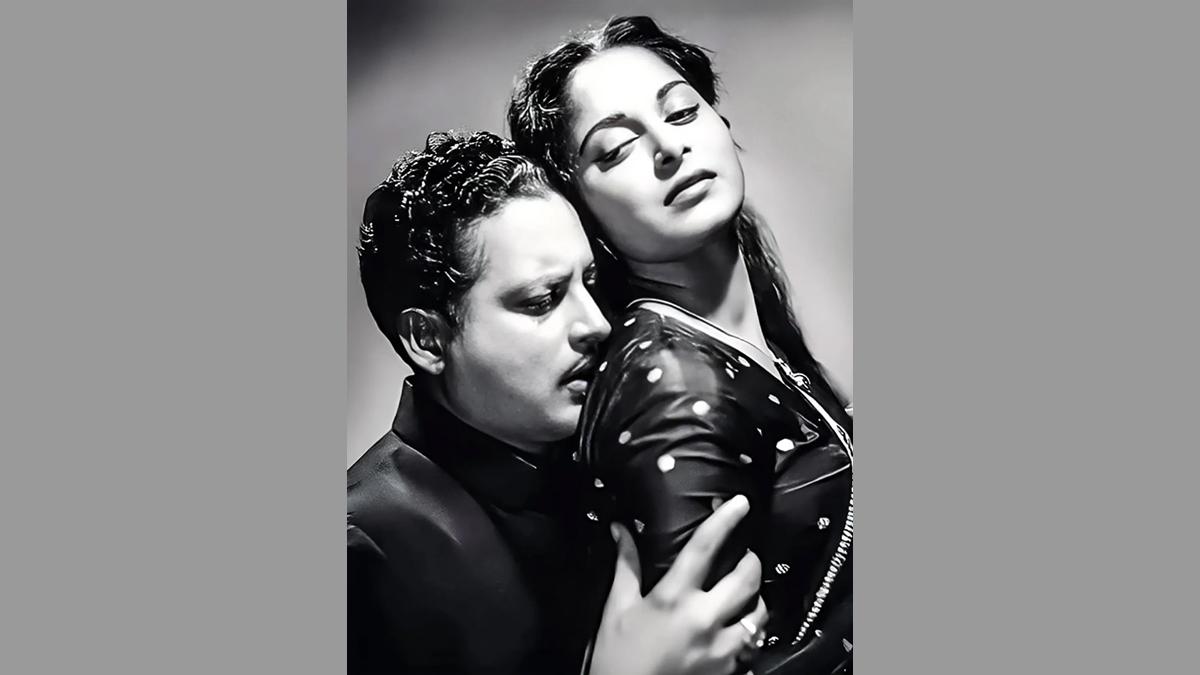
Guru Dutt's younger brother Devi Duttproduced critically acclaimed movies Aakrosh (1980) and Masoom (1983).
He began his film career under the aegis of his acclaimed elder brother, and was his production assistant for Pyaasa, Kaagaz Ke Phool, Sahib Biwi Aur Ghulam and Baharen Phir Bhi Aayengi.
Was Kaagaz Ke Phool expected to be a magnum opus at the time of its release?
I got married in 1959, just before the release of Kaagaz Ke Phool.
Guru Duttji threw a party for me at his bungalow on September 26, a fortnight before the film was to hit the theatres.
The most prominent filmmakers of the day -- K Asifsaab, Bimal Roy, Mehboobsaab -- were all present. After dinner, Ravi Shankar and Vilayat Khan performed a jugalbandi.
My brother showed the assembled guests a few scenes and a couple of songs from Kaagaz Ke Phool.
He wanted to gauge the response to his creation. The feedback was tremendous; people praised the film to the skies.
One viewer commented that my brother would need to construct more cupboards to accommodate all the money he would earn from Kaagaz Ke Phool.
But something went wrong with Kaagaz Ke Phool and Guru Duttji...
According to you, what went wrong with the film?
Guru Duttji made a film based on the life of a film director. Had Kaagaz Ke Phool been based on a film actor's life, it would probably have been a hit.
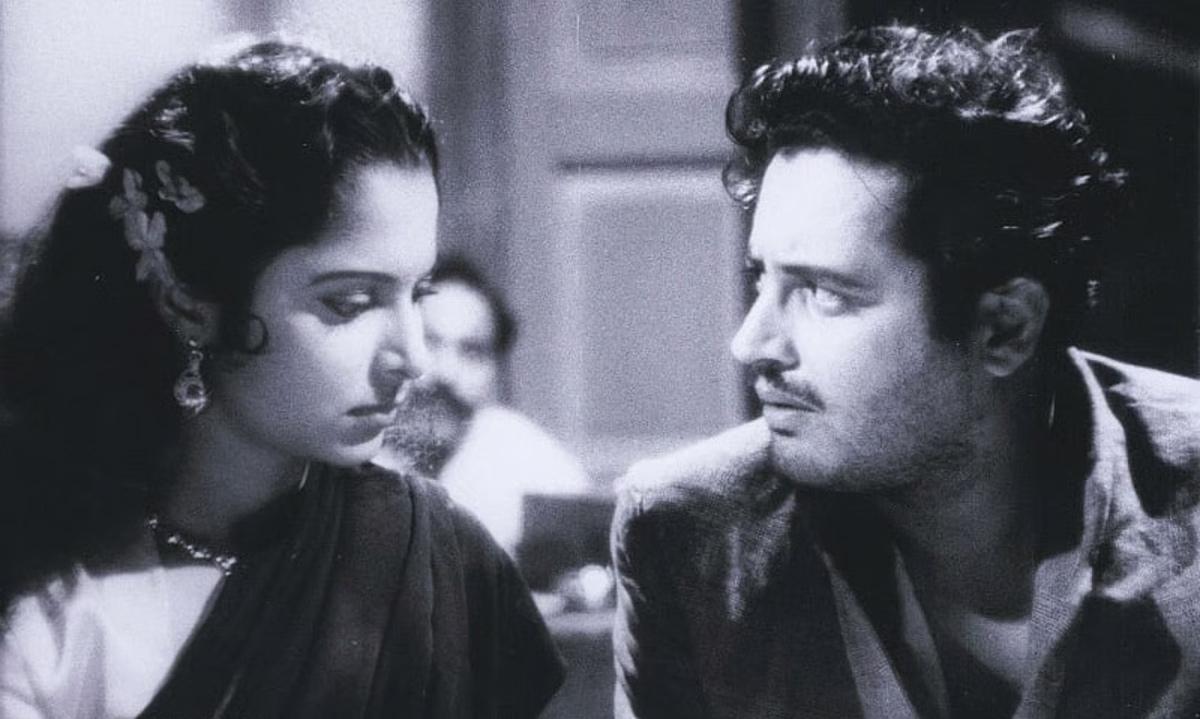
Are you of the opinion that the audience is more interested in the life of an actor?
Yes, definitely. Certain aspects of Kaagaz Ke Phool, such as the song Waqt Ne Kiya, are definitely memorable. But there were few light moments in the film.
My brother would cast comedian Johnny (Walker) sahab in each film and it would benefit the film; but in this film, the Johnny Walker scenes felt forced.
Johnny himself did not understand his role.
Also, you don't feel good after watching the film... Guru Duttji's character does not even get to bless his daughter at her wedding.
It is difficult to make an offbeat film which is commercially acceptable as well. But today, Amitabh Bachchan and Aamir Khan call Kaagaz Ke Phool a classic. As it always happens, a man's work is not valued while he is alive.
Would you agree with the view that Guru Dutt was devastated by the failure of Kaagaz Ke Phool?
When the film flopped, it was the biggest shock in his life.
He had spent lavishly on the film.
He was heartbroken.
After Kaagaz Ke Phool, he began to lose interest in filmmaking; he felt lost because of this one film.
The Ahmedabad highway was going to constructed over our studio grounds, and he was also stressed about it. And Kaagaz Ke Phool had left him deep in debt.
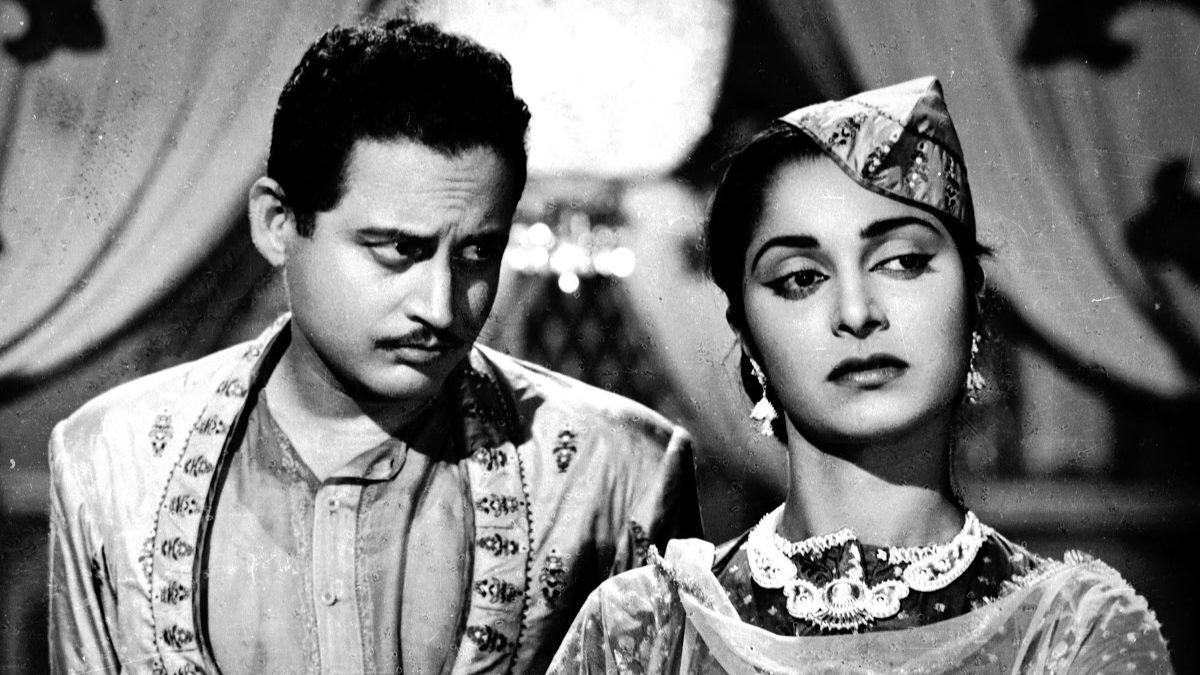
Chaudhvin Ka Chand was released within eight months of Kaagaz Ke Phool. The film's commercial success makes it a significant film in Guru Dut's production oeuvre.
According to me, Chaudhvin Ka Chand was his best film, his most satisfactory film.
We made the film in Rs 16 lakh and it recovered Rs 48 lakh in the first 18 weeks of its theatrical run.
The best thing about the film was its music. I am surprised that the film didn't bag any major award.
What prompted the decision to reshoot two Chaudhvin Ka Chandsongs in colour after the film had been released?
That was absolutely unnecessary because the film had already become a hit. Somebody opined that the film would run longer than 25 weeks if the songs were added in colour. So those songs were shot in Geva colour.
Later, Guru Duttji grew very interested in colour. He was fascinated by Raj Kapoor's Sangam.
I have lost count of the number of times he saw Sangam.
Every day he would say, 'Devi, arrange tickets for the last show.'
He planned on making Kaneez in colour. But he soon abandoned the idea.
At that stage, the problem with Guru Duttji was that he would suddenly lose interest in a project. He started and abandoned 10-12 films.
He wanted to produce Professor with Salman Khan's dad, Salim Khan, and Moti Ki Maasi with Tanuja. He stopped making Raaz with Sunil Dutt after a day's shooting at Mehboob Studios.
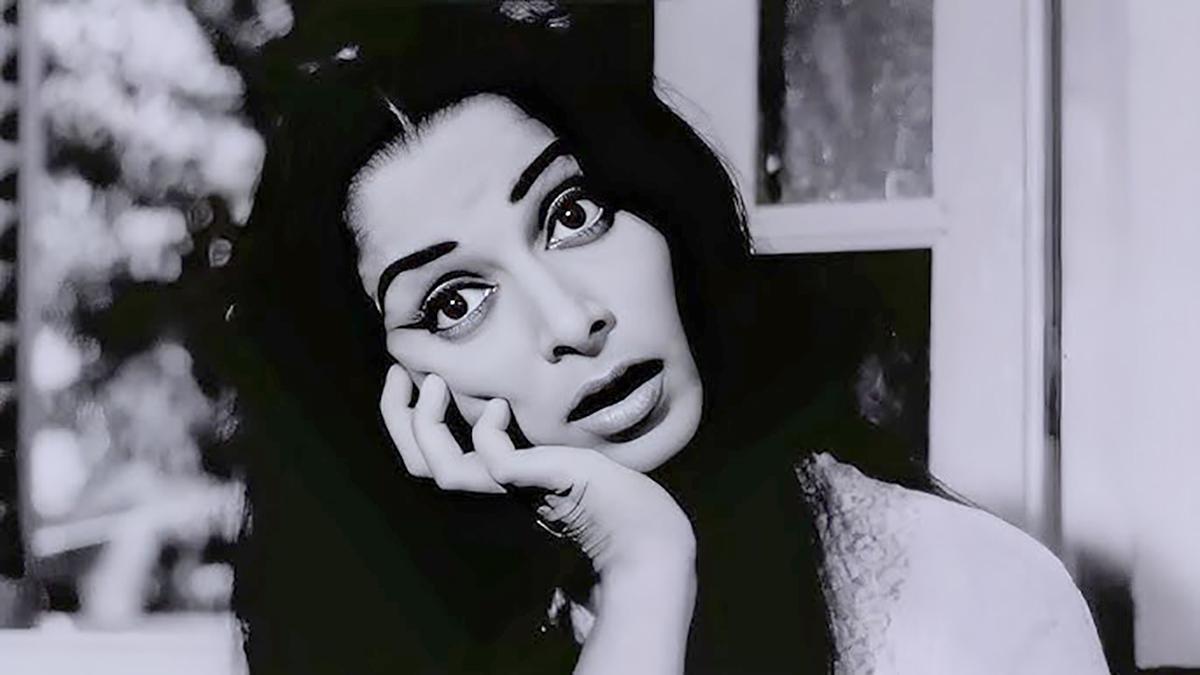
But he remained particular about his work. Abrar Alvi directed Sahib Bibi Aur Ghulam, but didn't Guru Dutt reshoot the song Bhanwara Bada Nadaan?
Abrar Alvi picturised Bhawra Bada Naadan Hain while Guru Dutt was out of town but his version has not been retained in the film.
The song featured my sister Lalitha Lajmi. Her face was covered but her hands were visible in the song.
Incidentally, the original song did not have any scenes picturised on Guru Duttji at all.
When Guru Duttji returned to Bombay, he did not see the song immediately. He was tired and stayed at the studio that night -- he would occupy three rooms in the studio: A bedroom, a makeup room and an office.
He saw the song the next morning with Abrarsahab, (cinematographer V K) Murthysahab and a few others. We were not allowed to join them. He saw the song six times in all.
After that, he just got up and left the room without speaking to anyone.
We were mystified.
After an hour, he called Murthysahab and said that he would reshoot the song in a day-and-a-half. And he did.
The end result was beautiful.
Sahib Bibi Aur Ghulam marked the end of Guru Dutt's association with Waheeda Rehman.
Everyone at Guru Dutt Productions would get monthly salaries. Waheedadidi would get Rs 2,500 per month. And that was the reason why she left.
She pointed out to Guruswamyji, the production-in-charge, that all the other actresses of the day were working on per-film contracts.
But when Waheedadidi asked for a per-film contract, Guru Duttji refused.
How did Guru Dutt's background shape his films? Was he academically bright as a youth?
Unfortunately, he did not get the opportunity to pursue his academic inclinations.
Incidentally, my mother and he did their matriculation together.
The problem was my father would never stick to one place. My father was highly intelligent but he had a short temper.
Guru Dutt studied dance with Uday Shankar. Did he choreograph songs for his home banner?
He would always take great interest in the picturisation of the songs of his films.
As for explaining the dance movements to the actors, he would do that initially, but he stopped once he established himself as a filmmaker.
Strangely, as an actor, he has never performed a flamboyant dance number.
To some extent, Guru Duttji did dance in the Bharosa song Aaj Ki Mulaqat Bas Itni with Asha Parekh.
Did Guru Dutt's films reflect his personality?
Kaagaz Ke Phool did.
Guru Duttji was also very soft-spoken like most of his screen characters. If he was sitting across the room, one would not be able to hear him. He was a total introvert.
But you mentioned he was good friends with many contemporary filmmakers.
There was mutual respect. He didn't have many friends.
If he had been more social, his life would have been different.
Raj Kapoor used to be there at every film function. Guru Duttji would not attend any function.
Was Guru Dutt enthusiastic about collecting awards?
He would refuse to attend award ceremonies. We won 16 awards for Kaagaz Ke Phool.
I have photographs in which I can be seen holding the trophy.
He would simply say: 'Devi, go and collect the award.'
Kind courtesy: Kagaz Ke Phool and Sahib Bibi Aur Ghulam: The Original Screenplay, by Dinesh Raheja, J Kothari. Published by Om Books International in association with Vinod Chopra Films










 © 2025