
'When you are a pioneer and someone who's put on a pedestal, but then the pedestal gets dusty, people don't look at the statue anymore.'
'They would say, 'Yes, yes, of course I know Bimal Roy. He made Do Bigha Zamin.'.'
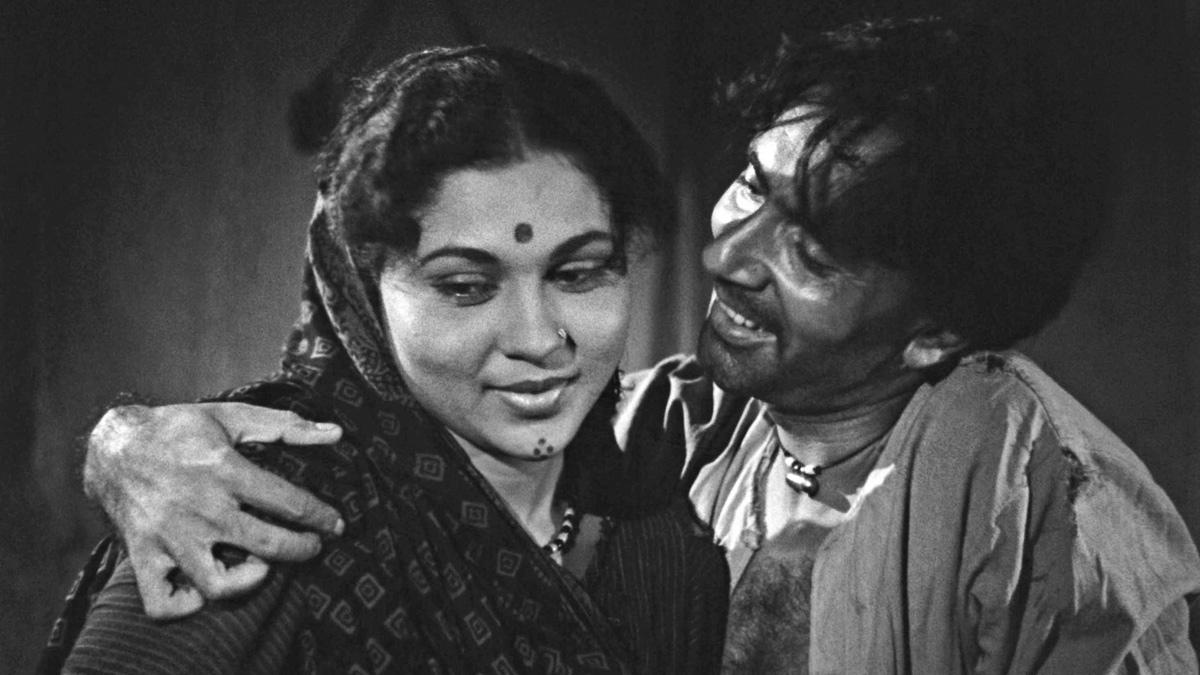
On September 4, the Venice Film Festival will host the premiere of a 4K restored version of Do Bigha Zamin, Bimal Roy's 72-year-old classic tale of a farmer's struggles. Other films screening in the Venice Classics 2025 section include Stanley Kubrick's Lolita (1962) and Pedro Almodovar's Matador (1986).
Do Bigha Zamin was restored by Shivendra Singh Dungarpur and his Mumbai-based organisation, the Film Heritage Foundation and the Criterion Collection at L'Immagine Ritrovata restoration laboratory in Italy, using a dupe negative of the film that was stored at the British Film Institute in London. According to Dungarpur, there was no complete print of the film available in India.
It's a stunning, sharp, black and white print where all the scratches and other distortions have been repaired. The sound has been corrected and subtitles have been added.
Criterion has restored a number of Satyajit Ray's films (The Apu Trilogy 1955-1956-1959, Devi 1960, Nayak 1966, among others) and two of Ritwik Ghatak's works (Meghe Dhaka Tara 1960 and Titas Ekti Nadir Naam 1973). But this is the first time they have restored a version of Bimal Roy's film.
The plan is to restore four of Roy's films: Devdas (1955), Madhumati (1958) and Bandini (1963).
Inspired by the Italian neo-realist cinema, and especially Vittorio de Sica's Bicycle Thieves (1948), Do Bigha Zamin won the International Prize at the 1954 Cannes Film Festival.
'Two Acres of Land (the film's English title) indicates Bimal Roy's concern for the acute rural problem which has existed in India for many years,' wrote a reviewer in Sight and Sound magazine in 1956.
The same year The Times review said, 'Realism blends naturally with emotion, and the wholesome influence of de Sica's Shoeshine and Bicycle Thieves is apparent.'
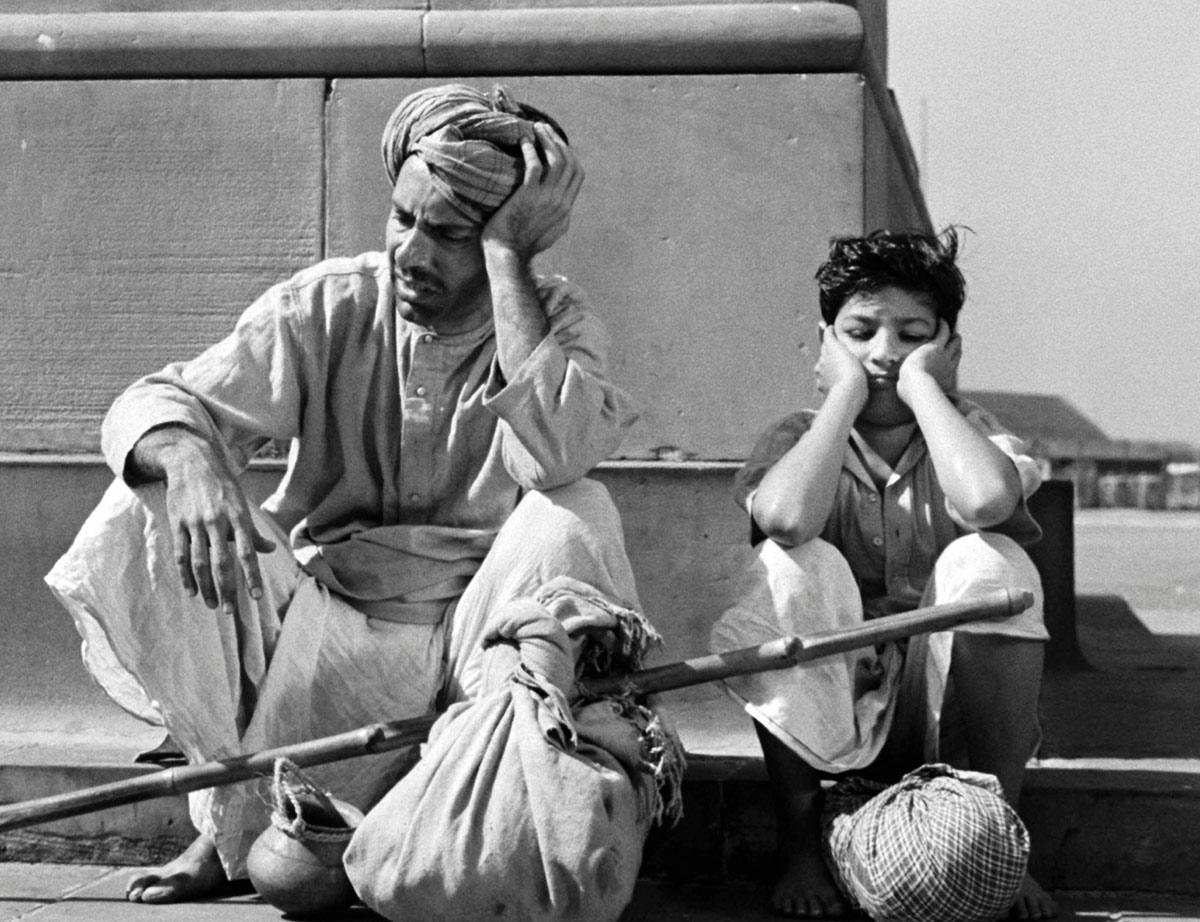
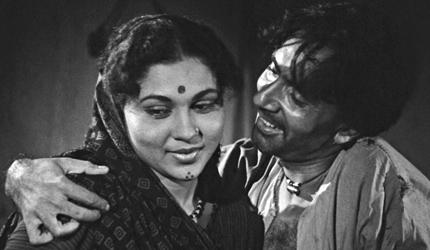
In the film, Balraj Sahni plays Shambu Mahato, a poor farmer, riddled with debts. To pay off his debts, he is forced to become a rickshaw puller on the streets of Calcutta. Sahni reportedly spent time learning how to pull a rickshaw with bare feet. Nirupa Roy played Mahato's wife Parvati.
Bimal Roy's family, including his children Rinki Bhattacharya, Aparajita Roy Sinha and Joy Bimal Roy, and grandchildren are expected to attend the Venice premiere of Do Bigha Zamin.
Rinki, Aparajita and Joy tell Aseem Chhabra what their father's films mean to them, adding, "The very first Filmfare awards were announced after Do Bigha Zamin was made. It was 1954 and there were only five awards which were instituted. My father won two of the awards for Best Picture and Best Director. Ma said I don't know whether it's true or not -- that apparently Raj Kapoor was heard asking, 'Who is this dhotiwala who has come up to take the awards?'"
I would love to hear about your memories of Do Bigha Zamin.
Rinki: I was nine when the film was released, so naturally, I have no recollection of its release, even though I was told we went for the premiere.
As I write in my book on my father (Bimal Roy: A Man of Silence, 1994), Do Bigha Zamin was the first Indian film to premiere and then play at Metro cinema in Bombay. Until then, the theatre only played English-language films.
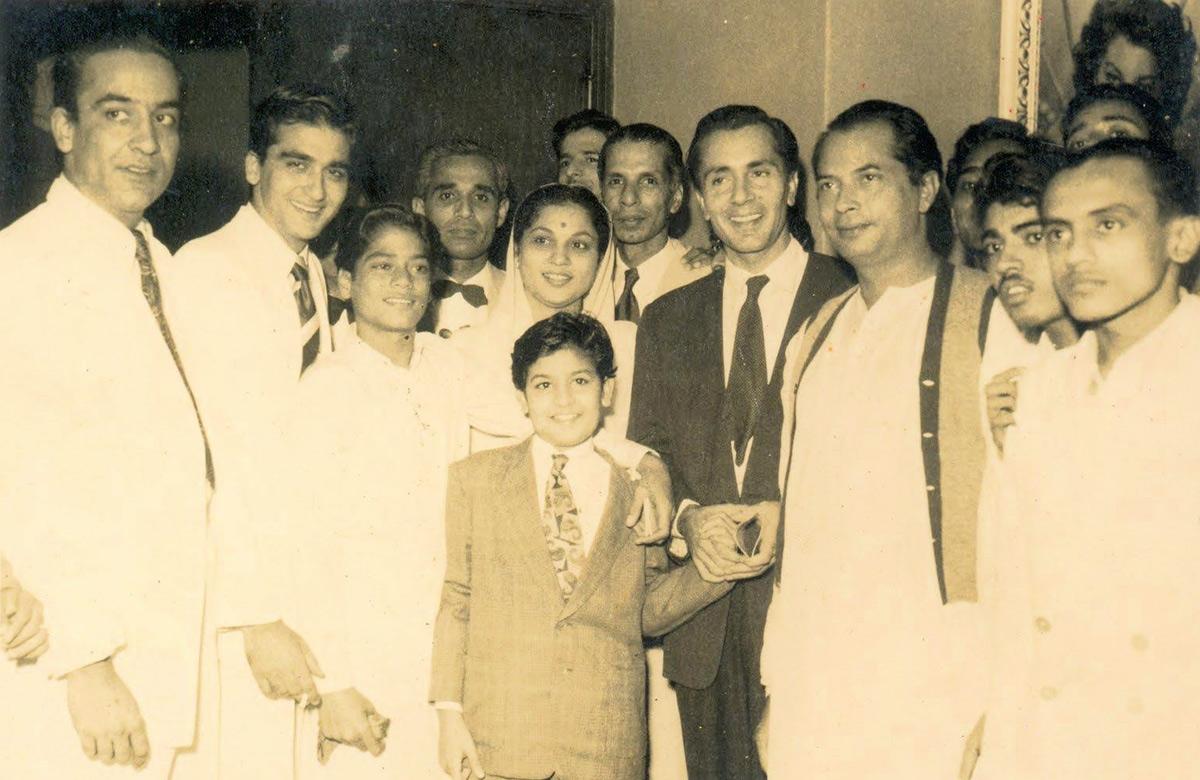
The stars and filmmaker were interviewed by Sunil Dutt who, at that time, worked for Radio Ceylon and was then known by his real name Balraj (the actor hosted a show Lipton Ki Mehfil).
Baba was shooting two films at that time, Parineeta (with Ashok Kumar and Meena Kumari) during the day and Do Bigha Zamin at night.
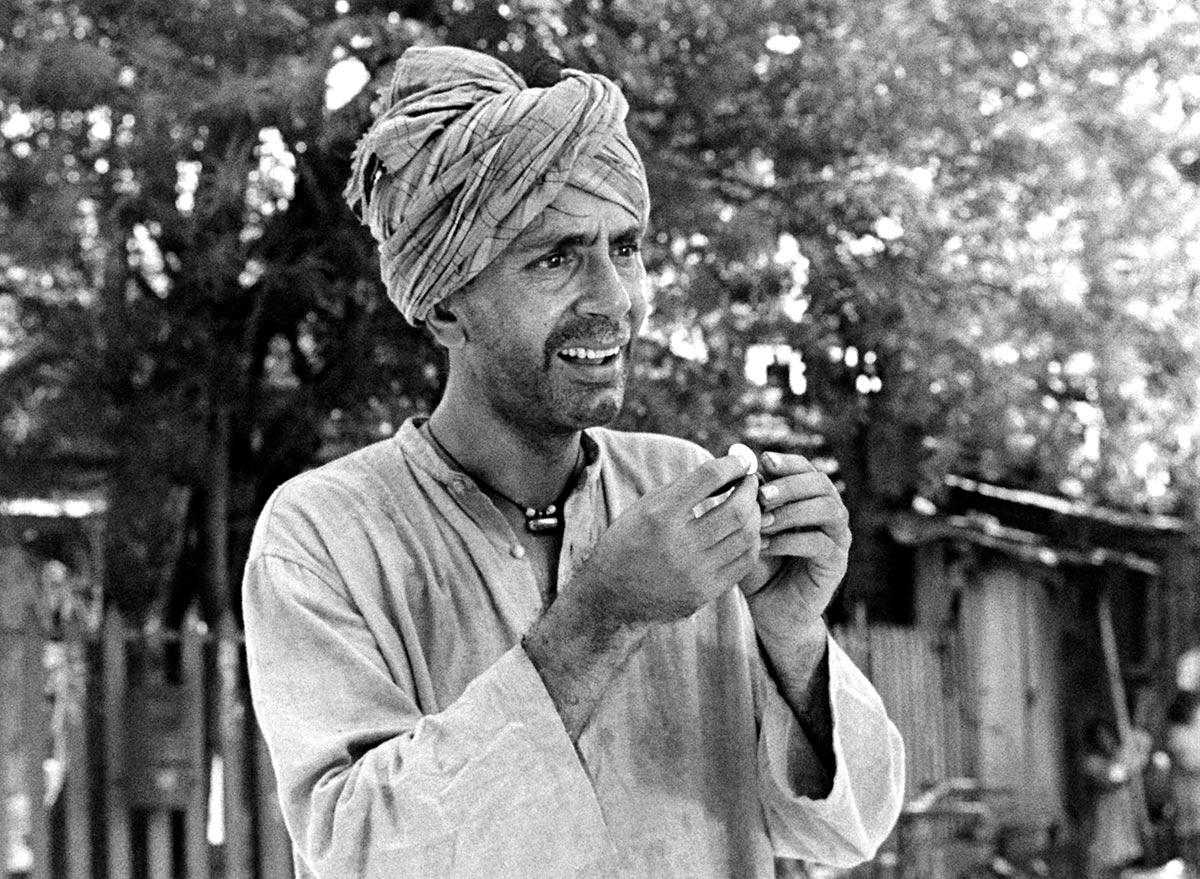
Yes, I read that is how Meena Kumari ended up making a guest appearance in Do Bigha Zamin. She sings the lori Aaja Ri Aa, Nindiya Tu Aa.
Rinki: In those days, people had to make trunk calls and the phone was in my room. Hrishikesh Mukherjee (the editor of the film) called Baba from Calcutta. In the first cut of the film, Nirupa Roy's character dies. The film had already been released in Calcutta and Hrishikesh Mukherjee said people couldn't take this tragedy.
So my father re-shot the ending. In the version shown at Metro, Nirupa Roy lives.
Aparajita: My mother found the ending of Nirupa Roy dying very sad.
Aparajita, do you have any memories of the film?
Aparajita: I remember one thing about Do Bigha Zamin. There was a very magnetic elderly French gentleman. He was one of the first directors of Alliance Francaise in Hyderabad. His wife was a film critic and she had written a book on Satyajit Ray. So they were both very knowledgeable about cinema. I had organised a screening of Do Bigha Zamin at Cinema Ghar, which was a museum run by M F Husain in Hyderabad.
This French gentleman and his wife came to see the film.
When the film started, I realised it wasn't subtitled.
I was mortified but I couldn't do anything about it.
So I kept trying to tell the couple the story.
At the end of the film, he said to me, 'You didn't need to translate it at all. I understood everything.'
That's when my eyes opened, and I thought, this is a film that speaks without words, even though there are a lot of dialogues.
My favourite films of my father's were Parakh (1960) and Sujata (1959).
Do Bigha Zamin is such a sad film.
I resisted that film in many ways.
I would say so is Devdas, but over the years, I got the film intuitively. It happened when I was much older. Devdas was made in 1958. I realised that at different times in my life, the film meant different things. The more I see the film, the more I can watch it.
Joy, do you have any memories? I know Do Bigha Zamin was released before you were born.
Joy: I was about 10 when my father passed away. Immediate after that, there was a screening of Do Bigha Zamin by a film society. It was held in a small theatre called Chitra. Ma took me along.
I remember going up to the front after the film was over.
I was shattered by the film because that was the first time I had seen it.
I guess my father's death hadn't affected me because sadly, in many ways, I didn't really know him.
I began to miss him much later when I was older and began to see his films. That's when it hit me that I had missed out on knowing this man.
Do Bigha Zamin is a very sad film and somehow I identified with that little boy, played by Master Ratan.
To be honest, I don't like watching the film because it makes me sad. I prefer to see Madhumati and Sujata because they have happy endings.
Bandini is also a very sad film. That's another film I find hard to see.
I find even Devdas heartbreaking.
Do Bigha Zamin is not a happy film, but it is an important one.
Joy: Absolutely, there's no question about it. It was the very first film that he made when he started his own company Bimal Roy Productions. So it was a statement to the world that this is what I am all about.
It marked his journey as a producer.
He chose to make a film which was different from the rest of Hindi cinema.
The very first Filmfare awards were announced after Do Bigha Zamin was made. It was 1954 and there were only five awards which were instituted. My father won two of the awards for Best Picture and Best Director.
Ma said -- I don't know whether it's true or not -- that apparently Raj Kapoor was heard asking, 'Who is this dhotiwala who has come up to take the awards?'
He was not known to anyone at that time and appeared out of nowhere and took these awards.
I read that your father's personal life was connected to the Do Bigha Zamin story.
Joy: Yes, he was very clued into the landlord-tenant relationships. He was from a zamindar family. The story goes that his father and his father's younger brother would sit all day long -- a bit like Shatranj Ke Khilari -- and play chess.
When my grandfather died, the estate manager informed them that he had transferred the land to his name and they had nothing.
So he kicked them out of the house with the clothes on their back. This was in 1931 and had nothing to do with Partition.
My father's first job was Rs 15 a month. He had to walk to work because he had no money for bus fare.
He grew up the hard way.
He had this strange, symbiotic kind of relationship with land where he did not want it. It didn't make him comfortable because he associated it with sadness, deprivation and loss.
So the scene in Do Bigha Zamin when the landlord asks the Munim how much Shambu Mahato owes has an authentic quality about it. You know, there is nothing you are watching that is not real.
There is no exaggeration.
It was a new voice in Hindi cinema. That's why it's very important.
So what does it feel that the world is going to rediscover a film of your father's?
Aparajita: I feel my father's time has come. He was in the company of some other great filmmakers and was friends with Guru Dutt, Raj Kapoor and Mehboob Khan.
But their trajectory was different.
You know when you are a pioneer and someone who's put on a pedestal, but then the pedestal gets dusty, people don't look at the statue anymore.
They would say, 'Yes, yes, of course I know Bimal Roy. He made Do Bigha Zamin.'
A few years ago, a young journalist come to me and said that she had just seen Parakh.
She said, 'I didn't know this film. I wish they would make more films like this.'
Parakh was made in 1960.
Parakh had lovely songs like Mila Hai Kisi Ka Jhumka and O Sajna Barkha Bahar Aayi. And they are beautifully shot.
I am glad you said his time has come. There are generations that have not seen his films.
Aparajita: They are always taken aback.
People do tell me they have seen Madhumati 18 or 20 times.
Parakh was lesser of his films. Madhumati had beautiful songs.
Satyajit Ray's films traveled around the world. That was not the case with Bimal Roy's works.
Joy: I am told that Do Bigha Zamin played in theatres in France and did well. But it is long forgotten.
Rinki: I think it is not fair to compare Baba's films with Ray's. My father was not media-hungry whereas Satyajit Ray came from an advertising background and was very commercial savvy.
My father started his career at New Theatres and was earlier known for his camerawork with P C Barua. Ray started making films 10 years later and was influenced by my father's early works.








 © 2025