
'If you watch songs like Acha Ji Main Haari Chalo Maan Jao Na, Lag Ja Gale or Jhumka Gira Re, you'll notice they're not just a distraction. There's a story unfolding within them.'
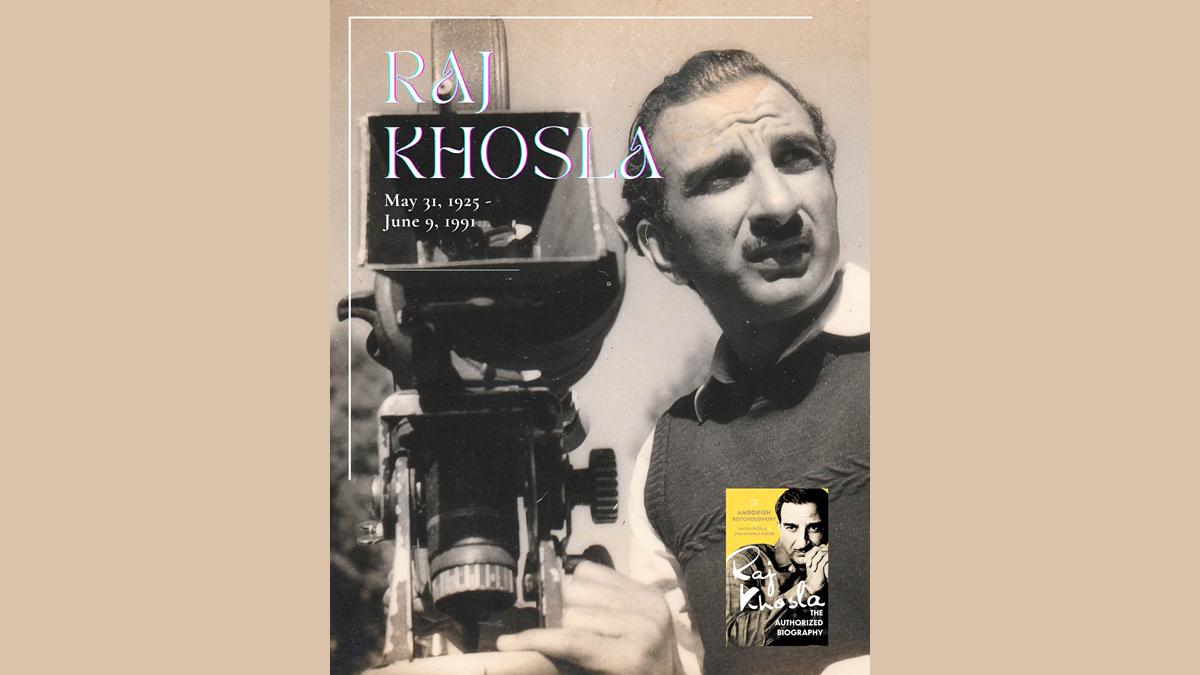
The director behind such classics is not known to recent generations of film goers.
Raj Khosla made memorable movies in the 1950s and 1960s, with chartbusters that are hugely popular even today.
On his birth centenary on May 31, his daughter Anita Khosla, along with author Amborish Roychoudhury, released Raj Khosla: The Authorized Biography, which provided remarkable insights into the director and his movies.
"One of the most interesting things that still surprises me is the sheer number of iconic songs associated with his films," Amborish tells Patcy N/Rediff. "Even young people know these songs. Lag Ja Gale was used in Sikander, hummed by Rashmika Mandanna. In Rocky Aur Rani Kii Prem Kahani, one of the most popular tracks was What Jhumka (remixed from Jhumka Gira Re)."
How aware were you of Raj Khosla before writing a book on him?
I grew up in the North East, and during my childhood, I used to watch a lot of films.
That exposure made me obsessed about the movies. But I never really paid attention to the director.
One day, I was watching Mera Saaya, and I noticed the credit: 'Directed by Raj Khosla.'
I watched two-three films in close succession with the same name.
That stuck with me. I remember asking my father who this person was and what a director does.
That was the first time I understood the role of a filmmaker.
Much later, when I became a writer, I read biographies of Guru Dutt, Dev Anand... Raj Khosla was often mentioned, always as an important figure, but never explored in depth.
Then, at one point, his family approached me. They commissioned me to write the book, and that's how this journey began.
What kind of research went into writing the book?
I have watched all of Raj Khosla's films.
I referred to several books, like Yasser Usman's Guru Dutt: An Unfinished Story, Nasreen Munni Kabir's Guru Dutt: A Life in Cinema, and Satya Saran's Ten Years with Guru Dutt: Abrar Alvi's Journey.
They mentioned Raj Khosla and helped shape the early stages of research.
One major source was the National Film Archives of India in Pune. They provided access to a vast collection of film magazines and newspapers from the 1940s. I also used the NCPA archives in Nariman Point (south Mumbai).
I spoke to people who had worked closely with him. Not all are with us anymore, but I managed to speak to his assistants and collaborators.
The family was very helpful.
I spoke with Lata Mangeshkar; mine was one of the last interviews she gave.
I spoke with Asha Bhosle; she gave me nearly two hours and shared some delightful stories about him.
I spoke to Pyarelal, Suresh Wadkar, Mumtaz, Moushumi Chatterjee, Dharmendra, Manoj Kumar, Prem Chopra...
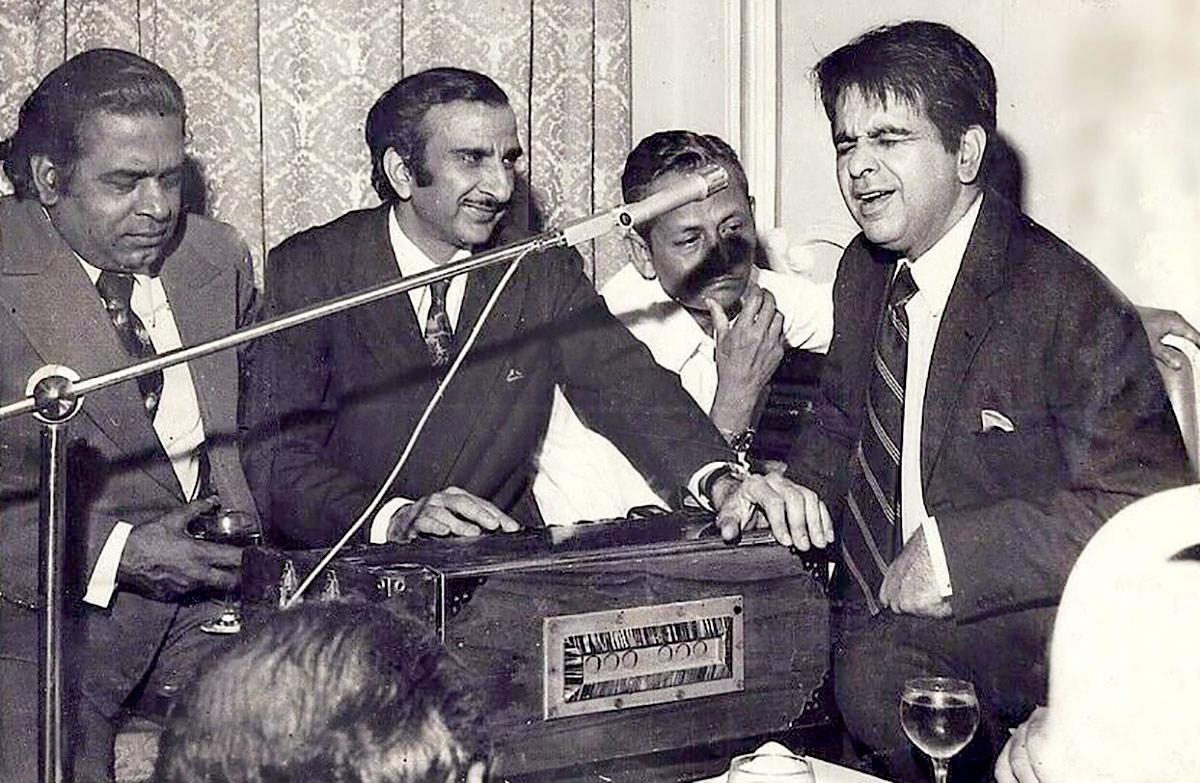
Everyone knows Raj Khosla as a director. But you have mentioned that he was also a trained singer and acted in films too.
Apart from the films he directed, I didn't know much about him.
One of the most interesting things that still surprises me is the sheer number of iconic songs associated with his films.
Even young people know these songs. For instance, Lag Ja Gale was used in the film Sikander, hummed by Rashmika Mandanna.
In Rocky Aur Rani Kii Prem Kahani, one of the most popular tracks was What Jhumka (remixed from Jhumka Gira Re).
Another thing, a clip went viral on Instagram recently, where Sadhana says, 'How much very much pagal' and Manoj Kumar replies, 'Very much very much pagal.'
People were making memes of that but no one seemed to know it was from Anita. That's the kind of cultural footprint his films have, but often uncredited.
Remember the film Mumbai Meri Jaan by Nishikant Kamat? Towards the end, there's a silent tribute scene to the people who died in the blast. Then softly, Ae Dil Hai Mushkil Jeena Yahaan begins playing (from CID) and then the song turns into Ae Dil Hai Aasaan Jeena Yahaan...
Everyone stood up in the theatre where I was watching it. That's the power of that song, even decades later.
Then there are the Do Raaste songs, Yeh Reshmi Zulfein, Bindiya Chamkegi and Kahin Pe Nigahen, Kahin Pe Nishana from CID.
Despite his massive success -- he directed 26 or 27 films, and most were box office hits -- we know so little about him.
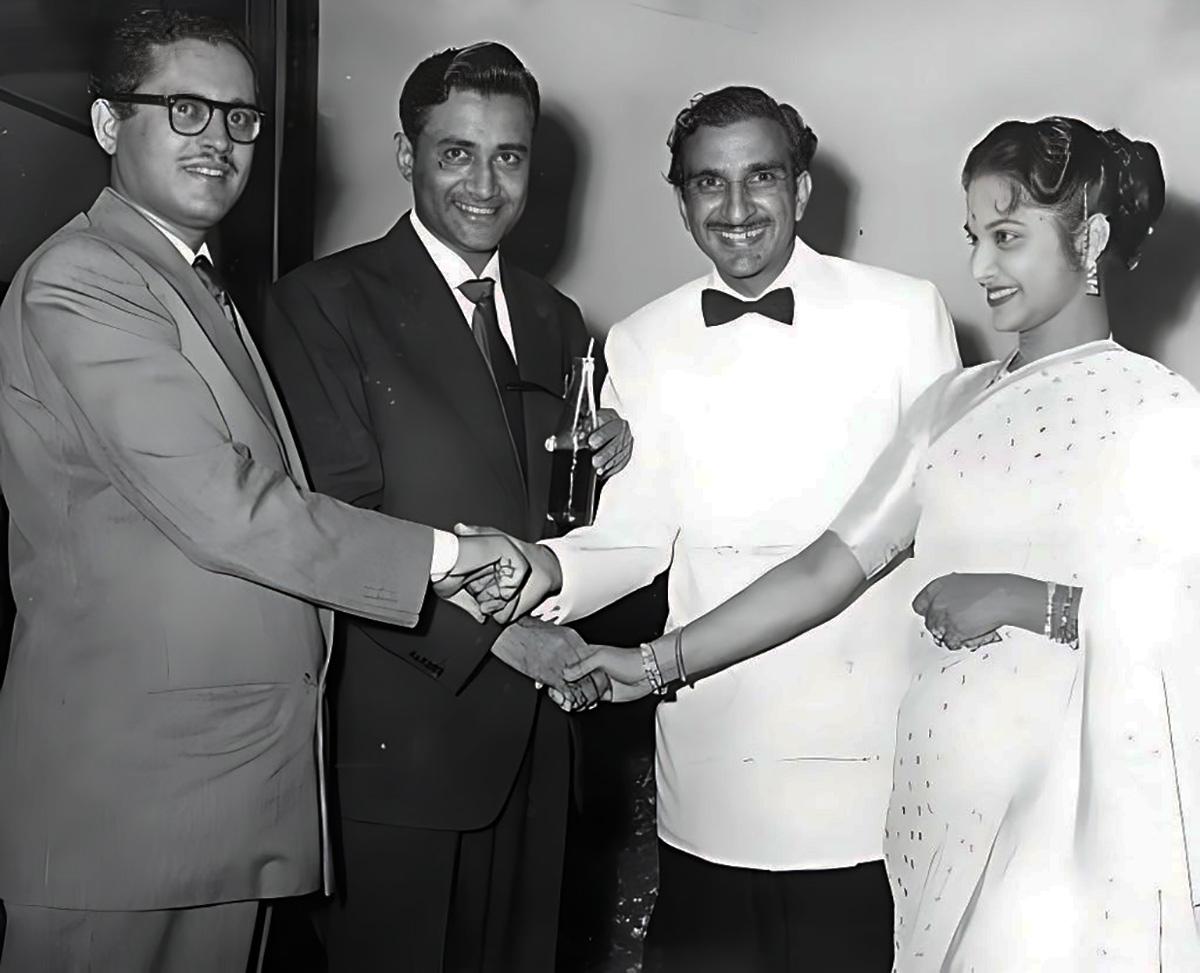
Raj Khosla considered Dev Anand and Guru Dutt as his mentors. What was their influence on his life and films?
There were actually three people Raj Khosla considered as his mentors: Guru Dutt, Dev Anand and (Producer) Shashadhar Mukherjee of Filmalaya.
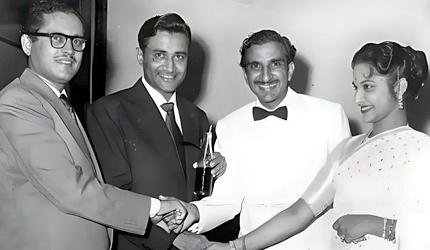
Dev Anand was instrumental in introducing Raj Khosla to the world of cinema. They met at the India Coffee House in South Bombay. During their conversation, Devsaab told him, 'I know you want to be a singer, why don't you think about making films? That way, you can give yourself a break as a singer too."
He then introduced Raj Khosla to his friend Guru Dutt, who was making films at the time. That's how Raj Khosla began his journey in cinema.
During his early days, Raj Khosla claimed he could read Hindi, when, in fact, he couldn't. But he taught himself.
He had grown up in pre-Partition Punjab, where most children were taught Urdu. Devnagari wasn't common unless you opted for it.
This was true of many people, like Dharmendra and Gulzarsaab.
Guru Dutt's influence on Raj Khosla is most visible in the way he shot songs. The importance of storytelling within songs is something Raj Khosla took from Guru Dutt.
If you watch songs like Acha Ji Main Haari Chalo Maan Jao Na, Lag Ja Gale, or Jhumka Gira Re, you'll notice they're not just a distraction. There's a story unfolding within them.
Another important inheritance from Guru Dutt was the love for thrillers and noir. While Guru Dutt is best remembered for his melancholic masterpieces like Pyaasa, Kaagaz Ke Phool, and Sahib Bibi Aur Ghulam, he also made thrillers and swashbucklers like Baaz, Aar Paar and Baazi.
These films showed a fondness for noir-films influenced by 1940s Hollywood.
You can see that influence in Raj Khosla's early thrillers like CID, Solva Saal, Kala Pani, Bombai Ka Babu, and Milap.
Raj Khosla was a huge admirer of Ghalib. He owned a copy of Diwan-e-Ghalib, gifted by Sunil Dutt, and was deeply interested in Shakespeare, especially King Lear, which he often referenced in conversations about his daughters.
Many of his films were literary adaptations. Mera Saaya was based on Raja Paranjpe's Marathi film Pathlaag, which was adapted from a novel of the same name. Do Raaste and Main Tulsi Tere Aangan Ki were based on novels by Chandrakant Kakodkar.
He was also a lover of Urdu poetry. He would quote verses from memory and always had a couplet ready for any occasion.
I believe Raj Khosla absorbed from Guru Dutt the idea that a filmmaker must also be a reader, a thinker.
There's also a personal, more tragic connection. Guru Dutt had a self-destructive streak, which ultimately consumed him. Raj Khosla didn't go the same way, but he had similar tendencies, especially when it came to alcohol and his own internal battles. He drank heavily, even during the day.
While he had a loving family -- strong relationships with his daughters, and supportive parents -- there was a sorrow that lingered within him.
In interviews, he spoke about that melancholy. And just like Guru Dutt, his pain found its way into his movies.
Main Tulsi Tere Aangan Ki, Prem Kahani, Sunny... reflected fragments of Raj Khosla's own life.
There's a pattern of sensitive, emotionally complex men trying to navigate love, duty, and disappointment in his works.
Dev Anand and Raj Khosla shared a very close friendship. They were both suave, sophisticated, with a Westernised charm.
Devsaab, for example, wasn't just a good looking man, he made people feel respected, protected, and seen. Many actresses have said that though he wasn't their husband, brother nor a father figure, if he hugged them or held their hand, they felt absolutely safe.
This extended to men as well. R K Narayan, who was unhappy with Guide's adaptation, was utterly charmed by Dev Anand when they met.
He had hoped Satyajit Ray would direct the film but once Devsaab spoke to him, he was so taken in by his personality that he agreed to the project, despite his misgivings.
People who knew both Dev Anand and Raj Khosla have said that Raj Khosla, too, had a similar aura. He had that same effortless charm and ability to make you feel special in his presence.
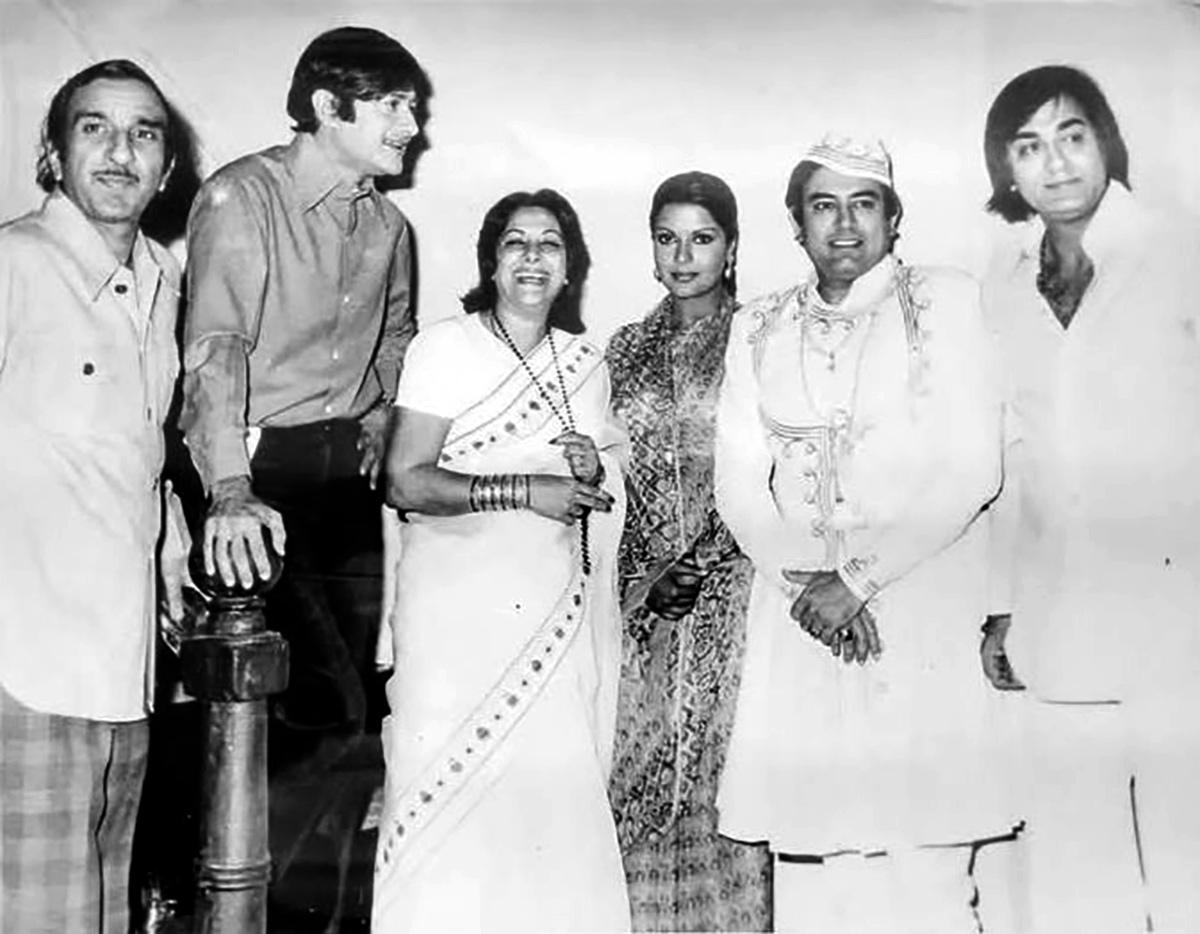
Raj Khosla was originally supposed to direct Guide.
Yes. Dev Anand had him in mind for the project but Waheedaji (Rehman) wasn't comfortable working with him after their earlier experiences on CID and Solva Saal.
She said they didn't see eye to eye. She felt he was being unreasonable and he didn't think very kindly of her either.
But years later -- 26 years later, in fact -- when he was making Sunny, she came back to work with him.
She said by then, she saw again what had drawn people to him in the first place: His charm, his ability to hold a conversation, to recite poetry, his refined way of speaking. He was a true gentleman.
Raj Khosla started directing in 1955, and within five years, he made five films, all with Dev Anand: Milap, CID, Kala Pani, Bombai Ka Babu, and Solva Saal.
Later, in 1973, they reunited for Sharif Badmash.
Guru Dutt's self-destructive tendencies showed up in his deep melancholy, his reaction to failure (Kaagaz Ke Phool being a turning point), and eventually in substance abuse -- alcohol, sleeping pills, and so on.
Raj Khosla's version was different. He'd often disappear, avoid work, or come late to the set.
There was something psychological -- perhaps depression or anxiety -- that made him avoid responsibility at times.
This wasn't someone who didn't know how to make films -- he was one of the best -- but he would often retreat, find excuses, or vanish for days. That behaviour hints at something deeper, some internal pressure or struggle.
Yet, even when his films didn't do well, the craft was always there. Even in his last film (Naqab, 1989), which wasn't particularly well-made, there were flashes of the old Raj Khosla touch.
With Sharif Badmash, he took his time. He delivered the goods but the film might not have been done that well.
Sharif Badmash was out of his comfort zone. It had gangsters, smugglers, helicopters, he wasn't drawn to that kind of spectacle. He had only done a few action-heavy films like Dostana and Nehle Pe Dehla. Still, Sharif Badmash was competently made.
It may not have been a box office success, but it's remembered.
In fact, Sriram Raghavan, who I interviewed for my book, counts CID and Sharif Badmash among his all time favourite films.







 © 2025