
'I make films which I think have the possibility of being liked by a majority of people, and present it with the right emotions.'
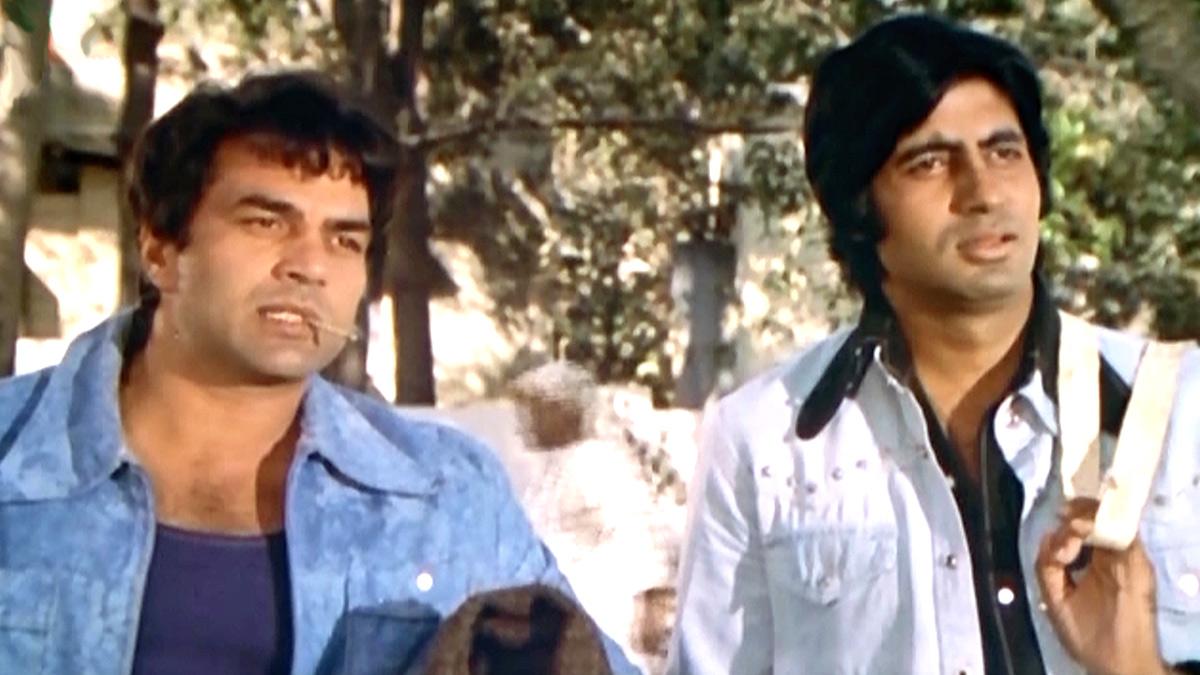
Sholay was a box office behemoth that ran for five years in Mumbai's Minerva cinema house.
But its enduring appeal lies in the fact that it is both a crowd-pleaser of gigantic proportions as well as a film for cineastes.
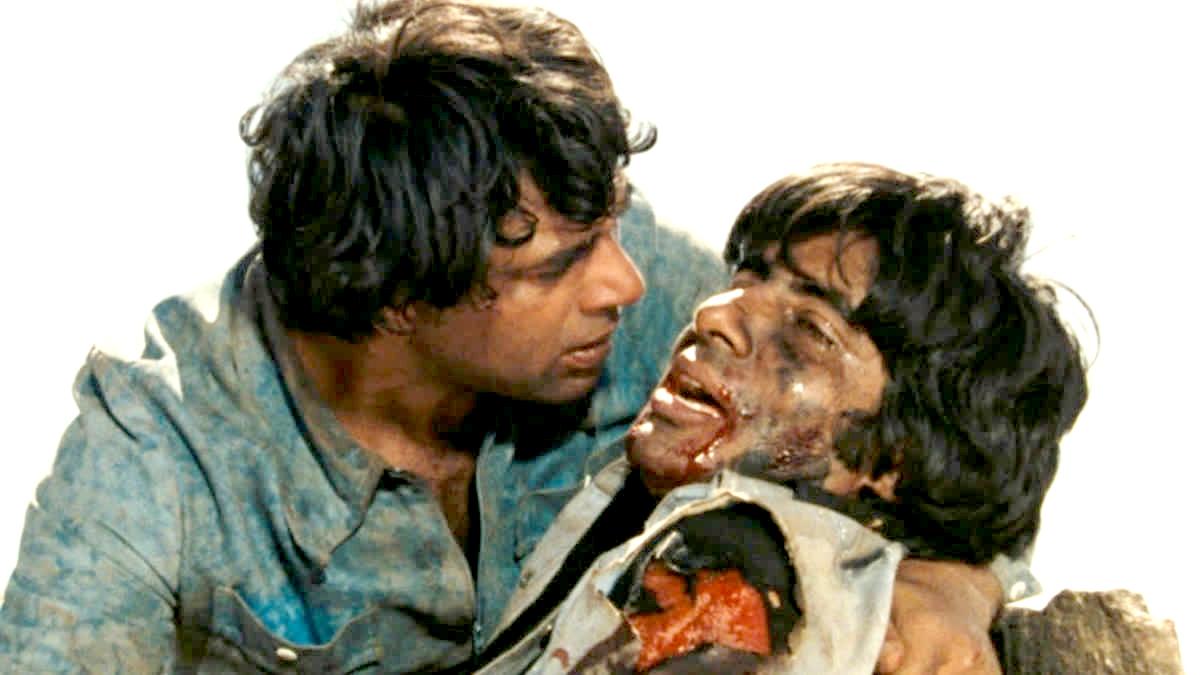
Sholay's iconic dialogues are forever quoted and memed, and scenes like the revelation of Thakur's amputated arms can make you feel the emotional impact like a whiplash.
Director Ramesh Sippy is a reticent filmmaker, who isn't given to grand proclamations in public. But he flashes back to the classic to commemorate 50 years of Sholay.
Sippy tells Dinesh Raheja, "I made the film with passion and worked almost like a mad man."
Creative people want to keep polishing their creations. Is there even a single thing you would want to change about Sholay, given the chance today?
Not really. I would not change anything in Sholay.
Ultimately, the film was released with my consent, and I decided what was to be retained and what had to be edited.
Sholay was released in the year of the Emergency (1975) and we could not argue much with the censors but the final cut I gave was what I wanted.
Initially, everyone wanted to know why I had killed off Amitabh Bachchan. But, as a director, you can't keep thinking 'yeh badal do ' or 'woh badal do'. You have to have a certain sense of judgement.
How true is it that Sholay didn't catch on immediately upon its release?
As far as we were concerned, the houses were full everywhere.
I was dazzled when I watched it in the first week with 70 mm and stereophonic sound. When the coin dropped on screen, I remember looking down to see if I had dropped my change.
Exactly. It's just that there was a kind of a stunned silence.
In the first week, there was no reaction to the film. I visited Geeta cinema in Worli (south central Mumbai) because the theatre owner called me. At interval time, only two-three people came out into the foyer.
He pointed out, 'You see that? Nobody is prepared to come out of the screening at the interval.'
When I asked him what he made of that, he replied, 'They are stunned.'
People were not reacting to Sholay because they had not seen a film like this earlier. It's only from the second and third week onwards that the audience started to react.
That is why initially there were reports which tried to bring down the film. The reactions from the trade papers were tough for five to six weeks.
And the film was very expensive!
It had cost Rs 3 crore (Rs 30 million) by the time it was completed.
That was a huge sum 50 years ago. I remember the Rajendra Kumar-Sharmila Tagore film Talaash being hugely hyped as a Rs 1 crore (Rs 10 million) colossus in 1970.
(Laughs) My father (Producer G P Sippy) and I, along with the writers Salim-Javed, did meet when so many negative reactions were coming in, but after discussing, we decided not to change anything.
Instead, we waited it out.
Sometimes, there are films that you can't form opinions of right away... it takes time.
And what a turnaround there was! As Sholay crosses a landmark 50 years, what is your paramount emotion?
I feel elated.
I made the film with passion and worked almost like a mad man.
I used my judgement, both during the shooting and in the post-production periods.
Has it been a challenge to match up to Sholay subsequently?
Results cannot be pre-decided. Not every film can be like Sholay, and that was the case with me too.
Each film has its own results depending on how much they appeal to the audience.
Classics too run the danger of becoming outdated. Why do you think Sholay has stood the test of time and is still relevant and appeals to the young?
I can only make a guess. The film showcases everlasting emotions that people continue to identify with -- friendship, sacrifice, revenge. But then, some of these emotions are in other films also.
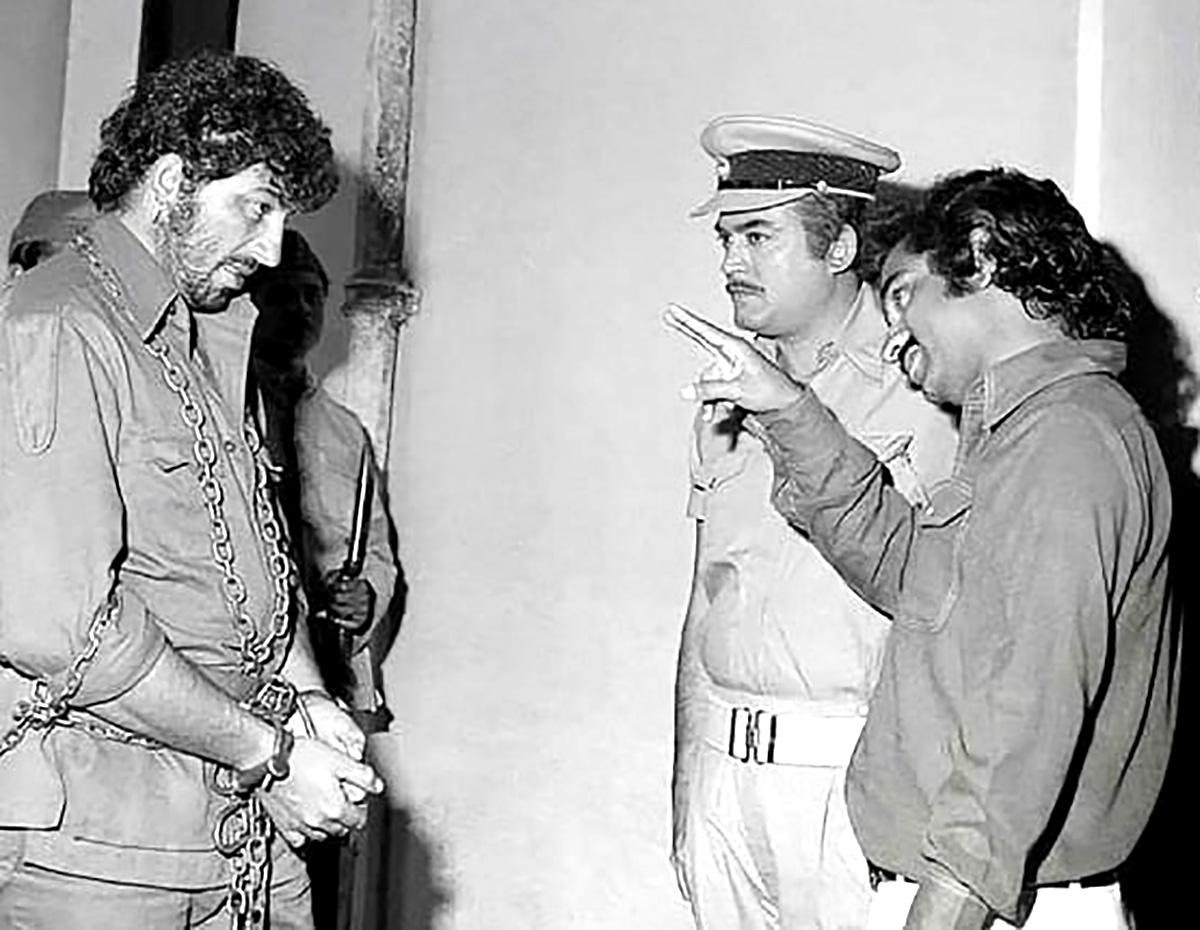
People remember the dialogue, the voice and get-up of Gabbar Singh.
His personality had a peculiar appeal; youngsters were in awe of this character. How do you explain that?
Sometimes, everything just falls in place.
Woh bhi hai. You do your best and leave the rest.
What was your directorial vision vis a vis Sholay? What did you want the audience to feel on watching the film?
I don't look at a film like that. I make films which I think have the possibility of being liked by a majority of people, and present it with the right emotions.
In Sholay, everything was in place.
Sholay changed the trend in Hindi cinema towards grittier, more elaborately scaled action films. Yet subsequently, you didn't adhere to the new trend you had fostered, and instead explored relationships in Shakti, Saagar, Buniyaad etc. Was it a deliberate choice to break away?
Not deliberate at all. Each film has its own strength and demands.
See, the basic elements in a film always the same; it's how you treat the subject.
It took me 300 days to shoot Sholay and the same number of days to shoot Saagar though there was little action in the latter film. Why is that?
You tell us, since you are the maker.
It's because whatever I wanted portrayed on screen, I wanted it portrayed exactly as I wanted it.
When you pursue that kind of perfection, you pay a price.
Your best work, whether it's Seeta aur Geeta or Sholay or Shakti or the television serial Buniyaad, is based on human interactions between strikingly individualistic characters.
I agree. But if you ask me if that was planned, the answer is no.
So what is the most crucial aspect of creating memorable cinema?
You make it well.
All good makers like Raj Kapoor, Hrishikesh Mukherji, Mehboob Khan onwards have had the intention to make a good film. They were very passionate about their work.
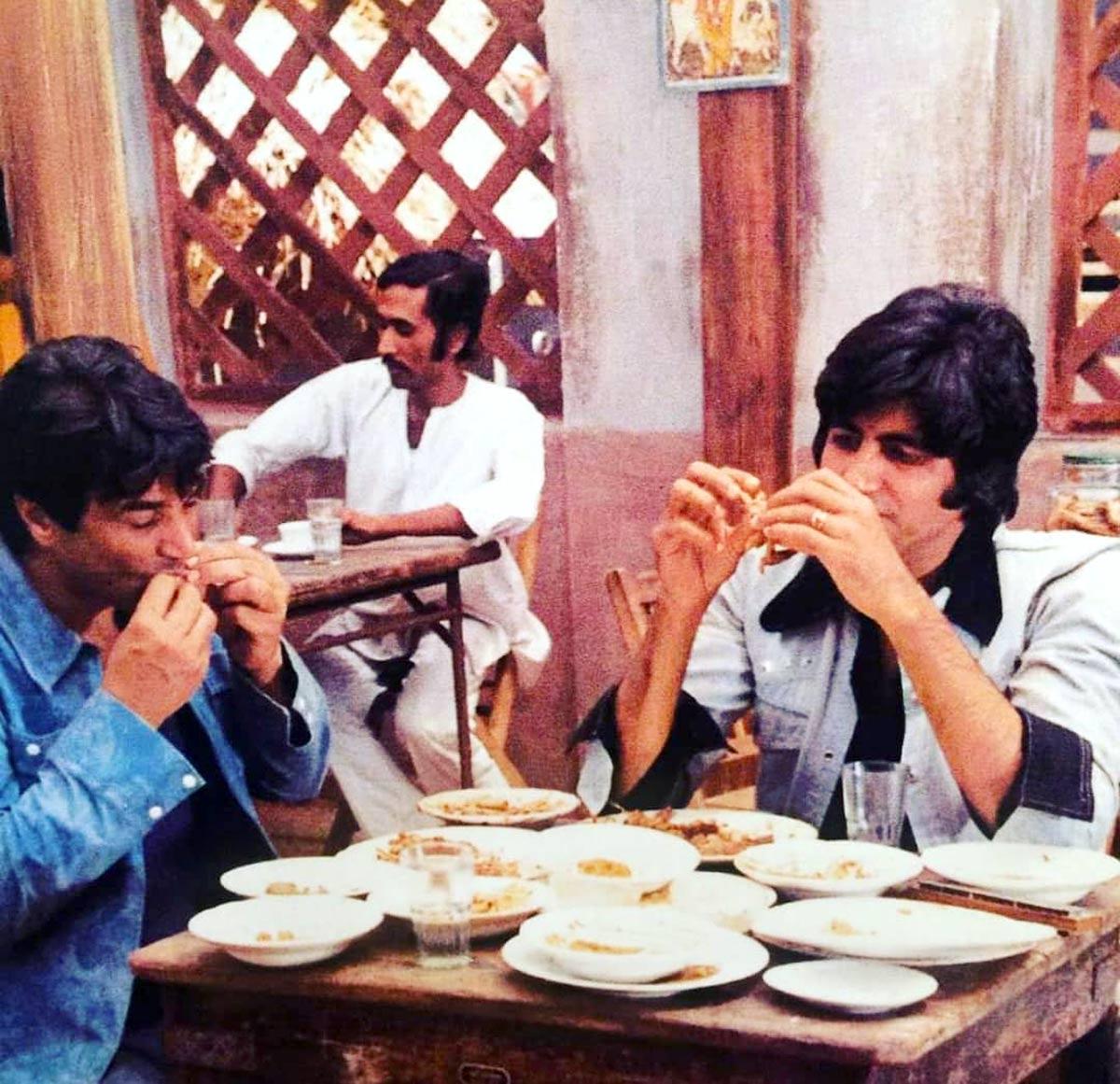
Do you look back and reminisce about Sholay with the film's stars like Amitabh and Dharmendra?
Yes. We talk about so many moments.
Moments in the film or on the sets?
More about the moments in the film, and then, of course, because we were together while making it, we bring up something or the other. Then we move onto other topics.
The dosti between Amitabh Bachchan and Dharmendra was the bedrock of the film.
Absolutely.
So how was the camaraderie between the two stars in real life at the shoot? Were they comfortable?
Yes, yes, yes.
Competitive?
Every individual is competitive. They don't like saying that but within themselves, I am sure they have assessed that they want to do their best, they should be remembered, they should stand out.
There were certain moments that belonged to one actor, and some that belonged to the other.
If he is standing on a tower creating a scene then naturally, it's going to be his highlight.
He is an extrovert while Amitabh's character is an introvert.
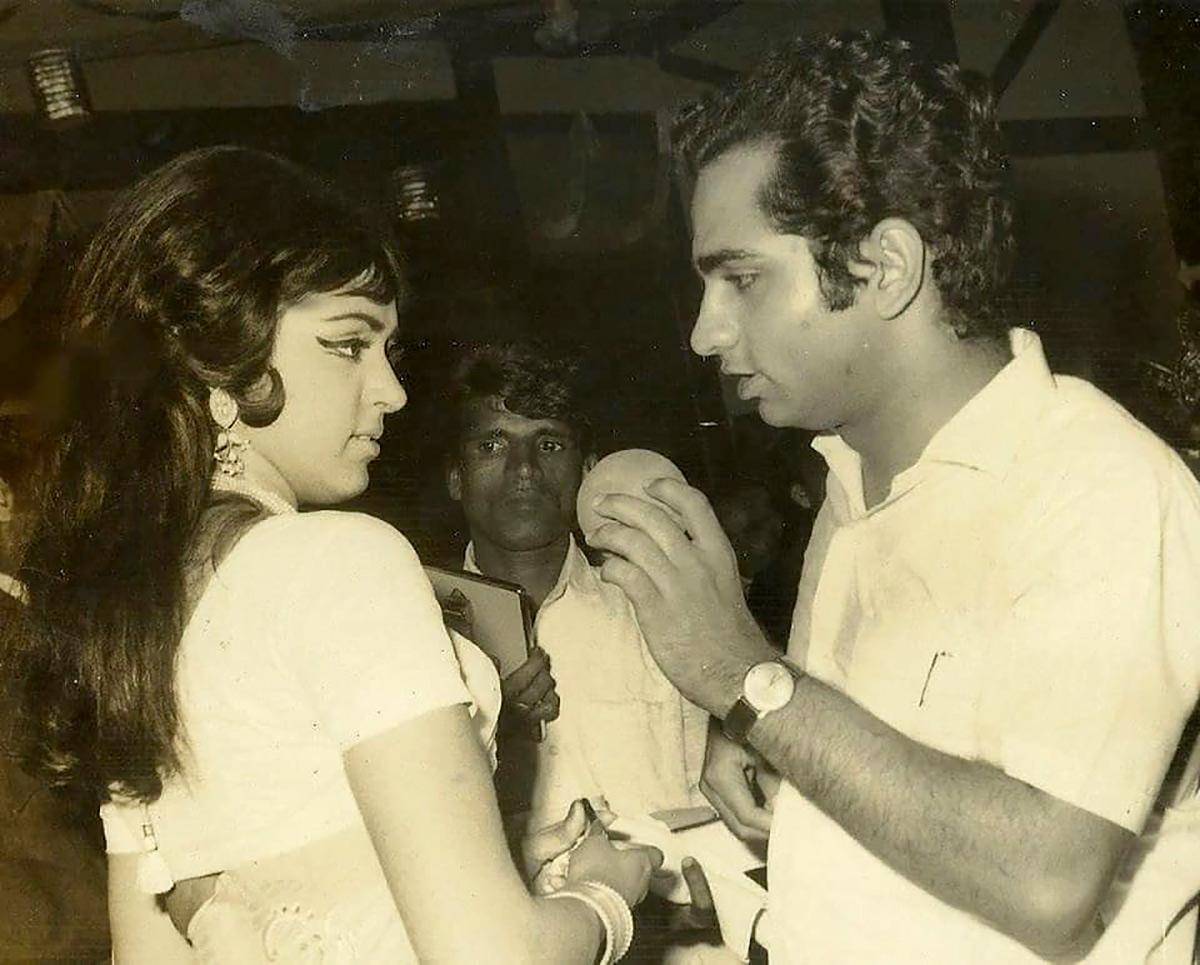
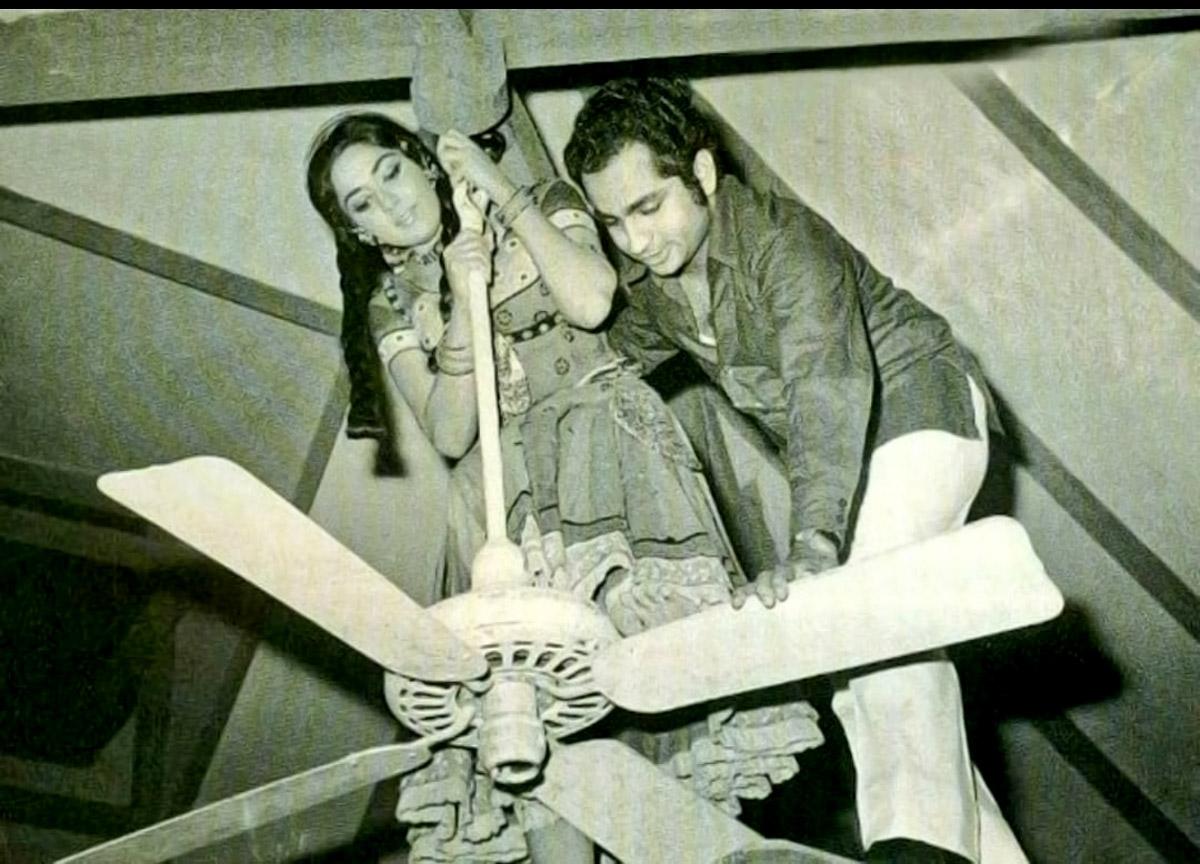
You were instrumental in making Hema Malini the leading female star of the 1970s with Andaaz, Seeta Aur Geeta and Sholay. How did you bring out the best in her?
Earlier, there were people who said, She is good looking, she is tall but she is not that much of an actress. That was the perception.
But a good actor is a good actor, and as a director, you have to work to get the best out of your artiste.
Does Hema acknowledge that?
She never refused me. We worked in Shimla Mirchi recently. She was very happy because it was again a very different role.
The concept of her character Basanti talking at breakneck speed, how was it decided?
All the characters had certain definite traits.
Yes. Including Asrani and Jagdeep.
Exactly. At that time, theatres had to shut down at midnight because of certain rules and regulations, and some distributors said that film is very long.
So for those territories, we cut out Asrani and Jagdeep's scenes because they had nothing really to do with the main story.
But after a few weeks, people started complaining that in Mumbai, people were talking about these scenes but they were not able to see them.
We had to put those scenes back in the film.

Have you ever gone back to Sholay's shooting locale, Ramnagar, now a tourist attraction?
Yes, I did go around 25 years ago.
You know, we were supposed to shoot Sholay at a location in North India, where all the dacoit films were shot normally because that's where the dacoit problem existed the maximum. But I shot in the South because I insisted I wanted a different background.
How did you react to the early deaths of Sanjeev Kumar and Amjad Khan, immortalised as Thakur and Gabbar?
One misses them. They went too early but woh kiske haath mein hai?
Tell us about R D Burman's background score which impressed me even more than his soundtrack.
His innovations for the tanga chase scene gave it a tremendous lift -- he used tabla, dholak and ghungroo with horse hooves.
Pancham's background score was as important as the songs.
The music was memorable as well. Anand Bakshi and R D Burman were equally important as Salim-Javed were.
Was Sholay's stereophonic sound a first?
Yes, absolutely.
Is it true that the sound recording entailed 18 shifts?
Much more. Some of the sound work was done in London as well.

Remove the sound effects like the coin rolling and the film's impact wouldn't have been as strong. At the same time, you also effectively used silences: Jaya lighting the lamps, Sachin's death, the massacre of Sanjeev's family.
Silence is as important as sound.
I planned it that way.
For the massacre sequence, I used the ominous creaking sounds of the swing while everything else is silent, only to have it broken by the sound of hooves and Gabbar's entry. It's all part of filmmaking.
Would you like your director son Rohan Sippy to remake Sholay from his perspective today?
That decision is up to him. I personally feel one should not remake it.
I had once written how nobody can better Sholay today, not even Ramesh Sippy.
I don't agree with that. I did my best when I was making it, why do I need to make it again?








 © 2025