
'The LTTE were the pioneers of that.'
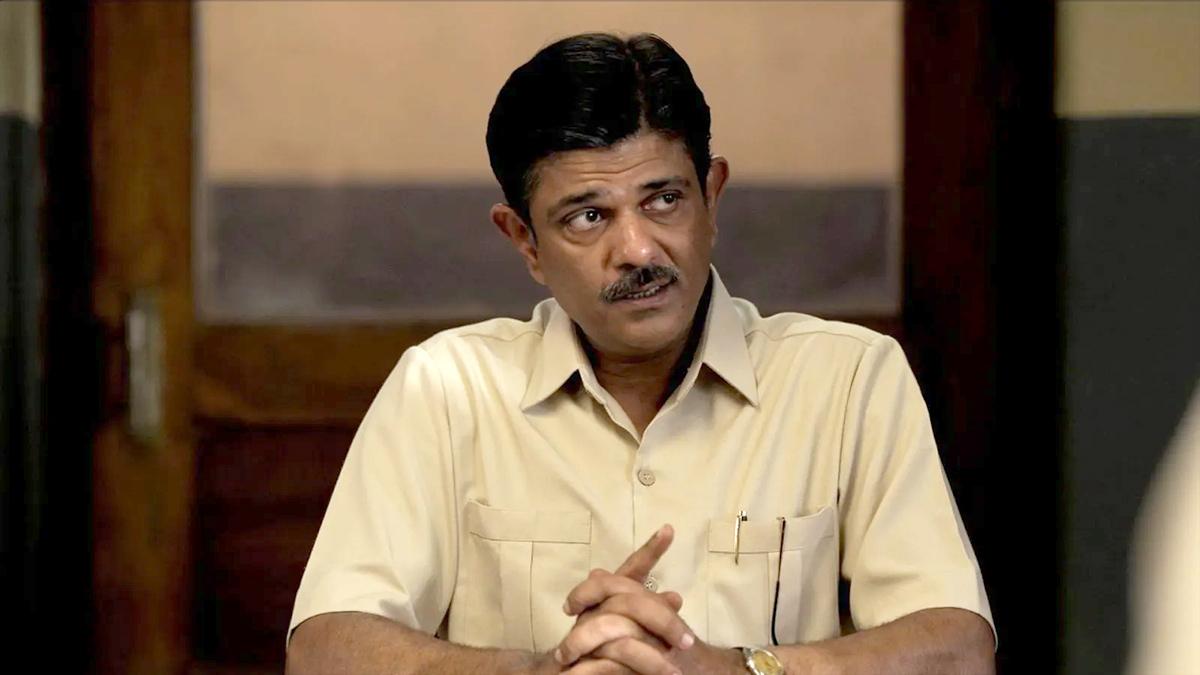
Nagesh Kukunoor is no stranger to reinvention.
The indie darling behind films like Hyderabad Blues and Iqbal, and his more recent ventures like the series City of Dreams, has given us a new series The Hunt: The Rajiv Gandhi Assassination Case.
In this lively interview with Syed Firdaus Ashraf/Rediff, Kukunoor addresses the perception of having 'disappeared' and defends his steady stream of work over the past seven years.
"Over 27 years, 15 feature films, almost seven shows, I'm continuously working. I'll never take away the joy of writing and directing. My God, direction is so much fun. Acting is not fun at all," he says.
Before watching The Hunt, I wondered where has Nagesh Kukunoor's magic touch gone. After watching it, Ifeel it's still very much there.
Why, you didn't like City of Dreams? Or did you never watch it?
No. But I couldn't help but wonder where you went.
I never really went anywhere.
In the last seven years, I have been working like a maniac.
The only difference is that I made only one feature film, which was in Telugu.
I made three seasons of City of Dreams.
I did Modern Love Hyderabad for Amazon Prime Video.
There was another series I almost started shooting but didn't.
So I have been working non-stop.
But I think a lot of people, even those who watched and liked City of Dreams, didn't know it was me.
So to answer your question, I never went anywhere. I've been doing my own thing.
But as I've learned in my career, there are some things which strike a chord with the audience.
Have I worked really hard? Do I think I've done something very different from my usual safety zone? Yes, in The Hunt.
But you never know what lands with an audience.
When you made Hyderabad Blues, it was for NRI audiences, but people in India loved it.
Correct. I'm not even an NRI.
I thought I would take it to 'international audiences'.
The Indian Diaspora at that time watching Indian films was small -- we're talking in 1997.
So I thought I'll take it to regular festivals. Then I was blown away by the fact that Indian audiences -- in India, not the Diaspora outside -- loved it.
So it's like that.
No film-maker knows what the've done till it actually finds a large audience.
Before I watched The Hunt, I felt I knew everything about Rajiv Gandhi's assassination. But after watching it, I realised I didn't know anything about it.
Did you feel the same way when you read Anirudhya Mitra's book on which the show is based?
100 percent! That's precisely why I wanted to do it.
I always wanted to dabble in the space of true crime, and it's something I did not get the perfect vehicle for.
Anirudhya's book literally reads like that.
There are so many jaw-dropping moments, so many twists and turns.
As a regular Joe, who knew nothing about the assassination other than the broad strokes reported in the media -- at least you're a journalist, you would have known a few more layers -- I knew nothing.
So when I read it, I was like, 'Oh my God, this could make for a terrific show.'
The questions are still there. Like why didn't they get Sivarasan (the LTTE terrorist who masterminded the Rajiv Gandhi assassination) on the same day? Why was there a delay of two days?
One genuinely doesn't know the answer.
You can do your research, go online, there are hundreds of theories floating around.
And I am not one to delve into conspiracy theories.
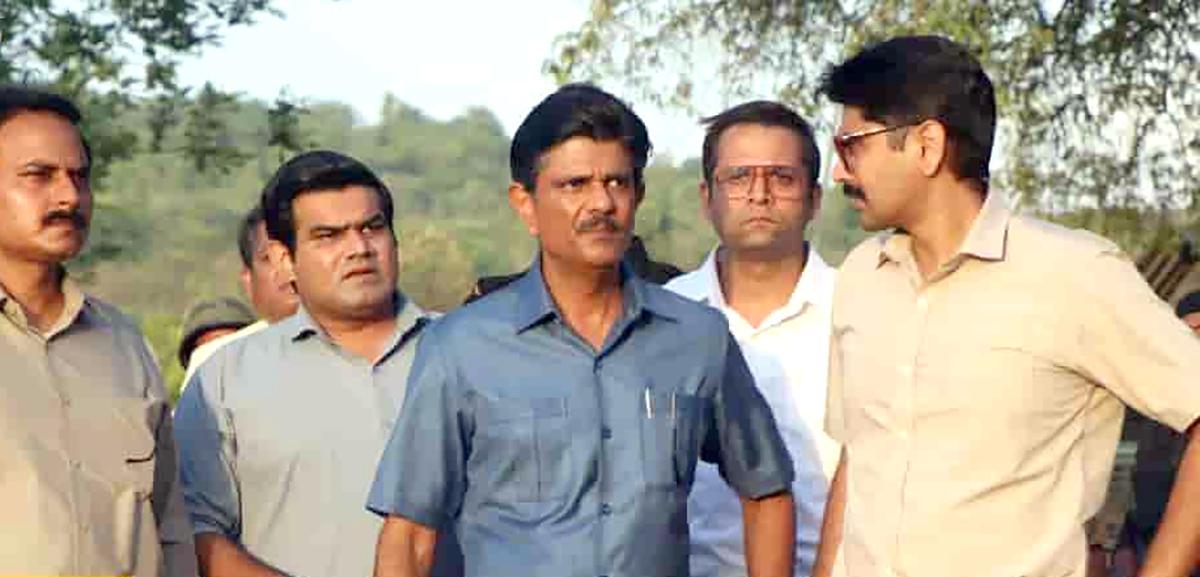
What I made sure in episode seven is that I would physically take the audience, the viewer, to Konanakunte (a suburb of Bengaluru) and have them experience that frustration for 35 minutes -- what the SIT felt, what Captain Ravindran felt.
I wanted you to feel that frustration. Other than relating all the events that went down in those 36 hours, there were no answers.
What I presented is exactly what happened the way it happened.
Any guess? Like they got to Sivasaran on a day, which was Rajiv Gandhi's birthday. Was that deliberate?
That's the way the events played out.
My co-writers and I couldn't believe that the day, the dawn on which it (the encounter) was conducted was actually Rajiv Gandhi's birthday. That is like the mother of all coincidences.
Did you feel any sympathy for Rajiv Gandhi while directing The Hunt? Or was it just a good story to tell?
I just wanted to tell a good story.
It is as simple as that, because the story is the investigation, not how his life was cut short so brutally.
Yes, it's unfortunate that he had to die so early -- no one deserves that -- but I had already left India by 1988.
I was working at my first job when I heard about the assassination. It didn't have the emotional impact that hit a lot of Indians. Shock, yeah.
The first episode starts slowly. Was that intentionally for people who don't know about Rajiv Gandhi's assassination?
There is so much stuff, so many characters introduced. Even then, people watching the show have to go back to see, 'Arrey, who is this character? Where was this?'
There's so much stuff going on.
Like, the whole investigation and how they crack it.
Now, it's second-hand knowledge. You say 'suicide bomber' and the whole world knows what that means.
But pre-1991, no one knew what a suicide bomber was.
They had a couple of cases where people drove trucks laden with explosives, but the individual suicide bomber carrying a bomb on himself -- certainly not herself -- that had never happened. The LTTE were the pioneers of that, so to set up that world requires time.
The effects of that world are felt as you watch the subsequent episodes. But the setup in episode one is a must, especially for Gen Z, that has absolutely no clue about Rajiv Gandhi's assassination.
How did you get such brilliant actors?
The credit goes to Casting Bay.
What casting directors do is sift through hundreds to first find the lookalikes. Then once you nail that, you get them to audition and see if they can act.
It's a long, complicated process.
Eventually, those auditions reach me, and I see how they visually match up, how they work as actors.
But the initial mind-numbing work has to be done by good casting directors.
As a director, how did you get them to immerse into the soul of those characters?
That's what I'm paid for.
The story was so convincing.
You tell them, 'Boss, read this book, read this character, you have to put this.'
When you're directing actors, the prep they do, how they immerse, is secondary to me. There is no right process to prepare for a role.
Most of the cast read 90 Days.
They understood what the space was, did their individual research.
What I did as a director is that I made sure they were in the right mental and physical space because they're mimicking people who lived.
After that, we tackle each scene as it comes, and I have to find the right line for them to toe.
That's the joy of directing.
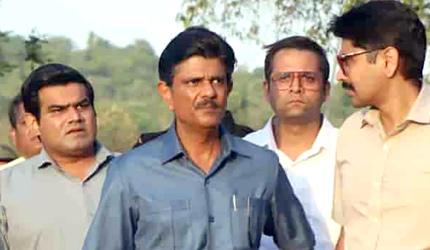
Two actors really stood out for me: Amit Sial, who played SIT chief D R Karthikeyan, and Shafeeq Mustafa, who played Sivarasan.
I was talking to a lot of actors, visually trying to match them up.
It was a suggestion by Sameer Nair of Applause Entertainment, who casually mentioned if I had thought of Amit Sial.
At that moment, I was like, 'Oh, I don't know Amit Sial.'
He said he was a terrific actor.
So I quickly did my research. He's done Maharani, Jamtara, and a bunch of stuff.
The beauty was that Amit, with his body type and face, matched Karthikeyan.
I met him, got a sense of the kind of person he was, trusted my gut and cast him. And it was proven in spades.
And Shafeeq Mustafa?
Shafeeq came from Casting Bay.
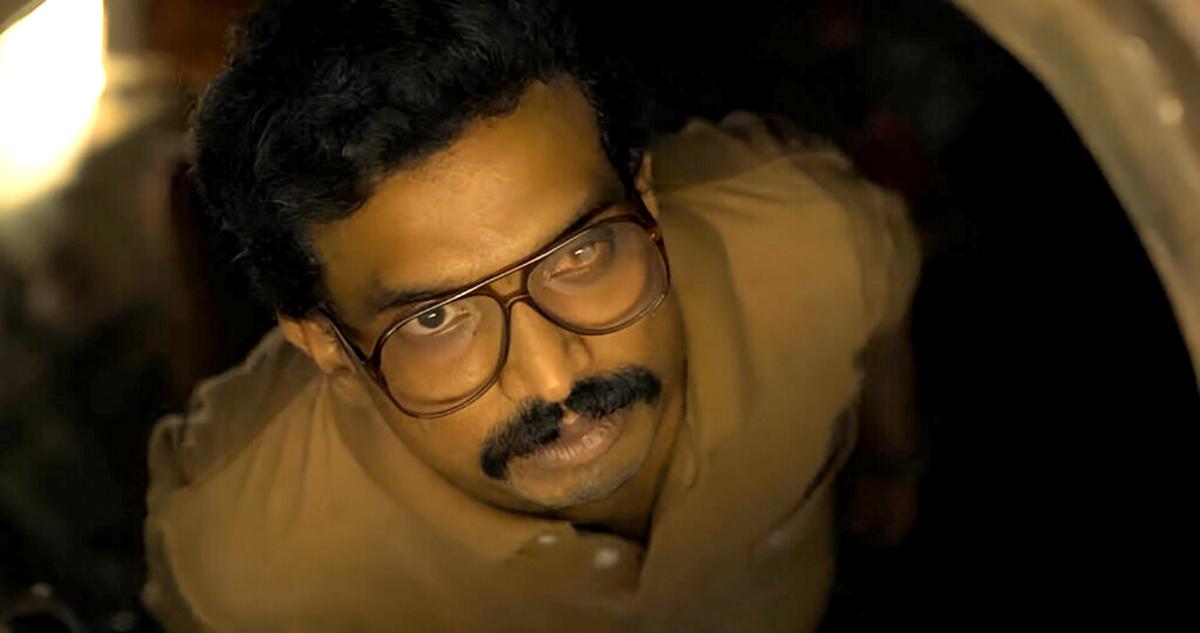
They found this Malayali actor, who visually matched.
What I loved was his body type. He's a very small guy, and Sivarasan was also small.
Shafeeq's body language, even in the audition, had a kind of nervous energy.
I thought, 'Oh my God, this is the guy.'
What about the actor in you? Do you still feel that urge to act? Because you starred in Pataal Lok.
That plays third fiddle to the writer and director. It's not something I get excited about.
Acting is a skill set I have to work very hard at.
When I agreed to do it, I was terrified.
I don't take that lightly.
If an opportunity comes and I'm not doing anything, I'll do it.
I enjoy it, but it's not a top priority.
The urge to act destroyed Vijay Anand's direction. Do you fear that?
No. The director in me is too strong.
Over 27 years, 15 feature films, almost seven shows, I'm continuously working.
I'll never take away the joy of writing and directing.
My God, direction is so much fun. Acting is not fun at all.
I was happy you didn't play the SIT chief in The Hunt!
Oh, there is no way I would have done it.
I did the photoshoot because we were desperate, getting close to the shoot.
But the shoot was so complicated.
I was directing in two languages.
I know my limitations as an actor, I have no delusions.
I'm an average actor. There are thousands, maybe lakhs, of good actors in India.
When you have the luxury of a good actor, why wouldn't you use them?
Photographs curated by Satish Bodas/Rediff







 © 2025