
Cost reduction will make backhaul infrastructure more affordable and enable carriers to undertake more efficient network expansion.
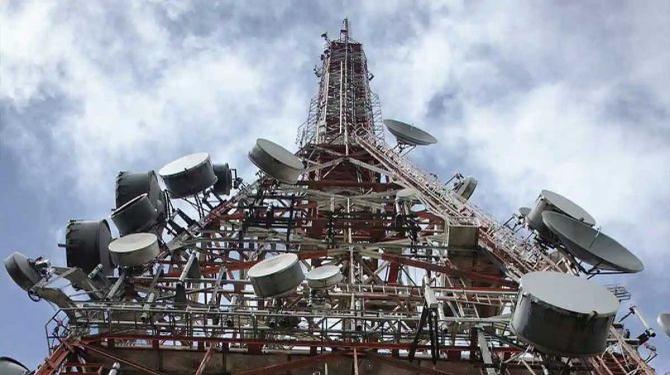
In a move that is set to slash the cost of backhaul spectrum charges by more than half, India’s telecom regulator has recommended that 0.1 per cent of adjusted gross revenue (AGR) be charged for the airwaves that connect towers to the core network.
Why is Trai proposing a flat 0.1% AGR rate for backhaul spectrum?
The Telecom Regulatory Authority of India (Trai) said on Wednesday that instead of calculating charges for backhaul spectrum on a weighted-average formula based on the number of carriers a telco may have, a flat low rate should be applied.
How much do telcos pay now, and why does Trai say the cut matters?
Currently, telcos pay between 0.15 per cent to nearly 4 per cent of AGR as backhaul charges on an annual basis, which is estimated to be about Rs 4,000 crore.
A significant reduction would make backhaul infrastructure more affordable and enable carriers to undertake more efficient network expansion, thus accelerating 4G and 5G rollouts.
How is backhaul spectrum assigned compared with access spectrum?
Unlike access spectrum that is auctioned to telcos, backhaul spectrum is assigned administratively at a price determined by the regulator and ratified by the Department of Telecommunications (DoT).
What changes has Trai proposed for microwave band assignments?
In its recommendations on assignment of microwave spectrum in the 6 GHz (lower), 7 GHz, 13 GHz, 15 GHz, 18 GHz, and 21 GHz bands, as well as E-band and V-band, Trai has proposed point-to-point based assignment of spectrum instead of block-based assignment to ensure better utilisation of airwaves.
Telcos would also be given the option to retain their existing backhaul carriers, which would prevent service disruption.
What are the proposed per-carrier charges across bands, and what happens next?
For point-to-point links in traditional microwave backhaul bands, Trai proposed levying Rs 75,000 per carrier per year in 6 GHz (lower) and 7 GHz bands, while Rs 25,000 per carrier per year for point-to-point links in 13 GHz, 15 GHz, 18 GHz and 21 GHz bands.
Spectrum charges for E-band carriers used for backhauling wireless access network traffic would be 0.1 per cent of AGR, down by a third, while for backhauling non-wireless access network traffic, Rs 25,000 will be charged.
Backhaul spectrum charges are proposed at Rs 2,500 per carrier per year for a point-to-point link in V-band.
Trai’s recommendations will now go to DoT for consideration.












 © 2025