
Stock markets are likely to remain range-bound in this holiday-shortened week amid a lack of any major domestic triggers, analysts said. Stock indices may also face volatility during the week amid the monthly derivatives expiry on Thursday. Equity markets would remain closed on Monday for Christmas.

'As one former Indian diplomat put it to me, Delhi has access to the White House, but Islamabad has access to Mar-a-Lago.'

Among the Sensex firms, Kotak Mahindra Bank, Bajaj Finserv, Bajaj Finance, Adani Ports, Trent, State Bank of India, Titan and Tata Consultancy Services were the laggards. However, Maruti, Infosys, NTPC, Asian Paints, Eternal and Hindustan Unilever were among the biggest gainers.

In an event-heavy week, stock investors will track quarterly earnings of several bluechip firms, the likely outcome of ongoing India-US trade talks, and inflation data for market cues, analysts said on Sunday. Moreover, global market trends and trading activity of foreign investors would also guide movement in equities, they said.

'Begin with a small investment, observe performance, then scale up gradually.'

From the Sensex firms, Bajaj Finance, Infosys, Hindustan Unilever, ICICI Bank, HCL Tech, UltraTech Cement, Bajaj Finserv, State Bank of India, Tata Consultancy Services, Reliance Industries, Axis Bank and Larsen & Toubro were among the major gainers. However, Trent, Tata Steel, Tech Mahindra and Maruti were among the laggards.

Only a limited set of investors should invest directly in corporate bonds.

Tata Steel's consolidated net profit more than doubled to Rs 2,007.36 crore during the June quarter, on account of "increase in net steel realisations and the planned cost-takeouts" across geographies. The Tata Group entity had posted a net profit of Rs 918.57 crore in the year-ago period.

At the end of the day, this isn't about choosing between EMIs and SIPs. It's about choosing your path to financial freedom.

'Right now, silver -- and especially platinum -- are very cheap compared to gold. If I were buying today, I would choose platinum.'

'While investing in a silver ETF, one should be aware that it has historically exhibited higher price volatility than gold.'
From the Sensex firms, Adani Ports, Bajaj Finance, Tech Mahindra, IndusInd Bank, Nestle and Tata Steel were among the major laggards. In contrast, Mahindra & Mahindra, Titan, Larsen & Toubro, Bharti Airtel and Maruti were among the gainers.

Among Sensex firms, Tata Consultancy Services, Adani Ports, Hindustan Unilever, Nestle, Bajaj Finserv and NTPC were the laggards. IndusInd Bank, Titan, Mahindra & Mahindra and Maruti were among the biggest gainers.

'Listing of scaled Indian subsidiaries of multinational corporations as well as of Indian conglomerates continues to remain a key theme for IPOs in India.'

The era where nations thrived through rigid alignments is giving way to an age where the connective State defines power. For India, that era has arrived, points out Dr Nishakant Ojha.

The latest spike in the Vix is a sign that investors are visibly rattled by global developments and fear a further drawdown in stock prices, experts said.

From the Sensex constituents, Adani Ports, Tata Steel, Kotak Mahindra Bank, UltraTech Cement, Bajaj Finserv and Titan were among the biggest gainers. In contrast, Power Grid, Trent, NTPC, Maruti, HCL Tech and Bharat Electronics were among the laggards.
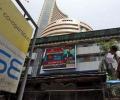
From the Sensex pack, Tata Motors, Sun Pharmaceutical, Bharti Airtel, Bajaj Finserv, ICICI Bank, Mahindra & Mahindra and JSW Steel were the gainers. Tech Mahindra, HCL Technologies, Asian Paints, Titan, Infosys, State Bank of India, Tata Consultancy Services and HDFC Bank were the laggards.

The ultra-rich invest differently -- embracing growth, compounding, and long-term clarity to build wealth with purpose and discipline, explains Ramalingam Kalirajan.

Despite recent underperformance, MNC funds have delivered over longer time frames.

Stolen's crisp running time and Abhishek Banerjee's metamorphosis from callous to crusader ensure the stark bits duly haunt and horrify, observes Sukanya Verma.

Singapore's state investor Temasek Holdings, which recently picked up 10 per cent stake in Haldiram, has been consistently expanding its footprint in India while slowly withdrawing from China over the last three years amid growing geopolitical risks and economic headwinds. India has become Temasek's third-largest market, after Singapore (27 per cent) and China (18 per cent), with its exposure to the country higher than the rest of Asia Pacific excluding the three (11 per cent), according to Temasek's annual review.

On Thursday, intensified shelling along the Line of Control and reports of drone and missile activity triggered anxiety across IPL camps.

Jane Street could do what they did because of the most fundamental flaw in the Indian stock market: a fragmented, fractured, fissured, fistula-ed liquidity stream, points out Shankar Sharma.

If you redeem your investments when prices have fallen sharply, you will be selling at low prices and may make a permanent loss. On the other hand, if you remain patient and remain invested, you give your investment the time to recover, says Dwaipayan Bose
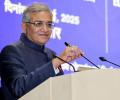
As an IAS officer in Kerala, Gyanesh Kumar -- who the Congress described as Amit Shah's 'right hand man' -- had a good working equation with the state's Congress and Left leaders.

A timeline of events related to the investigation of the Air India Boeing 787 crash in Ahmedabad, including investigation initiation, black box recovery, and safety measures taken.
The proposed guidelines cover several key parameters, including governance, investor protection, disclosure, testing frameworks, fairness and bias, and data privacy and cybersecurity measures.

Major Syed Moiz Abbas Shah, 37, was killed on Tuesday in a clash with the Taliban militants in the Sararogha area of South Waziristan near the Afghan border, according to a statement by the Inter-Services Public Relations (ISPR), the media wing of the army.

Among Sensex firms, HDFC Bank climbed more than 2 per cent. TCS, Maruti, Infosys, Reliance Industries and Bharti Airtel were among the major gainers. State Bank of India, JSW Steel, ITC, Tata Motors, UltraTech Cement and Nestle were among the laggards.

Success in this space demands more than luck, it requires sharp analysis, disciplined execution, and understanding market movers.

India's macroeconomic health is in a "relative goldilocks situation", and although the risk of higher landed oil prices, due to insurance cost surges and closure of choke points due to the brief Israel-Iran war, has receded, it is "too soon to sound the 'all clear' for the rest of the year", the Finance Ministry said on Friday.

Investors should avoid making drastic changes to their asset allocation during a market correction.

Domestic institutional investors (DIIs), mostly mutual funds and insurance companies, overtook foreign portfolio investors (FPIs) in ownership of NSE-listed companies in the March quarter of 2025. According to Prime Database, DIIs held a 17.62 per cent stake, up from 16.89 per cent in the December 2024 quarter.

Amid the ongoing conflict with Iran, Israel's foreign ministry said on Thursday that Soroka Hospital in Beersheba in the southern part of Israel has suffered a direct hit in a missile attack.
Equity investors would track global market trends, inflation data and trading activity of foreign investors for further cues this week, analysts said. Moreover, progress of monsoon and developments related to trade talks would also be monitored by investors, experts noted.

A multibagger stock multiplies its original investment several times, delivering returns of 100%, 200%, or even higher. The excitement of finding such wealth creators is undeniable, but the process of identifying them is far from simple. It requires a careful blend of research, patience, and the right set of tools.

Among Sensex firms, Tech Mahindra, HCL Tech, Asian Paints, NTPC, Infosys, Nestle, Sun Pharma, and Tata Steel were the major laggards. Eternal, State Bank of India, HDFC Bank, Larsen & Toubro, Reliance Industries and Bajaj Finserv were the gainers.

The Trinamool Congress on Friday accused the Bharatiya Janata Party of spreading lies and criminalising poverty over the detention of Bengali-speaking migrant workers in Odisha, while the saffron party charged the Mamata Banerjee dispensation with providing shelters to illegal immigrants.

Among Sensex shares, HCLTech, Asian Paints, Maruti, JSW Steel, TCS, SBI, ITC and Bharti Airtel were the major losers. On the other hand, Bajaj Finserv, Mahindra & Mahindra, Titan, L&T and Wipro were the major gainers.
