
The loss of input tax credit (ITC) following the rationalisation of the goods and services tax (GST) on individual life and health insurance from 18 per cent to nil is may weigh on the profits of life insurers in the third quarter (Q3) of 2025-26 (FY26).
Despite state-owned Life Insurance Corporation (LIC) reporting an improvement in value of new business (VNB) margin in Q1FY25, analysts believe the growth has not been satisfactory in the context of the insurer's medium-term targets on margins. VNB margin is a measure of profitability of life insurance companies. LIC's VNB margin improved by 20 basis points (bps) to 13.9 per cent in Q1FY25 over the same period last year due to a change in the business mix of the insurer.

Life Insurance Corporation of India (LIC) reported encouraging results for the April-June quarter (Q1) of FY26. The net premium income of India's largest life insurer was Rs 1.2 trillion, up 5 per cent year-on-year (Y-o-Y), in Q1. Renewal premium grew 6 per cent Y-o-Y to Rs 59,900 crore, while first-year and single premium grew 1 per cent and 4 per cent Y-o-Y respectively to Rs 7,500 crore and Rs 51,900 crore.
State-backed Life Insurance Corporation of India (LIC) recorded strong growth in the value of new business (VNB) margin in the third quarter of financial year 2023-24 (Q3FY24) while major listed private life insurers reported a weak performance. VNB refers to the profit that an insurer is likely to garner from new business, which comes from policies sold in a particular period. VNB margin is the profit margin of the insurer.
Life Insurance Corporation of India's (LIC) annualised premium equivalent (APE) growth remained weak in the fourth quarter of the financial year 2024-25 (Q4FY25) and flat in FY25, but management expects growth to rebound in FY26. The focus remains on improving product mix by increasing share of non-participating or non-par products in the individual APE.

'While we expand into other areas, banca remains our primary channel, and we continue to be a banca-led organisation.'
State-owned insurer Life Insurance Corporation of India (LIC) on Tuesday posted a 38 per cent increase in net profit to Rs 19,013 crore in the fourth quarter ended March 2025 helped by lower expenses. The country's biggest insurer had earned a profit of Rs 13,763 crore in the corresponding quarter a year earlier.

HDFC Life Insurance Company (HDFC Life) delivered a strong performance in the December quarter of the current financial year (Q3FY25), exceeding market expectations with robust earnings growth. The company reported a 13.7 per cent year-on-year (Y-o-Y) increase in net profit to Rs 414.9 crore in the quarter. The value of new business (VNB) rose 8.6 per cent Y-o-Y to Rs 930 crore, compared to Rs 856 crore in the corresponding quarter of the previous year.
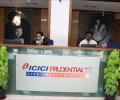
ICICI Prudential Life Insurance (IPRU) disappointed the market even though some analysts said the Q3FY25 results were in line. Most analysts cut margin estimates. The insurer reported M9FY25 growth of 8.5 per cent year-on-year (Y-o-Y) in value of new business (VNB) premium to Rs 1,575 crore, while total annual premium equivalent (APE) grew 27.2 per cent to Rs 6,910 crore.

'Our new business premium is around Rs 700 crore, which we want to take to Rs 2,000 crore.'

'Margins will be an outcome of that. They will likely remain somewhat range-bound.'
SBI Life Insurance reported a weak performance in Q2FY25. The annual premium equivalent or APE grew 3 per cent year-on-year (Y-o-Y) to Rs 5,390 crore. For the first half of financial year 2025 (H1FY25), it grew 9 per cent Y-o-Y to Rs 9,030 crore.
All the four listed private life insurance companies recorded a drop in value of new business (VNB) margin in the financial year 2023-24 (FY24) as compared to FY23. This is because of a higher share of unit-linked insurance plans (Ulips) in the product mix. VNB is a measure of the economic value of profits expected to emerge from a new business.
The data for individual weighted received premium (WRP) showed divergent trends for life insurers in December 2024. Overall, the industry's individual WRP grew 4.8 per cent year-on-year (Y-o-Y); LIC's individual WRP declined 13 per cent while private players saw 11.4 per cent growth.

'However, this process will take some time. Depending on the approval timeline, it may span a few quarters.'
India's largest life insurer, Life Insurance Corporation of India (LIC) reported encouraging performance in the January-March quarter (Q4) of FY24. Total annual premium equivalent (APE) was at Rs 21,180 crore, up 10.7 per cent year-on-year (Y-o-Y), with group APE of Rs 3,890 crore, up 60 per cent Y-o-Y, though individual APE contracted 2.1 per cent Y-o-Y. The participatory book contracted 20.2 per cent Y-o-Y, but the non-par grew by 206 per cent to Rs 3,740 crore.

ICICI Prudential Life Insurance Company (IPru) is struggling to generate growth in the value of new business (VNB). This is due to a combination of weak growth through the parent bank's channels, a shifting product mix in favour of unit-linked life insurance policies (ULIPS), and higher payouts to third-party channels. Leverage from current investments, a further reduction in contributions from ICICI Bank, and a pick-up in non-participating policies from the end of the year is key for this metric in the near to medium term.

'We do not believe in fire sale. We don't do it.'

Max Life Insurance plans to hire 30,000 agents and open 50 to 100 new offices in the financial year 2024-25 (FY25) to drive premium growth, said Prashant Tripathy, managing director and chief executive officer of the company. The private insurer's total agent count will rise to 1,30,000 in FY25. It added 47,957 agents in FY24, 54 per cent more than the year before.
Life Insurance Corporation of India (LIC) reported weak growth through H1FY24 but it witnessed a boost in embedded value (EV) due to equity-market performance. But concerns regarding its stock include loss of market share as it is outpaced by private sector rivals, sticky operating expenses (reduced slightly year-on-year but up in Q2FY24 versus Q1FY24), and high sensitivity of embedded value to equity volatility. Traders may also factor in the likelihood of another stake sale by the Government of India.
Life Insurance Corporation of India (LIC) declared disappointing results in Q1FY24. While it reported a net profit of Rs 9,540 crore in Q1FY24, this was attributable to the transfer of Rs 7,490 crore from non-participating (non-par) products to shareholders' accounts due to the accretion on available solvency margin. In operational terms, annualised premium equivalent (APE) declined and value of new business (VNB) margin was flat. But the medium-term prospects may be better.
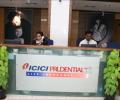
The ICICI Prudential Life Insurance Company's net premium income in the third quarter (October - December) of the current financial year (Q3FY24) swelled by 4.9 per cent year-on-year (Y-o-Y) to touch Rs 9,929 crore. Income from investment rose 111.3 per cent Y-o-Y to touch Rs 16,315 crore. The Annual premium equivalent (APE), and new business premium (NBP) increased by 4.8 per cent Y-o-Y. Both declined 7.5 per cent and 5.6 per cent respectively, quarter-on-quarter (Q-o-Q).
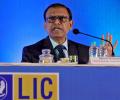
'At the policy's maturity, the total premium is refunded.'

When Life Insurance Corporation (LIC) of India gets listed on the bourses next month, it will be among the biggest listed life insurers globally in terms of market capitalisation (m-cap), assets, and revenue, but will also be among the least profitable and capitalised among its peer group. A big gap between LIC's m-cap, profits, and networth (shareholder capital) will make it one of the priciest insurers globally, in terms of price-to-earnings (P/E) multiple and price-to-book value (P/B) ratio. LIC also lags behind its Indian listed peers in terms of profit and networth.

The 2023 Budget set off a downtrend in the listed life insurance company stocks. The key reason was a proposal to tax income from insurance policies (other than unit-linked insurance plans or ULIPs) with a premium, or aggregate premium, of above Rs 500,000 per annum. This impacted the traditional savings profile since it affected the returns for these products.
The life insurer tinkered with its business strategy - raised the share of protection plans and reduced dependency on ULIPs in the past four years.

'If through growth and serving the customer we become number one, we will be very happy and very proud.'

These stocks offer the best combination of maximum 'buy' recommendations from brokerages and share price upside over the next 12 months.

'Had there been no war, maybe, we would come out with a 7.5 per cent stake sale.' 'At this point in time, a 3.5 per cent stake sale looked good.'
 © 2026 Rediff.com - Investor Information - Advertise with us - Disclaimer - Privacy Policy - Sitemap - Feedback - About us - Terms of use - Grievances