
Nearly 90 per cent of the stocks comprising the National Stock Exchange Nifty 500 Index and 49 of the 50 stocks that make up the Nifty50 are trading above their respective 200-day moving averages (DMAs). The 200-DMA is considered one of the most relevant trend indicators by investors and traders. They believe that stocks and indices trading above this key level exhibit strength and are likely to rally, while those trading below this level are viewed as bearish, with the stock/index expected to see a selloff.

Foreign Portfolio Investors (FPIs) have pulled out over Rs 10,000 crore from Indian equities in the first three weeks of September, primarily due to rising US interest rates, recessionary fears, and overvalued domestic stocks. Before the outflow, FPIs were incessantly buying Indian equities in the last six months from March to August and brought in Rs 1.74 lakh crore during the period. Mayank Mehra, smallcase, manager and principal partner at Craving Alpha,believes that strong economic growth prospects, attractive valuations, and government reforms could support foreign investment flows in the next month.

After withdrawing record funds in 2021-22, foreign portfolio investors (FPIs) continued their sell-off in the last fiscal too and pulled out Rs 37,631 crore from Indian equities amid aggressive rate hikes by central banks globally. The outflow trend is likely to reverse in the current financial year since India has the best growth potential in the financial year 2023-24 (FY24), VK Vijayakumar, chief investment strategist at Geojit Financial Services, said. Market analysts believe that FPI flows in the current financial year would be decided by a host of factors, such as the US Federal Reserve's policy stance, oil prices movement and development in the geopolitical situation.

Notwithstanding concerns about lofty valuations, smallcaps recorded their most significant monthly gain in nearly three years in November. The National Stock Exchange Nifty Smallcap 100 finished the month with a 12 per cent gain, the most since February 2021 when it rose by 12.2 per cent. After declining by 4.1 per cent in the preceding month, the Nifty Midcap 100 rose by 10.4 per cent, the most since July 2022.

'We will have a strong exit as our third quarter is strong.'

The domestic benchmark indices - the S&P BSE Sensex and the National Stock Exchange Nifty50 - had lost close to 1.5 per cent in three days recently before gaining slightly. Notwithstanding weakness and volatility, the Nifty50 has managed to hold on to the 18,000 mark, while the Sensex has managed to stay above the 61,000 level. The performance of the stocks that comprise these front-line indices remains polarised.

From the Sensex pack, Power Grid, HDFC Bank, HDFC, Tech Mahindra, Tata Consultancy Services, Wipro, Reliance Industries and Larsen & Toubro were the major gainers. Mahindra & Mahindra, ITC, IndusInd Bank, Axis Bank, Bajaj Finance and Maruti were among the laggards.

Bright dreams of a new journey, desperation to stage a comeback and desire to rediscover old glory will be the dominant themes of this season's Ranji Trophy that begins at various centres across the country from Friday.

Benchmark stock indices Sensex and Nifty closed with losses in a choppy trade on Thursday as investors preferred a cautious approach ahead of inflation and industrial production data to be released later in the day. Unabated foreign fund outflows also hit the investor sentiment. The 30-share BSE Sensex declined by 147.47 points or 0.25 per cent to settle at 59,958.03.

Inflation data, both at domestic and global level, interest rate scenario in the US, geopolitical situation and general elections in 2024 are some of the major factors that would influence trading in the equity market this financial year, analysts said. Besides, foreign fund trading activity and global trends will also dictate terms in the equity market going ahead. Equity markets across the globe faced major challenges in FY23 due to concerns over high inflation, which resulted in increase in interest rates around the world, lowering investor sentiment, experts added.

Foreign Portfolio Investors (FPIs) pumped in Rs 43,838 crore in Indian equities in May, the highest level in nine months, supported by strong macroeconomic fundamentals, and reasonable valuations. FPIs continued the buying stance in June too, and invested Rs 6,490 crore in just two trading sessions of the month, data with the repositories showed. VK Vijayakumar, chief investment strategist at Geojit Financial Services, said that inflow by FPIs will continue in the current month since the latest GDP data and high-frequency indicators reflect a robust economy gaining further strength.

Cheteshwar Pujara's presence did not help Saurashtra as a gritty Tripura humbled the defending champions

Shares of real estate firms have been outperforming over the past year. The rally, analysts say, may hit roadblocks in the near term amid stretched valuations, even as the long-term prospects for the sector remain ebullient. "Most of the positive news flow is already in the price. Hence, investors sitting on hefty profits may partially cash out at current levels," suggests V K Vijayakumar, chief investment strategist at Geojit Financial Services.

It rained fours and sixes in Bengaluru as a total of 549 runs were scored -- the highest aggregate in a T20 match.

"India is the best market right now in the world with the digital initiatives the government has implemented

As temperatures soar across the country, amid searing heat wave, analysts see power demand hitting fresh record highs this year. The time, therefore, may be opportune to add related stocks on dips as higher demand boosts earnings visibility, they said. On April 18, India's electricity demand touched a new high of 216 gigawatts.

A round-up of the Ranji Trophy quarter-final matches played on Monday.

Benchmark indices rallied for the eighth day running on Thursday, ending at fresh record closing highs, amid firm global market trends and continuous foreign fund inflows. Buying in IT counters also added to the momentum.

IT services major HCL Technologies is looking at hiring about 20,000 people over the next two quarters to meet the demand coming in on the back of strong growth in deal signing and adoption of digital services. The Noida-based company, which crossed $10 billion milestone in the calendar year 2020, had 159,682 employees at the end of December 31, 2020. It saw a gross addition of 12,422 people, while net addition during the December 2020 quarter was of 6,597 people. Attrition for IT services (on last 12 month basis) was at 10.2 per cent.

Foreign flows into Indian equities are expected to pause in the short to medium term, say analysts. The outlook is influenced by multiple factors, including rising oil prices, actions from global central banks, climbing bond yields, and the dollar index gaining prominence. "Valuations appear rich with the markets at record highs.
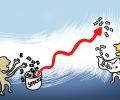
In a dazzling resurgence, foreign investors have graced the Indian equity markets with an influx of nearly Rs 1.5 lakh crore in 2023, fuelled by optimism over the country's resilient economic fundamentals amid shadows of a gloomy global scenario. Experts believe that the positive trend may continue in 2024. This follows Indian equities witnessing the worst-ever net outflow of Rs 1.21 lakh crore by FPIs in 2022 on aggressive rate hikes by the central banks globally after net inflows for three consecutive years.

Shepherded by Priyank Panchal's spunky innings, West Zone defied South Zone bowlers while chasing a formidable 298 and finished day four of the Duleep Trophy final at 182 for five.
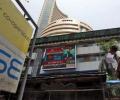
Benchmark indices Sensex and Nifty declined in early trade on Wednesday due to selling in financials, oil and IT stocks amid weak global trends.

In a memorable year for the equity market, Dalal Street investors added a whopping Rs 81.90 lakh crore to their wealth in 2023 as a raft of positive factors powered a stellar rally in stocks. Experts said India's strong macroeconomic fundamentals, political stability owing to the BJP's success in recent elections in three significant states, optimistic corporate earnings outlook, signals from the US Federal Reserve about three prospective rate cuts next year and heavy retail investors participation played a major role in fuelling the stock market rally in 2023. In the year 2023, the 30-share BSE Sensex jumped 11,399.52 points or 18.73 per cent.

Equity benchmarks started the first day of trade of the New Year on a positive note and ended with smart gains, propelled by buying in index majors Reliance Industries and ICICI Bank amid a firm trend in European markets. The 30-share BSE Sensex climbed 327.05 points or 0.54 per cent to settle at 61,167.79 on Monday. During the day, it jumped 382.05 points or 0.62 per cent to 61,222.79.

The Sensex came under fag-end selling pressure to close in the red for the sixth straight session on Friday as risk-off sentiment prevailed amid unabated selling by foreign institutional investors and concerns over inflation. The 30-share BSE benchmark pared all intra-day gains and declined 136.69 points or 0.26 per cent to end at 52,793.62. During the day, it had rallied 855.4 points or 1.61 per cent to 53,785.71. On similar lines, the broader NSE Nifty dipped 25.85 points or 0.16 per cent to settle at 15,782.15.

Investment in the Indian capital markets through participatory notes dropped to Rs 88,398 crore month-on-month in February amid higher valuation of domestic markets. This was the third consecutive monthly decline in the investment level. Before this, investment through the route had been on an increasing trend since July 2022 because of a slump in the oil and other commodities prices and the relative outperformance of Indian equity markets.

South Zone pacers were brilliantly bellicose while reducing West Zone to 129 for 7

Baba Indrajith helped himself to a fine hundred while another senior campaigner Vijay Shankar scored a half-century as Tamil Nadu cruised into the semi-finals of the Vijay Hazare Trophy.

Stock market investors are expecting a balanced Budget with a focus on job creation, increased spending on infrastructure, reigning in the deficit, and bringing the economy back on track, experts said on Wednesday. Stock markets have been subdued in the run-up to the Union Budget with BSE's benchmark Sensex is almost flat so far this month. Even the corporate earning season failed to excite the markets, while some indices like IT and bankex have seen some positive movements.

Mutual funds (MFs) have stepped up equity purchases after staying on the fence for over two months. Their net equity investments reached a four-month high of Rs 7,700 crore in July, rising for the fourth consecutive month after withdrawing a net of Rs 5,100 crore in April 2023. This trend continued in August, with net investments of Rs 3,400 crore in the first three trading sessions, according to data from the Securities and Exchange Board of India.

With sales of cooling products turning out dismal this summer due to unseasonal rains, the stocks of related companies are now off their March highs. Shares of fan and air conditioner makers such as Voltas, Symphony, Orient Electric, Johnson Controls-Hitachi Air Conditioning and Crompton Greaves are down 5-23 per cent since March when the summer season saw a firm onset. In comparison, the BSE Sensex index is up 10 per cent.

Equity markets halted their two-day rally on Friday, with the Sensex tumbling 714.53 points amid weak global equities and selling in index majors Infosys, ICICI Bank, HDFC Bank and Reliance Industries. Continuous foreign fund outflows also dented sentiments. The BSE benchmark Sensex tanked 714.53 points or 1.23 per cent to settle at 57,197.15. During the day, it plummeted 776.96 points or 1.34 per cent to 57,134.72. The NSE Nifty also declined 220.65 points or 1.27 per cent to 17,171.95.

Mayank Agarwal, vice-captain of South, Sarfaraz Khan and Prithvi Shaw have come to this match riding on heaps of runs that they have made in the previous Ranji season.

Industrial production and inflation data, quarterly earnings from IT majors and global trends would drive the equity markets in a holiday-shortened week, analysts said. Moreover, foreign fund trading activity, movement of the rupee and global crude oil prices would also dictate terms in the market, they added. Equity markets would remain closed on Friday for 'Dr Baba Saheb Ambedkar Jayanti'.

A round-up of the Ranji Trophy quarter-final matches played on Sunday.

Shares of most of the Adani group firms ended lower on Monday, a day after it released a 413-page response to allegations of wrongdoing brought by a US-based short seller Hindenburg Research.

Among Sensex shares, HDFC Bank fell the most by 2.58 per cent, followed by SBI (2.12 per cent), HDFC (2.09 per cent), and IndusInd Bank (2.02 per cent). Axis Bank, Bajaj Finserv, M&M, L&T, Reliance, Infosys and TCS were among the major losers. In contrast, Tata Motors, Maruti, NTPC, Sun Pharma, Power Grid and Titan were among the gainers.

Continuing its heavy selling spree for the eighth consecutive month, foreign investors pulled out nearly Rs 40,000 crore from the Indian equity market in May on fears of an aggressive rate hike by US Federal Reserve that dented investor sentiments. With this, net outflow by foreign portfolio investors (FPIs) from equities reached at Rs 1.69 lakh crore so far in 2022, data with depositories showed. Going ahead, FPI flows will remain volatile in the emerging markets on account of rising geo-political risk, rising inflation, tightening of monetary policy by central banks, among others, Shrikant Chouhan, Head - Equity Research (Retail), Kotak Securities said.

Benchmark indices gained for the third day running on Friday, with the Sensex climbing over 300 points amid mixed global market trends. The 30-share BSE benchmark advanced 303.38 points or 0.56 per cent to settle at 54,481.84. During the day, it jumped 448.68 points or 0.82 per cent to 54,627.14. The broader NSE Nifty went higher by 87.70 points or 0.54 per cent to end at 16,220.60.
