
India's industrial production growth slowed to a nine-month low of 1.2 per cent in May 2025 due to poor performance of manufacturing, mining and power sectors caused by the early onset of monsoon, according to official data released on mMonday. The factory output, measured in terms of the Index of Industrial Production (IIP), had expanded by 6.3 per cent in May 2024.

UPI has catapulted India into the forefront on the global digital payments landscape. Working hand in hand, the AePS payments system is making life easy for rural folks, notes Tamal Bandyopadhyay.

Data since 2005 show that the five years with the highest rainfall saw average market returns of 8.98 per cent, while the five driest years returned 25.7 per cent on average.

Marico reported consolidated revenue growth of 20 per cent year-on-year (Y-o-Y) during the January-March quarter (Q4) of FY25. Domestic revenue surged 23 per cent Y-o-Y, while volume growth was 7 per cent. International growth stood at 11 per cent (16 per cent in constant currency growth).

India's economic growth slowed to 7.4 per cent in the March quarter, bringing down the annual growth rate to 6.5 per cent during 2024-25, according to official data released on Friday. The growth in the January-March period was lower than the 8.4 per cent expansion in the year-ago quarter.

India and the US desire to give preferential market access to each other's businesses and teams of both the countries are working together on the proposed bilateral trade agreement, Commerce Minister Piyush Goyal has said. In February, US President Donald J Trump and Prime Minister of India Narendra Modi announced plans to negotiate the first tranche or phase of a mutually beneficial, multi-sector Bilateral Trade Agreement (BTA) by fall (September-October) of 2025.

From using lavender in traditional Dogri embroidery to making essential oils, beauty products and food syrups infused with this flowering plant, Bhaderwah, once known for its maize fields, is embracing lavender to bring about an economic transformation to their small town.

India's fresh restrictions on limiting access to Bangladeshi exports appear to be in response to Dhaka denying certain value-added items from the Northeast to enter that country through the land transit points.

Agriculture, pharma, electronics, and engineering goods together accounted for over 50 per cent of India's merchandise exports in 2024-25, according to government data, highlighting the country's growing strength in diverse sectors amid efforts to boost manufacturing and value-added exports.

India finalised a free trade agreement with the UK, its 16th so far as the country aimed at boosting bilateral trade and investments. The other regions and countries with which India has signed such agreements include the four-nation European bloc EFTA, Japan, Korea and Australia.

The Sixteenth Finance Commission Chairman, Arvind Panagariya, has highlighted the challenges faced by southern states due to falling fertility rates and the subsequent increase in dependency ratios and ageing populations. He noted that Andhra Pradesh, Assam, and Tamil Nadu have raised concerns about these demographic trends. The Commission is currently touring the states to gather feedback and is expected to submit its recommendations after completing nationwide consultations.

In response to the panic triggered by Trump's trade policies, the RBI net sold approximately $43 billion in the second half of FY25 to curb volatility, as the rupee plunged to a low of 87.95 per dollar in February this year.

77 per cent of all transactions in the January-March 2025 period took place digitally, indicating continued preference for online car purchases.

India's policy for agriculture trade must move commodity-by-commodity to gain maximum benefits as US President Donald Trump's 26 per cent tariff on exports from the country take effect, said agriculture economist Ashok Gulati in a recent policy paper.

India's economic growth rate decelerated to 6.2 per cent in the October-December quarter this fiscal, mainly due to poor performance by mining, manufacturing and all other sectors, with the exception of agriculture. However, on a sequential basis, the economic growth rate in the third quarter showed improvement over 5.6 per cent recorded in the second quarter.
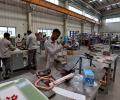
In a relatively rare occurrence, the growth in manufacturing jobs exceeded the pace of sector growth in 2022-23 (FY23). The number of persons engaged in the segment grew by 7.43 per cent in FY23, according to figures from the Annual Survey of Industries (ASI) released on September 30. The gross value added for the manufacturing sector grew by 4.24 per cent in current prices and declined by 2.2 per cent in real terms for FY23, according to earlier annual figures released by the government.

Homegrown fast-moving consumer goods (FMCG) major Dabur India is set to record low single-digit growth in consolidated revenue in the December quarter, it said in an update on Friday. The maker of Hajmola candy and Real fruit juice said rural consumption continued to be resilient and grow faster than urban in the third quarter.

India's economic growth rate is estimated to slip to a four-year low of 6.4 per cent in 2024-25, mainly on account of poor showing by the manufacturing and services sector, according to government data released on Tuesday. The gross domestic product (GDP) rate of 6.4 per cent will be the lowest since the Covid year (2020-21) when the country witnessed a negative growth of 5.8 per cent.

Growth in corporate profits needs to be commensurate with wages to boost the economy, Economic Survey 2024-25 said, noting that sharp disparities between the two pose risk to the economy by curbing demand. The document tabled in Parliament on Friday noted that while the labour share of GVA (gross value added) shows a slight uptick, the disproportionate rise in corporate profitsredominantly among large firmsaises concerns about income inequality.

While this will incur a revenue loss amounting to 0.2 per cent of GDP, it will provide a strong boost to consumer sentiment and spending, points out Rajani Sinha.

The VBL board approved the purchase of SBC Tanzania for Rs 1,304 crore and SBC Beverages Ghana for Rs 127 crore. These own manufacturing/distribution rights for NARTD (PepsiCo branded) beverages in Tanzania and Ghana. The acquisitions will help VBL gain ground in East and West Africa.

Low wage costs would not be the sole factor in the battle of supremacy of world textile trade post-MFA and countries that aspire to maintain export-led strategy must also develop their expertise in value-added services, according to a OECD report.

The finance minister, in her Budget speech, should focus more on what she is directly responsible for, rather than on programmes where her role is largely supportive, notes Nitin Desai.

Headline growth was quite weak heading into the Covid period but averaged 6.4 per cent and 6.7 per cent in the five years between FY16 and FY20 for GVA and GDP respectively, points out Abhishek Upadhyay.

Amid low growth elsewhere, gross value added (GVA) growth in agriculture and allied activities recovered during the second quarter of the current financial year (Q2FY25) to 3.5 per cent year-on-year (Y-o-Y) due to strong monsoon. Experts feel that the rains have laid the foundation of an even better GVA performance in subsequent quarters. GVA growth in the first quarter of FY25 was 2.0 per cent.

VAS operators constantly complain that as they provide features, content and a wide range of services like ringer tunes to mobile operators for their customers in the absence of a proper regulatory structure, they don't get adequate financial returns from telcos.

India's economic growth slowed to near two-year low of 5.4 per cent in the July-September quarter of this fiscal due to poor performance of manufacturing and mining sectors, but the country continued to remain the fastest-growing large economy, data showed on Friday. The gross domestic product (GDP) had expanded by 8.1 per cent in the July-September quarter of 2023-24 fiscal. The previous low level of GDP growth at 4.3 per cent was recorded in the third quarter (October-December 2022) of financial year 2022-23.

Logistics major Delhivery has had promising Q2FY25 results. The Q2FY25 consolidated revenue was Rs 2,190 crore (up 0.8 per cent quarter-on-quarter or Q-o-Q and 12.8 per cent year-on-year or Y-o-Y). Express parcel revenue was Rs 1,300 crore, (up 1.7 per cent Q-o-Q/7.3 per cent Y-o-Y) alongside better yield (+5 per cent Y-o-Y) in the segment.

Marico may buck the industry trend with the fast-moving consumer goods (FMCG) major reporting strong growth and favourable commentary in a weak quarter for the industry. The company reported consolidated revenue growth of 8 per cent year-on-year (Y-o-Y) in Q2FY25. Domestic revenue growth was 8 per cent Y-o-Y with 5 per cent volume growth (4 per cent in Q1FY25).
Commenting on the study Subho Ray, president, IAMAI, said, "This is the first attempt to get an estimate of this market and we are hopeful that the MVAS industry with now get the required attention from the government and the industry."
India's economic growth slowed to a 15-month low of 6.7 per cent in April-June 2024-25, mainly due to poor performance of the agriculture and services sectors, government data showed on Friday. The gross domestic product (GDP) expanded by 8.2 per cent in the April-June quarter of 2022-23. India, however, remained the fastest-growing major economy, as China posted a 4.7 per cent growth in April-June 2024.

'Only 20 per cent of families in India buy cheese twice once a year.'

'While criticising India's high tariffs, Mr Trump stated he would impose reciprocal taxes on Indian products if re-elected.' 'However, since India's tariffs follow WTO rules, Mr Trump's actions would violate these rules,' Ajay Srivastava points out.

At a time when the government is nudging the private sector to ramp up its capital expenditure (capex), the Ministry of Statistics and Programme Implementation (MoSPI) is poised to kick-start the first-of-its-kind annual survey on the status of private sector capex from next month. "The inaugural edition of the annual exercise will start in October and will be completed by December. "The results will be made public by February next year," said Geeta Singh Rathore, director general, National Sample Survey Office (NSSO), at a data users' conference on Thursday.
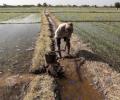
Gross Value Added (GVA) growth in agriculture and allied activities in the first quarter of the 2024-25 financial year (Q1FY25) dipped to 2.7 per cent at constant prices from 4.2 per cent in Q1FY24 due to a drop in output of some crops following heatwave in the main growing months. Low post-monsoon rains, which dried most of the reservoirs in several states across the country, also impacted the production of many crops. At current prices, the growth was estimated at 8.5 per cent as against 4.1 per cent in Q1FY24 due to a spike in food inflation during the April to June months of FY25.
India has become a hot spot for global technology companies trying to cash in on the booming telecom market here by offering value added services to telecom operators.

Concerns have been raised over Marico's exposure to Bangladesh in the wake of turmoil in that country. However, the management reiterated expectations of growing domestic business at double digits and maintaining international growth. Marico scaled up its food business by 4 times between FY20-24 and aims to double it again in the next three financial years.

Given the high priority accorded to the manufacturing sector, several policy initiatives around the theme of Atmanirbhar Bharat have been set in motion to address its competitiveness and growth. Some notable examples include the PLI scheme and the employment-linked incentive scheme announced in the recent Union Budget. The Budget also announced the setting up of 12 industrial parks under the National Industrial Corridor Development Programme (NICDP).

Milk supplies could improve with the monsoon, provided the rains are not excessive.
 © 2026 Rediff.com - Investor Information - Advertise with us - Disclaimer - Privacy Policy - Sitemap - Feedback - About us - Terms of use - Grievances