
Gold future prices sustained upward trend for the fourth straight session by surging Rs 2,048 to hit a fresh record high of Rs 100,000 per 10 grams as investors rushed to safe havens after US President Donald Trump indicated plans to overhaul Federal Reserve amid continuing global trade war jitters. On the Multi Commodity Exchange (MCX), the August delivery contract of the yellow metal bounced by Rs 2,048 or 2.1 per cent to hit a fresh peak of Rs 100,000 per 10 grams in the mid-session trade.

In response to the panic triggered by Trump's trade policies, the RBI net sold approximately $43 billion in the second half of FY25 to curb volatility, as the rupee plunged to a low of 87.95 per dollar in February this year.

Reserve Bank Governor Sanjay Malhotra on Saturday said that the market forces decide the value of rupee with respect to the US dollar and the central bank is not worried about day-to-day movement of the currency value.

United States President Donald Trump has once again held out the threat of tariffs to BRICS (Brazil, Russia, India, China, South Africa) nations if they try to replace the US Dollar with any other currency.

The US Fed interest rate decision, trading activity of foreign investors and quarterly earnings from corporates would largely drive the momentum in the equity market this week, analysts said. Escalating tensions between India and Pakistan over the Pahalgam terror attack will also remain on investors' radar, they added.

Global trends, macroeconomic announcements and US tariff developments are expected to drive stock markets in a holiday-shortened week, analysts said. Market participants will also closely track foreign investor activity, geopolitical tensions, and their impact on the US dollar and crude oil prices, they added.

Reserve Bank Governor Sanjay Malhotra on Friday said the exchange rate policy has remained consistent over the years and the central bank does not target any 'specific level or band' of the rupee, which slipped to an all-time low of 87.59 to a US dollar. On Thursday, the rupee plunged 16 paise to close at a record low of 87.59 against the American currency. "I would like to mention here that the Reserve Bank's exchange rate policy has remained consistent over the years.

The depreciation of Indian rupee against the US dollar is expected to push the country's import bill by about $15 billion, think tank GTRI said on Thursday. Compared to December last year, the Indian Rupee (INR) has depreciated 2.34 per cent against the US dollar, moving from Rs 83.25 to Rs 85.20, while the Chinese Yuan has weakened by 0.06 per cent, the Global Trade Research Initiative (GTRI) said.
Finance Minister Nirmala Sitharaman on Monday clarified in the Lok Sabha that India's rising gold reserves, including those held by the Reserve Bank of India (RBI), is not intended to replace any international currency.

'Investors' decisions should reflect their financial goals, risk tolerance, and the amount of gold already present in their portfolio.'

The weaker rupee will push the country's import bill due to higher payments for crude oil, coal, vegetable oil, gold, diamonds, electronics, machinery, plastics, and chemicals, economic think tank GTRI said on Friday. Citing an example, it said the depreciating domestic currency will increase India's gold import bill, especially as global gold prices have jumped 31.25 per cent, rising from $65,877 per kg in January 2024 to $86,464 per kg in January 2025.

High frequency indicators, like vehicles sales, air traffic, steel consumption and GST E-way bills, point towards a sequential pickup in momentum of economic activity during the second half of the fiscal 2024-25 and sustain moving forward, RBI Bulletin said on Wednesday. However, a strong dollar, driven by US economic resilience and trade policy pivots, could exacerbate capital outflows from emerging economies, push risk premiums higher, and intensify external vulnerabilities, said an article on 'State of the Economy' published in RBI's February bulletin.

From the Sensex pack, Bharti Airtel, Titan, Tata Consultancy Services, Hindustan Unilever, Infosys, Nestle, Reliance Industries, Mahindra & Mahindra, HDFC Bank and Tata Motors were the biggest gainers. However, IndusInd Bank, Bajaj Finance and UltraTech Cement were the laggards.

'I don't see 88 per dollar now.'

Moody's Ratings on Wednesday said India's economic growth will exceed 6.5 per cent in the next fiscal, up from 6.3 per cent this year, on higher government capex and consumption boost from tax cuts and interest rate reduction. Projecting a stable outlook for the banking sector, Moody's said although the operating environment of Indian banks will remain favourable in the next fiscal, their asset quality will deteriorate moderately after substantial improvements in recent years, with some stress in unsecured retail loans, microfinance loans and small business loans.

The Indian rupee may experience some volatility in the early days of Donald Trump's presidency, but it is likely to stabilise soon after, a report by the State Bank of India (SBI) said on Tuesday, terming this short term phenomenon as "Trump Tantrum".

Gold prices could hit the $3500 an ounce (oz) mark in the next 18 months - up around 13 per cent from the current levels - given the global uncertainties and aided by investment demand, said analysts at BofA Securities in a recent note. Uncertainty around Trump Administration trade policies, BofA said, could continue to push the US dollar (USD) lower, further supporting gold prices near-term.

The government, in the forthcoming Budget, could consider levying higher tariffs on imports to check the significant decline in rupee value witnessed in the past few months, said EY Chief Policy Advisor DK Srivastava. The noted economist argued that higher import duties would curb the demand for dollars from importers and help arrest the sliding value of the rupee, which touched a historic low of 86.70 to a dollar on January 13.

President-elect Donald Trump's warning that BRICS countries will face 100 per cent tariffs if they choose to move away from the US dollar is unclear to what extent he will carry out his threat, as it remains to be seen if the US laws permit such an action, former RBI Governor Duvvuri Subbarao said on Monday. He also said even for BRICS, there are internal differences about bringing out an alternative to the US dollar.
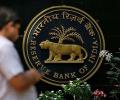
The RBI on Wednesday slashed key interest rate by 25 basis points, for the second time in a row, to support a shuttering economy hit by reciprocal tariffs imposed by the US. Following the rate cut, the key policy rate eased to 6 per cent providing relief to home, auto and corporate loan borrowers.

Investors will take cues from the December quarter corporate earnings, with blue-chips like Infosys, Reliance Industries scheduled to report their results this week, in addition, inflation data and trading activity of foreign investors will also be crucial in dictating market trends, analysts said.

ONGC's overseas arm applied for a sanctions waiver to access $500 million dividend from two Venezuelan projects.

Global fund managers witnessed one of their largest-ever declines in assets under custody (AUC) during the ongoing correction in the Indian markets, as stocks came under pressure from foreign outflows and the weakening rupee.

Escalating trade tensions amid a tariff war after Donald Trump took over as President of the United States (US) could adversely impact global growth and fuel inflation, an article on the "State of the Economy" in the Reserve Bank of India (RBI) monthly bulletin said.

'My advice: Don't mark your portfolio to market every day. Focus on survival.'

Moody's Ratings on Tuesday said India has a lower overall exposure to the US relative to others in the APAC region, although certain sectors such as food, textiles and pharmaceutical products face risks. Moody's said most companies in its rated portfolio are domestic-focused with limited exposure to the US market.

'As the global economy undergoes significant transformations in 2025, India's ability to navigate the complexities of trade wars, financial realignments, and emerging blocs will be pivotal,' explain Harsh V Pant and Soumya Bhowmik.

Information technology (IT) stocks ended at their lowest in nearly nine months after a fresh bout of selling, triggered by concerns over a recession in the US, the key market for domestic software exporters. A report by Morgan Stanley citing risks to growth also weighed on sentiment.

Shares worth over Rs 50,000 crore (or approximately $6 billion) are set to become freely tradable between now and April 10. Historically, such substantial volumes have been absorbed by a buoyant block-deal market.

The rupee tumbled 3 per cent against the US dollar in 2024 as concerns over slower economic growth and a stronger greenback in global markets weighed, but it was among the least volatile currencies in the world and the headwinds may be less intense in the coming year.

Unless something changes, Mr Trump is a huge threat right now, which is perhaps not being recognised fully, cautions Debashis Basu.
After two weeks of buying, FPIs turned net sellers in Indian equities this week, with a net withdrawal of Rs 976 crore amid a strengthening US dollar and steady rise in US 10-year bond yields, impacting investor sentiment. Foreign Portfolio Investors (FPIs) began the week on a positive note, investing Rs 3,126 crore in equities during the first two trading sessions (December 16-20).

From the 30-share blue-chip pack, Tata Motors, Reliance Industries, ICICI Bank, Asian Paints, Nestle India, UltraTech Cement, Larsen & Toubro and Adani Ports were among the biggest gainers. In contrast, Zomato, HCL Tech, Tata Consultancy Services, Tech Mahindra, Kotak Mahindra Bank and Infosys were among the losers.

United States President-elect Donald Trump on Saturday warned BRICS countries against any move to replace the US dollar and has sought a commitment from the nine-member group that includes India, Russia, China, and Brazil.

India's stock markets corrected recently but foreign money is likely to chase China rather than India in the short-to-medium term, said Chris Wood, global head of equity strategy at Jefferies, on Thursday. Wood told the Business Standard Manthan Summit in New Delhi he is bullish about Indian equities from a long-term perspective, but for the short term he is cautious given the quantum of foreign investor (FII) outflows and valuation woes.

Wholesale price inflation moderated to 2.31 per cent in January due to the decline in prices of food items especially vegetables, government data released on Friday showed. The Wholesale Price Index (WPI) based inflation was 2.37 per cent in December 2024. It was 0.33 per cent in January 2024.

'Even if India is attractive, FPIs currently lack the funds to invest, as money is being redirected to the US.'

eclined for the third month in a row in January, falling by 2.38 per cent year-on-year to $36.43 billion, while the trade deficit widened to $22.99 billion in the month. Imports rose by 10.28 per cent year-on-year to $59.42 billion in January due to an increase gold shipments, according to the Commerce Ministry data. The trade deficit was $21.94 billion in December and $16.55 billion in January last year.

From the Sensex pack, Zomato, HDFC Bank, Tech Mahindra, Adani Ports, Tata Consultancy Services, ICICI Bank, Sun Pharma, Larsen & Toubro, HCL Tech and ITC were the major laggards. On the other hand, Tata Motors, Nestle, Titan, Hindustan Unilever and Reliance Industries were among the gainers.

He said that as compared to global models costing 2.5 to 3 US dollars per hour usage, India's AI model will cost less than less than Rs 100 per hour (1.16 US dollars per hour) after 40 percent government subsidy.
 © 2026 Rediff.com - Investor Information - Advertise with us - Disclaimer - Privacy Policy - Sitemap - Feedback - About us - Terms of use - Grievances