
Indian benchmark indices Sensex and Nifty closed higher, with the Sensex climbing 355.90 points, driven by positive state election results and better-than-expected Q4 earnings, despite ongoing geopolitical concerns.
Indian markets on Dalal Street rallied sharply as easing tensions in the US-Iran conflict and stable oil prices boosted sentiment. Track Nifty 50 and BSE Sensex performance and key global triggers.

FMCG major Hindustan Unilever Ltd (HUL) reported a 21 per cent increase in its March quarter consolidated net profit, reaching Rs 2,994 crore, primarily driven by higher volumes and a significant gain from the divestment of its stake in Nutritionalab.

Indian stock markets extended their gains for a third consecutive day, with the Sensex climbing 753 points and the Nifty closing above 24,550, driven by a drop in crude oil prices and optimism surrounding potential peace talks between Iran and the US.

Indian benchmark indices, Sensex and Nifty, saw a significant rebound in early trade, driven by a decline in crude oil prices. This drop followed US President Donald Trump's announcement of progress in negotiations with Iran towards an agreement to end the war, leading to a temporary pause in 'Project Freedom' to escort ships through the Strait of Hormuz. Track Nifty 50 and BSE Sensex performance and key global triggers.
Indian markets on Dalal Street rallied sharply as easing tensions in the US-Iran conflict and stable oil prices boosted sentiment. Track Nifty 50 and BSE Sensex performance and key global triggers.

Indian benchmark stock indices, Sensex and Nifty, closed nearly 1 per cent lower due to surging crude oil prices, weak global market trends, and significant foreign fund outflows, with geopolitical tensions and inflation concerns further dampening investor sentiment.
Indian benchmark indices Sensex and Nifty experienced a significant tumble in early trade, driven by surging global oil prices, continuous outflows by Foreign Institutional Investors (FIIs), and persistent geopolitical uncertainties, particularly in West Asia.

Indian benchmark equity indices, Sensex and Nifty, experienced a decline in early trade, ending a three-day rally, primarily due to heavy selling in IT stocks and concerns over prolonged instability in West Asia.
Indian benchmark equity indices, Sensex and Nifty, snapped a three-day rally, tumbling nearly 1 per cent due to heavy selling in IT stocks, a jump in crude oil prices, foreign fund outflows, and fears of prolonged instability in West Asia.

Mcap of top 6 most valued firms drops nearly Rs 65k cr; Airtel biggest laggard
Indian benchmark indices Sensex and Nifty rallied nearly 1 per cent, driven by optimism over easing geopolitical tensions in the Middle East and fresh foreign fund inflows, with the Sensex gaining over 500 points.

Wipro reported Q4FY26 IT services revenue of $2.6 billion, a modest 0.2 per cent Q-o-Q constant currency growth, with adjusted operating profit margin beating estimates at 17.2 per cent. The company announced a significant share buyback of ~15,000 crore, but faces near-term growth challenges, particularly in the BFSI segment, and has issued a soft Q1FY27 revenue guidance.

Indian stock market benchmarks Sensex and Nifty closed higher on Tuesday, buoyed by a drop in crude oil prices, a rally in global markets, and strong buying in IT stocks.

Indian stock market indices Sensex and Nifty closed nearly 1 per cent higher, marking their third consecutive day of gains, supported by a slight decrease in crude oil prices and positive global market trends.

Indian equity markets experienced a significant downturn as geopolitical tensions in West Asia, rising oil prices, and foreign fund outflows dampened investor confidence. The Sensex and Nifty both fell sharply in early trade, reflecting broader global market weakness.

Indian benchmark stock indices Sensex and Nifty rebounded, closing over 1% higher, mirroring a global equities recovery after recent losses due to geopolitical tensions.

Indian equity investors experienced a significant loss of 16.32 lakh crore due to a two-day stock market decline fueled by escalating geopolitical tensions involving the US, Israel, and Iran.
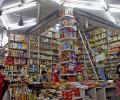
Stocks of fast-moving consumer goods companies have taken it on the chin in calendar year 2026 (CY26) with the Nifty FMCG index falling over 6 per cent compared to the Nifty 50 dipping 0.8 per cent. Nifty FMCG is one of the worst-performing sectors on the NSE in CY26.
Hindustan Unilever Ltd's (HUL's) second quarter 2025-26 (Q2FY26) consolidated revenue rose 2 per cent to Rs 16,250 crore, with low or flat volume growth. Demand remained stable but goods and services tax (GST) transition and prolonged monsoon hurt offtake.

Hindustan Unilever (HUL) has topped the Perpetual Capital Hurun India Impact 50 - 2026 list with 53.9 points (on the scale of 0-100), reflecting a strong performance across key sustainable development goals (SDGs), including climate, water, circularity, gender and biodiversity.

Indian equity markets closed higher, driven by gains in PSU bank, auto, and financial stocks, following the US Supreme Court's decision on tariffs. Sensex climbed 479.95 points to 83,294.66, and Nifty advanced 141.75 points to 25,713.
Benchmark equity indices Sensex and Nifty extended their gains for the third straight session on Wednesday, driven by last-hour buying in bank, metal, and FMCG shares.

Indian equities on Dalal Street saw volatility as global market trends and fresh tariff concerns linked to Donald Trump impacted investor sentiment. Track Sensex, Nifty50 movement and key market drivers for Feb 24, 2026.
Equity benchmark indices Sensex and Nifty experienced a significant decline, primarily driven by a selloff in IT stocks due to concerns about AI disruption and renewed worries over global trade.

Stock markets rebounded on Friday with the benchmark Sensex closing higher by 316 points after heavy buying in banking and metal shares amid optimism over trade deal progresses and India's participation in Pax Silica.

Benchmark equity indices Sensex and Nifty tumbled more than 1 per cent on Friday due to across-the-board selloff, especially in metal, IT and commodity stocks, tracking sluggish global markets.

FMCG major Hindustan Unilever Ltd (HUL) on Thursday reported a two-fold jump in consolidated net profit to Rs 6,603 crore in the December quarter of FY'26, on a year-on-year basis, driven by a one-off positive impact from the demerger of its ice cream business.

Equity benchmark indices Sensex and Nifty advanced for the third straight session on Tuesday driven by firm global cues and optimism over India-US trade agreement, even as investors turned to profit-booking at higher levels.
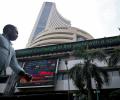
Benchmark stock indices Sensex and Nifty closed on a flat note in a choppy session on Wednesday as gains in PSU banks and auto shares were offset by losses in IT stocks.

Stock markets closed higher for the second straight session on Tuesday, driven by gains in bank, IT and capital goods shares.
Hindustan Unilever Limited's (HUL's) standalone revenue grew 4.4 per cent year-on-year (Y-o-Y), while volume rose 3.5 per cent during the third quarter of financial year 2026 (FY26).
Benchmark equity indices Sensex and Nifty rebounded on Thursday after three sessions of losses, tracking gains in global markets after US President Donald Trump struck a conciliatory tone on Greenland. In a volatile session, the 30-share BSE Sensex climbed 397.74 points, or 0.49 per cent, to close at 82,307.37.

Market sentiment is likely to remain cautious as investors position themselves for the upcoming Union Budget and the US Fed's interest rate decision, where expectations are muted.
Stock markets closed higher on Friday after the Reserve Bank of India kept its benchmark interest rate unchanged as expected and proposed allowing banks to lend to Real Estate Investment Trusts (REITs) with certain prudential safeguards to deepen the financing pool for the real estate sector.

From the 30-Sensex firms, Tata Consultancy Services, Asian Paints, Maruti, Sun Pharma, Hindustan Unilever, ICICI Bank, Kotak Mahindra Bank, Tech Mahindra, HDFC Bank and Larsen & Toubro were among the biggest laggards. On the other hand, Tata Steel, NTPC, Axis Bank and UltraTech Cement were among the gainers.

ICICI Bank, Eternal, Titan, Adani Ports, Tata Consultancy Services and UltraTech Cement were also among the laggards. However, InterGlobe Aviation, Tech Mahindra, Hindustan Unilever and Bajaj Finance were among the gainers.
From the 30-Sensex firms, Tata Steel, Asian Paints, Trent, State Bank of India, Hindustan Unilever, UltraTech Cement, ICICI Bank and Bharti Airtel were among the gainers. On the other hand, Infosys, Bajaj Finance, Bharat Electronics, Larsen & Toubro and HDFC Bank were the laggards.
From the 30-Sensex firms, HDFC Bank, Infosys, HCL Tech, Bajaj Finance, Tata Consultancy Services and Reliance Industries were among the biggest laggards. In contrast, Bharat Electronics, Hindustan Unilever, Tata Steel and UltraTech Cement were among the gainers.
From the 30-Sensex firms, Bajaj Finance, Asian Paints, HCL Tech, Tata Consultancy Services, Eternal and Sun Pharma were among the biggest laggards. However, Titan, NTPC, Axis Bank, UltraTech Cement, Reliance Industries and Hindustan Unilever were the gainers.
 © 2026 Rediff.com - Advertise with us - Disclaimer - Privacy Policy - Sitemap - Feedback - About us - Terms of use - Grievances