
Indian benchmark indices, Sensex and Nifty, recorded their fifth consecutive day of losses, driven by investor caution over rising oil prices due to West Asia tensions and renewed concerns regarding US trade tariffs.
India and the United States have reviewed progress on a proposed interim bilateral trade agreement, discussing market access, digital trade, and non-tariff barriers, as they race to finalise a deal before a temporary 10 per cent US tariff regime expires on July 24.

The United States has implemented a 10 per cent tariff on goods imported from India and 16 other countries, citing efforts to combat forced labour in production.

India anticipates a reduction in the United States' proposed tariffs on Indian goods under the Section 301 investigation, following New Delhi's recent notification to restrict the import of products made with forced labour.

US President Donald Trump announced steep tariffs on imported generic medicines, effective from August 2028, with the aim of boosting domestic pharmaceutical production. This policy, which includes a phased increase in tariffs up to 200 per cent, could significantly impact India, a major global supplier of generic drugs to the US market.

India is waiting for assurance from the US on comparative advantage over other economies under the deal.
India may press for an automatic review mechanism in its proposed interim trade deal with the United States (US), mirroring a sunset clause introduced by the European Parliament in its trade agreement with Washington, people aware of the negotiations said. The European Parliament last week approved the EU-US trade deal but inserted a sunset clause requiring the arrangement to expire on December 31, 2029, unless both sides agree to extend it.

'It's very important for India to retain its sovereignty. India should not sign any agreement which compromises its sovereignty.'
The bill, introduced on Thursday, was conceived by Democrat Senator Richard Blumenthal and late Republican Senator Lindsey Graham and has the support of over 60 lawmakers.

The United States and India are on the verge of finalising a landmark bilateral trade deal, aiming to boost trade to USD 500 billion by 2030, according to US Deputy Assistant Secretary of State Bethany Poulos Morrison. The agreement seeks to open India's 1.4 billion-strong market to American goods on reciprocal terms, with ongoing high-level discussions to recalibrate the pact after recent changes in US tariff policy.

'The contours of the trade deal need to be reworked now.'

Industry bodies representing alcoholic beverage manufacturers have welcomed the India-UK Free Trade Agreement (FTA), which will see tariffs on UK whisky and gin reduced, boosting bilateral trade and supporting premiumisation. However, domestic manufacturers are calling for state governments to withdraw concessions currently enjoyed by imported liquor brands.

Prime Minister Narendra Modi announced that the India-UK Comprehensive Economic and Trade Agreement (CETA) will come into effect on July 15, 2026, anticipating a significant boost to bilateral trade and investment.
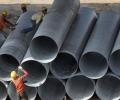
India has successfully negotiated the protection of its steel export interests under the free trade agreement with the UK, ensuring 85 per cent of its outbound shipments remain outside Britain's steel safeguard measures. This consensus addresses a key sticking point ahead of the comprehensive economic and trade agreement (CETA) coming into force on July 15.

These new tariffs were imposed by Trump on all countries, including India, on February 24 for 150 days following a Supreme Court verdict that struck down his earlier sweeping levies.
The India-Oman free trade agreement, operationalised on June 1, is set to create significant export opportunities for India's labour-intensive and value-added sectors, including textiles, gems and jewellery, and marine products, while also strengthening energy security.

American industry groups sought punitive tariffs on Indian goods at USTR hearings, while Indian officials defended the country's manufacturing growth as demand-led and WTO-compliant.

Finance Minister Nirmala Sitharaman on Wednesday said global trade is increasingly "getting weaponised" through tariffs and other measures, and India will have to negotiate its way carefully. She said that the overall strength of the economy will give the country an added advantage.

Commerce Minister Piyush Goyal announced that the legal scrubbing of the India-EU Free Trade Agreement (FTA) text is expected to be completed within 10-12 days, with the final deal anticipated to be signed by December 31.

India and the US have agreed to a trade deal that will see Washington reduce reciprocal tariffs on Indian goods from 25% to 18%, according to US President Donald Trump. The deal also includes commitments from India to reduce tariffs and non-tariff barriers against the US and to increase purchases of American products.

Prime Minister Narendra Modi and US President Donald Trump are set to hold comprehensive talks focusing on a bilateral trade deal, defence cooperation, and energy and critical minerals sectors during the G7 summit in Evian-les-Bains, France.
A bipartisan group of US senators has introduced a comprehensive bill imposing extensive sanctions on Russia, with India identified as one of five countries that could incur tariffs for its continued purchase of Russian oil.
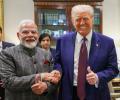
The agreement addresses non-tariff barriers and promotes increased trade in technology products and cooperation between the two countries.

India and New Zealand have signed a comprehensive Free Trade Agreement (FTA) aimed at significantly boosting bilateral commerce and investments, providing duty-free access for 100 per cent of India's exports to New Zealand and securing duty-free inputs for India's manufacturing sector.

Indian benchmark indices Sensex and Nifty tumbled nearly 1 per cent for the third consecutive day, driven by a sharp spike in crude oil prices and significant selling in bank stocks, with Brent crude jumping to USD 95.27 per barrel.
India and the US have reported positive progress in recent trade talks in Washington, agreeing to maintain engagement to finalise a bilateral trade agreement, which now requires recalibration following new US tariffs.
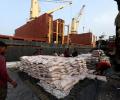
Indian exporters are unlikely to receive direct tariff refunds from the US's $166 billion payout, but the rollback of reciprocal duties is enhancing their pricing power and improving order prospects, particularly in textiles, apparel, and engineering goods.

'They talked bad about our leaders. They said India was a dead economy. They were not sensitive to the Indian psyche.'
Commerce and Industry Minister Piyush Goyal announced that a US team is expected to visit India next month for trade talks, following an earlier Indian delegation's visit to Washington, DC, in April to finalise an interim pact and advance negotiations for a broader bilateral trade agreement.

A US trade representative described India as a 'tough nut to crack' during trade agreement negotiations in Washington, highlighting India's protection of its agricultural markets and the ongoing discussions on specific commodities.

The remarkable rise of smallcaps reflects the emergence of a broad set of specialised businesses operating in industries where the sectoral tailwinds remain considerably stronger than macroeconomic headwinds, points out Debashis Basu.

'You have seen the retrenchments by big corporates in the IT industry because they are not getting enough offers.' 'MSMEs in the manufacturing sector are really struggling. They do not know what to do. They are not able to predict what will happen tomorrow.'

External Affairs Minister S Jaishankar and US Secretary of State Marco Rubio discussed cooperation in trade, critical minerals, nuclear energy, and defence, reaffirming commitment to a free and open Indo-Pacific.
Chief negotiators from India and the US are set to begin three-day talks in Washington to recalibrate the bilateral trade agreement (BTA) framework, following significant changes in the US tariff landscape, including a new 10 per cent tariff imposed on all countries.

India's fair trade regulator, the Competition Commission of India (CCI), has dismissed a complaint alleging anti-competitive conduct against Reliance Jio Infocom Ltd and over 4,500 other firms across various sectors, citing a lack of specific evidence.

India and the United States are committed to finalising an interim trade agreement, despite recent challenges including the US imposing a blanket 10 per cent surcharge and India's decision to wait for a new global tariff architecture. The US Trade Representative's annual report highlights India's maintained high import tariffs and various non-tariff barriers across several sectors.

Responding to a question on the trade deal being negotiated between the two countries, Trump said India had taken advantage of US policies for years and charged tremendous tariffs.

The Asian Development Bank (ADB) on Wednesday lowered India's growth forecast for FY26 to 6.5 per cent from 6.7 per cent on account of trade uncertainty and higher US tariffs that are expected to impact exports and investment. Despite the downward revision from the April 2025 Asian Development Outlook (ADO), India remains one of the fastest-growing major economies in the world.

Reliance Industries (RIL) delivered a better-than-expected operational performance in Q1FY27, driven by a recovery in its oil-to-chemicals (O2C) business and robust gains in the telecom (Jio) segment, though its retail arm missed estimates. Analysts highlight the upcoming Jio Platforms IPO and execution in new energy and consumer businesses as key triggers for the stock's future growth.
India must focus on building enduring national capabilities and economic sovereignty in the face of shrinking space for rules-based trading, anti-immigrant stance, weaponization of energy sources and growing use of export controls in critical sectors, the Economic Survey said on Thursday.
