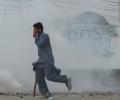
Succumbing to the demands of a radical Islamist party, the Pakistan government has agreed to try blasphemy suspects under terrorism charges in addition to the other sections of the country's penal code.
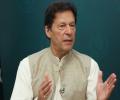
Tehreek-i-Labbaik Pakistan chief Saad Hussain Rizvi was on Thursday released from the jail, weeks after Prime Minister Imran Khan-led government entered into a 'secret agreement' with the radical Islamist party which was involved in recent deadly clashes with the police.

Scores of churches and homes belonging to Christians in Jaranwala tehsil of Faisalabad district, some 130 km from the provincial capital, were burnt down on Wednesday by a mob enraged over reports that two Christians had desecrated the Quran.

Ahmadis are designated non-Muslims in Pakistan's Constitution and their beliefs are considered blasphemous in most mainstream Islamic schools of thought.

Hafiz Saeed-backed Allah-o-Akbar Tehreek (AAT) had fielded 265 candidates -- including 13 women -- countrywide.

The EU too urged Pak to ensure "safe and secure conditions" for the polls.
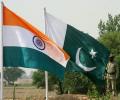
So far, almost every positive development in terms of the bilateral ties has been overtaken by innate hostility that is often driven by popular sentiments.

As the country readies to go to polls on July 25, one can't deny the role of the military, but there are other factors too.

A single party will need at least 137 of the directly elected seats to be able to form the government on its own.
 © 2026 Rediff.com - Advertise with us - Disclaimer - Privacy Policy - Sitemap - Feedback - About us - Terms of use - Grievances