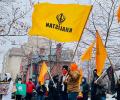
Over the years, Khalistani extremists were further "emboldened" and started "operating with impunity" from Canada.

Prime suspect in the 1985 Air India bombing Talwinder Singh Parmar had reportedly told Punjab Police that leaders of a Sikh youth organisation might be behind the attack that claimed 329 lives.
Canadian government officials delayed the process of obtaining a wiretap warrant against the key figure in the Air India bomb plot Talwinder Singh Parmar because of religious concerns, a former intelligence officer has said.
Canada's spy agency was neither cooperative nor forthright during the probe into the Kanishka bombing case, a former Crown prosecutor has said terming as "incompetent" its act of erasing wiretap tapes of a key suspect in the case.
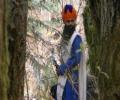
The three-day, 24-hour-running, Akhand Path began on Friday but with the portrait of Babbar Khalsa leader Talwinder Singh Parmar hanging inside, staring at the faces of the congregation -- some of them being members of the victims' families.
Politicians of all levels of government attended the April seven event, which drew a crowd estimated at 100,000.
The prosecution claims Reyat, who admitted a minor role in the bombing, was refusing to identify others in the plot.
An application for the warrant to tap phone calls, dated October 19, 1984, stated that Parmar had been calling for the murder of 50,000 Hindus and other acts of violence for months in speeches across Canada.
"I lost my daughter Indira in that bombing along with 328 other innocent people. So, Akhand Paath should be for these victims and not for the terrorists," Kalsi said.

'Can Trudeau's evidence hold up? If not, he's finished.'
 © 2026 Rediff.com - Investor Information - Advertise with us - Disclaimer - Privacy Policy - Sitemap - Feedback - About us - Terms of use - Grievances