
Credit card spends touched an all-time high of Rs 1.16 trillion in July, registering a growth of 6.5 per cent on a month-on-month basis and 54 per cent year-on-year, latest data put out by the Reserve Bank of India revealed. Spends have topped the Rs 1 trillion level for five consecutive months now. Industry participants are expecting further tailwinds in credit card spends with the onset of the festive season, where spends typically remain at an elevated level.

The Indian economy recovered from the Covid-induced downturn during 2022 and is poised for further improvement in the coming quarters though downside risks emanating from geopolitical tensions, strengthening dollar and elevated inflation will continue. The positive trajectory in the growth trend and improved fundamentals will help the nation in neutralising the impact of global headwinds which are expected to have a bearing on the country's exports in the months to come. The challenges before the government and the Reserve Bank in the new year would be to arrest inflation, check declining value of rupee against US dollar and promote private investment and growth, with a view to ensure that the country remains one the fastest growing major economies of the world.
The economy is likely to register a 9.5 per cent growth this fiscal over 7.3 per cent contraction last year, as the ongoing recovery is faster and more credible than earlier foreseen, according to a foreign brokerage report. It will gather more momentum in the second half of the current fiscal, but will slow down to 7.7 per cent next financial year, it added. The government has budgeted for a 10.5 per cent growth this fiscal, but the Reserve Bank has scaled it down to 9.5 per cent.

'It will send a very strong signal that it is now our time to grow.'

Since infrastructure projects have long gestation periods, investors need to enter them with a long horizon of at least 10 years.

Reliance Industries' fourth investment cycle of an estimated USD 50 billion spending over the next three years could help the firm double its earnings, a report said. The firm's "fourth investment cycle this century has significant differences to past cycles, underappreciated energy tailwinds and the potential to double profits by 2027," Morgan Stanley said in a report. The spending is planned on chemicals, 5G, retail and new energy over the next three years.

Akasa Air, which took to the skies two months ago, will allow domesticated dogs and cats in cabin as well as cargo from November and will also be starting new routes in the coming weeks. The airline, which is "well capitalised", plans to start international services in the second half of 2023 once it has a fleet of 20 planes. Currently, the carrier has 6 aircraft and will have a total of 18 planes by the end of March next year.

The Nifty IT has been one of the worst-performing indices on the bourses this calendar year. Rising concerns of a potential global recession, which investors fear can dampen demand for export-facing domestic information technology (IT) giants, have sent the index down over 30 per cent on a year-to-date basis. By comparison, the Nifty50 Index has shed 2.8 per cent during the period, reveals data by ACE Equity.

The grand old party faces the onerous task of rebuilding its moribund organisation, which is struggling to overcome a leadership crisis and regain credibility with the voters.

Serving pilots question the Kozhikode plane crash report findings.

A total of 49 companies raised Rs 81,615 crore in Samvat 2077, more than the preceding four years and almost double the amount raised in the previous year. Samvat 2078 appears even more promising with mega issues of Paytm and Life Insurance Corporation (LIC) of India. However, Paytm's record could be short-lived as state-owned LIC is planning to launch a Rs 1-trillion IPO by March 2022.

Edtech unicorn Vedantu has laid off 424 employees, about 7 per cent of its workforce, according to a blog post shared by the Bengaluru-based firm. This comes as the focus in the edtech space has shifted to profitability, according to experts. The lay-off comes days after the company fired 200 contractual and full-time employees, at a time when offline schools and colleges are opening up and learning is evolving into a more nuanced blended delivery model with a mix of online and offline.

'Yet the market didn't do all that badly because it was cushioned by domestic inflows.'

Max Verstappen won the Spanish Grand Prix in a Red Bull one-two on Sunday

Titan was the top loser in the Sensex pack, shedding over 3 per cent, followed by M&M, HUL, Maruti, Asian Paints and IndusInd Bank. Nifty fell 91 points to 17,157.40.

Equity benchmarks continued their winning momentum for the third day on Thursday and jumped over 1.50 per cent, tracking an overall bullish trend in Asian equities. On the political front, the BJP headed for a second straight win in politically crucial Uttar Pradesh and dominated the trends chart in three other states. The 30-share BSE benchmark Sensex opened in the green and further zoomed 1,595.14 points or 2.91 per cent to 56,242.47 during early trade.

Companies in the small-cap universe are having a dream run - the Nifty Smallcap 100 index has shot up more than 25 per cent on a year-to-date basis, even as the benchmark Nifty is up 7 per cent. This is the best start for the index since 2017 when the Nifty Smallcap 100 index surged 32.3 per cent between January 1 and May 10. However, in terms of outperformance to the Nifty, this year's performance is the best in more than a decade. A combination of sectoral tailwinds and lack of institutional selling pressure has helped small companies escape from the correction triggered by the second wave of Covid-19.

'Recent underperformance notwithstanding, equities should constitute a major part of investors' financial portfolio.'

Kumar banged his table at Patna's Indian Coffee House as he announced this to an audience that was discussing alleged corruption in Bihar in 1977, writes Sankarshan Thakur in his biography of Kumar -- The Brothers Bihari.

A summary of Indian athletes showing on Friday, Day 8 of the Commonwealth Games.

Two landings were aborted by pilots due to tailwind.

Rs 1,000 now buys $13.5 against $14 a year ago.

Every 10 per cent rise in crude oil price will shave off around 0.2 percentage point (pp) from India's GDP growth and widen the current account by 0.3 per cent, says Nomura.
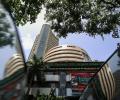
Infosys was the top gainer in the Sensex pack, rising around 3 per cent, followed by Bajaj Auto, SBI, ICICI Bank, HCL Tech, Titan and Asian Paints. NSE Nifty rose 19.85 points or 0.14 per cent to 13,760.55 -- its new closing record.

Falling valuations, slowing funding rounds and faltering investor sentiment seem to have prompted many start-ups to lay off employees in a bid to conserve cash. The latest to do so is SoftBank-backed Cars24, a leading e-commerce platform for pre-owned vehicles, which has laid off over 600 staff, according to sources in the know. The move, they said, is aimed at conserving cash amid cautious investor sentiment and a slowdown in funding.

India's GDP may turn positive at 1.3 per cent in the third quarter of 2020-21, having witnessed contraction in the previous two quarters due to the coronavirus pandemic, as the number of cases is falling and public spending has started rising, according to a report. The government will release the GDP numbers for the October-December quarter of the current fiscal on Friday. Projecting that the gross domestic product (GDP) may have returned to the black in the last quarter of the calendar year 2020, DBS Bank in the report said the full-year growth in real terms may be at a negative 6.8 per cent.
'We will likely be buffeted by tailwinds from the global economy, geopolitical shifts and robust domestic demand.'

Business activity has fallen by a fourth of the pre-COVID levels due to lockdowns imposed by states to contain the spread of the second wave of COVID-19, Japanese brokerage Nomura said on Tuesday. However, it said the falling activity levels will have a muted economic impact and maintained its growth estimates for the year, saying the lockdowns present "downside risks". As of April 25, the Nomura India Business Resumption Index (NIBRI) registered its steepest weekly fall in over a year of 8.5 percentage points to 75.9, which is 24 percentage points below pre-pandemic normal, the brokerage said in a statement.

'When fund managers talk of being bullish for the long term, they assume strong economic growth.' 'That is what they have assumed every year, naively believing the pronouncements and promises of ministers.' 'Unfortunately, they have been wrong year after year,' observes Debashis Basu, editor, www.moneylife.in.

Consumption is among the most diversified and sought-after themes in Indian equities. Over the past five years, consumption theme funds have given an annualised category average return of 15.17 per cent, according to the data from Value Research. But this theme has been affected by the Covid-19 pandemic, which impacted jobs and livelihood.

Subdued prices of food items like vegetables pulled down retail inflation for the third month in a row to 5.3 per cent in August, within the RBI's comfort zone. While the Consumer Price Index (CPI)-based retail inflation declined to 5.3 per cent in August from 6.69 per cent in the same month a year ago, food inflation dipped at a much faster pace to 3.11 per cent from 9.05 per cent in August 2020. The food inflation was also lower than 3.96 per cent in preceding month of July.

Increasing awareness about mutual funds, ease of transactions through digitisation and sharp surge in equity markets have aided asset management companies to add a staggering 3.17 crore investor accounts in 2021-22, with experts saying the trend is likely to continue this fiscal as well. This was a significant rise from 2020-21 when 81 lakh accounts (or folios in mutual fund parlance) were opened, data with the Association of Mutual Funds in India (Amfi) showed. The ongoing financial year too appears to be promising in terms of folios as increase in investor accounts will enable people to move beyond fixed deposits and savings accounts, said Priti Rathi Gupta, founder of LXME, a financial platform for women.

There has been a stellar rise for the Indian markets this far in calendar year 2021 (CY21) with the S&P BSE Sensex surging over 19 per cent. The gain in mid-and small-cap indices on the BSE has been sharper with both these indexes surging around 38 per cent and 54 per cent, respectively during this period. Rampant spread of Covid pandemic's Delta variant and the ensuing lockdown and mobility curbs across India, rising prices key commodities, including crude oil and its impact on inflation, possibility of tightening of policy stance by major global central banks, especially the US Federal Reserve (US Fed) have been some of the key headwinds that the markets successfully negotiated during this period.

Billionaire Gautam Adani on Sunday won the race to acquire Swiss cement major Holcim's stake in Ambuja Cements and its subsidiary ACC for $10.5 bn (around Rs 81,361 crore), including the open offers. The Adani family, through an offshore special-purpose vehicle, announced that it had entered into definitive agreements for the acquisition of Holcim Ltd's entire stake in two of India's leading cement companies -- Ambuja Cements and ACC -- the Adani group said in a statement. The group outbid Ultratech and JSW group to enter the cement industry and also emerge as the country's second-largest cement manufacturer, with 70 million tonnes of capacity annually.

The one-year returns for equity-oriented mutual fund (MFs) schemes have largely mirrored the gains made in the secondary market. However, schemes that invest in infrastructure (infra), small-cap, and public sector undertaking (PSU) banks have emerged standout performers, with gains in excess of 100 per cent in some cases. Of the total 484 equity schemes, 353 have managed to beat the Sensex, reveals the data provided by Value Research. Around 20 have delivered returns in excess of 90 per cent and six schemes have given returns of over 100 per cent in the past one year. The S&P BSE Sensex Total Return Index (TRI) has given returns of 51 per cent in the last one year, ended October 29.

'Periods of high volatility are usually bad for mid-caps and this is something that has to be kept in mind.' 'Focus on quality is of paramount importance.'

'The government is trying to kickstart the investment cycle in India and while the corporate investments are yet to gather momentum, there are early signs of the same.'

'Pockets of mid and small-cap indices are showing exuberance and are discounting even FY23 valuations now.'

'If the third wave of Covid infections is as bad as the second one, the market may get very polarised with a preference for blue-chips with low volatility.'

'If the Union Budget can provide incentives for animal spirits to come as well as induce demand stimulus and consumption, the Budget would have done a wonderful job.'
 © 2026 Rediff.com - Investor Information - Advertise with us - Disclaimer - Privacy Policy - Sitemap - Feedback - About us - Terms of use - Grievances