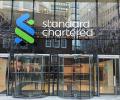
'India is a big market for StanC, and it is also fastest growing economy in the world.'

The country's primary capital markets delivered a robust performance in FY26, emerging as a global leader in initial public offerings (IPOs) despite an uncertain environment, the Economic Survey said on Thursday.

Markets regulator Sebi has notified a stricter regulatory framework for small and medium enterprise (SME) IPOs by introducing a profitability requirement and capping a 20 per cent limit on offer-for-sale (OFS). The reforms aim to provide SMEs with a sound track record an opportunity to raise funds from the public while protecting investor interests. This move follows a rise in SME issues, which has driven significant investor participation.

Budget 2026 is an intentional and ambitious one - From manufacturing growth to services supremacy, from technology consumption to AI-powered transformation. This is the blueprint for a $7 trillion economy built on intelligence, not just scale.

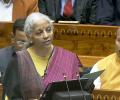
Budget 2026 sticks to fiscal discipline, shuns populist measures despite five key state elections coming up, but ends up rattling stock markets with a higher transaction tax on derivatives trading.

For MSMEs the transition could mean higher wage bills and tougher compliance -- unless strong handholding follows reports Auhona Mukherjee.

The surge has come alongside a decline in average issue sizes and more muted listing-day returns compared with last year.

An IAF aircrash investigation typically concludes in two/three odd months. The reason for the crash is usually established in a week's time.

'Many do not have robust business models, and their prospects of survival and long-term growth are poor.'

Of the total 199 small and medium enterprises (SMEs) listed this year so far, 22 had an issue size of less than Rs 10 crore, which the Securities and Exchange Board of India (Sebi) will no longer allow in the listed ecosystem after its recent consultation paper. The market regulator on Tuesday proposed an overhaul of the rules governing the initial public offerings (IPOs) of SMEs and corporate governance norms for listed SMEs, following concerns over 'systemic risk' seen in the ecosystem with instances of fund diversion and price manipulation.
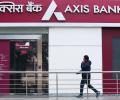
Axis Bank reported a sharp drop in net profit in the second quarter of financial year 2026 (Q2FY26) on higher provisions and weak operating profit growth while revenue growth was moderate. But loan growth and deposit growth improved to double-digits year-on-year (Y-o-Y) and asset quality also improved with the gross non-performing loan or NPL ratio moving down.

PhonePe on Friday said it has got the final authorisation from the Reserve Bank of India (RBI) to operate as an online payment aggregator. With RBI authorisation in place, PhonePe will be able to expand its reach and tap into online merchants, with a particular focus on small and medium businesses (SMEs) across the country, according to a release.

'Instead of one or two families controlling 10% to 15% of GDP, it has to be broad based. Then, the resilience of the economy also will be higher.' 'Then, if something happens to one business, it will not hurt the economy badly.'

The Sebi board on Wednesday approved a series of measures, including stricter regulatory norms for SME IPOs, a comprehensive overhaul of investment banking regulations, and an expanded definition of Unpublished Price Sensitive Information (UPSI). Also, the board approved reforms to boost ease of doing business for Debenture Trustees, ESG rating providers, InvITs, REITs, and SM REITs.
Stock exchanges have intensified vigil on Small and Medium Enterprise (SME) listings by mandating more comprehensive financial disclosures and enhanced monitoring of utilisation of issue proceeds from investment bankers, amid rising instances of dubious practices. Bourses - responsible for vetting initial public offering (IPO) documents and granting approvals to SMEs - have tightened norms in recent weeks with further measures planned for new filings to safeguard investor interests, sources said.

The initial public offerings (IPOs) by small and medium enterprises (SMEs) hit a new high in 2023-2024 (FY24). In this financial year, data from the Prime Database showed that 190 companies raised Rs 5,579 crore through the SME IPO route. This financial year's tally bettered the fundraising in the previous financial year when 125 companies raised Rs 2,235 crore.

India's economic growth is expected to be lower at 6.3 per cent this fiscal compared to the RBI's projection of 6.5 per cent, a SBI Research Report said on Thursday. The report pegged the first quarter GDP estimate at around 6.8-7 per cent, mainly due to muted private capex.

India's micro, small and medium enterprises (MSMEs) - which contribute over 45 per cent to outbound shipments - are facing a major disruption following the United States (US) decision to impose 50 per cent additional tariffs on the country's exports. MSME industry bodies have raised an alarm over the deep impact, seeking immediate government intervention.

'The pricing model will be different. The product will be different.'

Businesses are testing new markets, tapping into domestic demand, and pushing the government for relief.

In the current calendar year, small and medium enterprises (SMEs) have witnessed an impressive surge in initial public offerings (IPOs), surpassing the 2018 record. Over 150 SME IPOs have been introduced to the market, breaking the previous record of 141 set in 2018. According to data from PRIME Database, a primary market tracking firm, 147 companies successfully concluded their debut share sales by the end of October, raising a cumulative Rs 3,727 crore.
Strong performance of past IPOs spurred investors' interest, with 87 small and medium enterprises (SMEs) garnering Rs 1,460 crore through initial share-sales in the first nine months of the year. This was way higher than 56 companies that had raised Rs 783 crore through initial public offering (IPO) in the entire 2021, the industry data showed. Further, the remaining part of the year 2022 can see more mature companies accessing the platform.
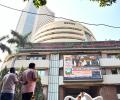
'BSE has facilitated nearly Rs 35 trillion in capital raising across multiple segments.'
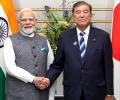
Prime Minister Shigeru Ishiba's sudden resignation after only a year in office has thrown Japan into political turmoil, raising doubts about how the country will handle economic and regional challenges, observes Dr Rajaram Panda.

The IPO wave of 2025 is here, and it's bigger than ever. From fintech unicorns to financial powerhouses and infrastructure giants, some of India's biggest names are all set to make their stock market debut. PhonePe, Zepto, Tata Capital, NSE, NSDL, and JSW Cement are just a few of the highly awaited listings that have investors and analysts buzzing with excitement.
In Q1FY26, the bank reported fresh slippages of 8,200 crore, up 71 per cent Y-o-Y and sequentially. Of this, 7,500 crore is from the retail segment.

Qcom alone is expected to account for a 60 per cent surge in gig hiring, adding 1.5 million to 2 million roles.

The story of the Bombay Stock Exchange and the people who shaped its growth: From wars and bomb blasts to speculators, reformers and wealth creators.
Fair trade regulator CCI on Tuesday cleared Bajaj Group's proposed acquisition of a 26 per cent stake each in its insurance joint ventures, Bajaj Allianz General Insurance and Bajaj Allianz Life Insurance, from its partner Allianz SE for a total of Rs 24,180 crore. "The proposed combination involves acquisition of 26 per cent paid-up equity share capital of Bajaj Allianz Life Insurance Company Ltd (BALIC) and Bajaj Allianz General Insurance Company Ltd (BAGIC) by Bajaj Finserv Ltd (BFS), Bajaj Holdings & Investment Ltd (BHIL) and Jamnalal Sons Pvt Ltd (JSPL) from Allianz SE," the regulator said in a release.

'The brand, the team, and the people have to make the transition from playing league matches to Test matches.'

The government will launch a Rs 2-crore term loan for 5 lakh first-time women, SC and ST entrepreneurs, Finance Minister Nirmala Sitharaman said on Saturday.

'Now we have one of the best asset qualities in the industry.'

When Gensol Engineering made its public market debut through a small and medium enterprises (SME) initial public offering (IPO) in September 2019, its promoters held a commanding 96 per cent stake. Now, that figure has shrunk to a "negligible" fraction.

The Securities and Exchange Board of India (Sebi) has intervened in the matter concerning alleged irregularities by Trafiksol ITS Technologies, which had come out with a Rs 45 crore initial public offering (IPO) last month. In an ex-parte order, the market regulator has said it will undertake a detailed examination into the disclosures made by the small and medium enterprise (SME) company in its draft offer document. BSE had halted the listing of Trafiksol, a software provider for traffic systems, amid complaints around use of the issue proceeds and wrongful disclosures.

Net flows from domestic institutional investors crossed Rs 5 trillion for the first time during a calendar year.
Fifteen companies have launched their initial public offerings (IPOs) in December 2024, making it the best month for public offerings since 1996. Collectively, they have raised Rs 25,425 crore, which also made December the best month in terms of the quantum of funds raised. In December 1996, 33 companies had raised Rs 931 crore.

The IPO market will be bustling next week, with four companies, including Bajaj Housing Finance, set to launch their initial share-sale to raise a total of Rs 8,390 crore. Besides these four main-board IPOs, nine SMEs are preparing to debut with their maiden public issues next week, targeting to collect Rs 254 crore. Together, these 13 firms are looking to raise Rs 8,644 crore through IPO.

In 2024, the Securities and Exchange Board of India (Sebi) implemented significant reforms, focusing on cooling down the derivatives segment, enhancing transparency and accountability in small and midsised enterprise (SME) listings, and deepening the fund management ecosystem.

Metropolitan Stock Exchange of India (MSE) plans to raise Rs 120 crore from investors in an attempt to stay afloat. The beleaguered exchange's board has approved issuance of 1.19 billion equity shares of face value Rs 1 at a premium of Rs 1 through private placements, according to a disclosure on its website.
 © 2026 Rediff.com - Advertise with us - Disclaimer - Privacy Policy - Sitemap - Feedback - About us - Terms of use - Grievances