
Sitiveni Rabuka's visit to New Delhi marks a major shift in India-Fiji ties as the former coup leader who once expelled India's envoy now returns as an honoured guest, explains Ambassador T P Sreenivasan.
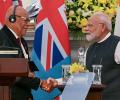
Fijian Prime Minister Sitiveni Rabuka discussed US tariffs on Indian goods with Prime Minister Narendra Modi, noting that "somebody is not very happy with you." The discussion occurred during Rabuka's visit to India to strengthen ties.

India and Canada have mutually beneficial political and economic linkages. The two countries should get together and find a solution. The expulsion war should, in the meantime, be a guarantee against any deterioration of the situation, asserts Ambassador T P Sreenivasan, the first Indian head of mission to be ever expelled by any country.

Prime Minister Narendra Modi was on Monday conferred with the highest honour of Fiji by its premier Sitiveni Rabuka in recognition of his global leadership, in a rare honour for a non-Fijian.

T P Sreenivasan was India's high commissioner in Fiji in 1987, when Sitiveni Rabuka toppled the Indian-dominated government there. Ambassador Sreenivasan stayed on for two years after the coup, fighting for the rights of the people of Indian origin before he was expelled by Rabuka. 'Meeting Sitiveni Rabuka, who had overthrown a democratically elected government, discriminated against the Fiji Indians, brought untold humiliation and suffering to them, tried to disenfranchise them, ordered me out of Fiji and closed down the Indian high commission was a difficult decision to take even after 25 years,' notes Ambassador Sreenivasan who eventually caught up with Rabuka over a game of golf.

COVID-19 has accomplished what the UN failed to do in the last 75 years by making mankind rally around a mask of unity, observes Ambassador T P Sreenivasan.

As India gears up to honour its pravasis on January 9 to mark their contribution in the nation's development, rediff.com presents perspectives from eminent writers on the Diaspora. Kicking off the series is Ambassador T P Sreenivasan, who points out that the change of the Diaspora policy put in place by Rajiv Gandhi following the military coup in Fiji and his decision to stand by them, was the one defining moment in India's dealings with its overseas family.
 © 2026 Rediff.com - Advertise with us - Disclaimer - Privacy Policy - Sitemap - Feedback - About us - Terms of use - Grievances