
The National Financial Reporting Authority (NFRA) will invite public comments on the revised International Standard on Auditing 600 (ISA 600) proposed to be adopted by publicly listed companies and non-public-sector banks, sources close to the development told Business Standard. The decision to take this "graded approach" for the adoption of the ISA, which is meant to rein in auditors often found hiding behind the audit reports signed off by subsidiary companies, was taken at a meeting of various financial sector regulators at NFRA's board meeting on Monday (August 26). The idea behind upgrading the Standards of Audit 600 currently followed by Indian auditors to ISA 600 is to plug current gaps, which have led to major audit lapses in the recent past.

While SGBs are a sound investment, they aren't worth buying at any price. The interest income you earn from them will not justify paying a high premium.

Electric two-wheeler (e2W) maker Ather Energy has submitted preliminary papers to the Securities and Exchange Board of India to raise funds through an initial public offering (IPO). According to the draft red herring prospectus (DRHP), the IPO will comprise a fresh issue of equity shares valued at Rs 3,100 crore, alongside an offer for sale of 22 million equity shares by its promoters and investor shareholders.
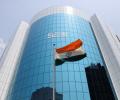
If Hindenburg or its partner do not join the investigation, then Sebi may pass an ex-parte order against it, which may be enforced as a foreign award in US courts.

During the first eight months of CY24, 50 IPOs mobilised Rs 53,453 crore.

The government is planning to introduce legislative changes to the Foreign Exchange Management Act (Fema) regulations, with a focus on easing the pathway for inflows from a foreign portfolio investor to transition seamlessly into foreign direct investments (FDI) once the FPI surpasses the 10 per cent ownership threshold in a company. This move stems from multiple requests by foreign investors seeking to streamline the reporting requirements that arise when their stakes in Indian firms cross the 10 per cent mark.

The IPO filing-to-approval lapsing ratio this year is the best in three years, underscoring the improvement in the IPO market's buoyancy.

The Securities and Exchange Board of India (Sebi) on Monday proposed expanding the scope of regulations prohibiting insider trading to a wider group of people, including those connected to the officials in access to price-sensitive information. The market regulator has suggested changes in the definition of "connected persons" and "relative" to address any gaps in the norms and possible violations.

The new asset class (NAC) proposed by the market regulator could see diverse product offerings with high-risk strategies across equity and debt if the mutual fund (MF) industry's recommendations are incorporated into the final regulations. While the Securities and Exchange Board of India (Sebi) has suggested relaxations in investment norms for NAC compared to traditional MFs, some fund houses are advocating for further relaxations in concentration norms, greater flexibility in leverage, and the ability to invest in securities currently outside the MF domain, such as unlisted debt papers and debentures, sources reveal.

The total number of demat accounts in the country stood at 171.1 million as of August 31.

Stock exchanges have intensified vigil on Small and Medium Enterprise (SME) listings by mandating more comprehensive financial disclosures and enhanced monitoring of utilisation of issue proceeds from investment bankers, amid rising instances of dubious practices. Bourses - responsible for vetting initial public offering (IPO) documents and granting approvals to SMEs - have tightened norms in recent weeks with further measures planned for new filings to safeguard investor interests, sources said.

The Securities and Exchange Board of India (Sebi) is likely to notify soon stricter derivatives trading norms aimed at curbing speculative trading activity and curtailing losses of over Rs 50,000 crore incurred by retail investors every year. Based on the feedback received from industry participants, seven measures proposed by the market regulator in a consultation paper in July may be implemented with minor tweaks ahead of its forthcoming board meeting, said sources.
An analysis by the Securities and Exchange Board of India (Sebi) has revealed that retail traders remain at the wrong end of the stick when it comes to equity derivatives trading. About 93 per cent of them incurred an average loss of Rs 2 lakh (per trader) during the last three financial years. The new report highlights an increase in the loss-making individual investors in futures and options (F&O) to 91.1 per cent in FY24 compared to 89 per cent in FY22.

'Many do not have robust business models, and their prospects of survival and long-term growth are poor.'

In a step towards investor awareness, the Securities and Exchange Board of India (Sebi) has directed companies planning to launch initial public offers (IPOs) to release a 10-minute video containing key information related to the issue. The initiative is to make it easier for investors to understand the features of the public issue and the company.

Commissions paid to mutual fund distributors (MFDs) increased by over 20 per cent for most large fund houses in 2023-24 (FY24), driven by a sharp market rally and strong inflows. The largest fund house, SBI Mutual Fund (MF), which now manages nearly Rs 10 trillion in assets, paid Rs 2,025 crore to its major distributors - 21 per cent higher than the Rs 1,675 crore payout in 2022-23 (FY23).

Leading brokers are expected to increase brokerage rates in the coming weeks, as they navigate a series of regulatory changes that are expected to squeeze profitability. According to industry sources, top brokers may soon begin charging for equity trades and raise the flat fees for intra-day and derivatives trading by 10-30 per cent. Several smaller players have already hiked their brokerage charges, signalling a potential end to the zero-brokerage era that has drawn millions of new investors into the stock market and fuelled active trading.

With Rs 17,087 crore raised so far this calendar year, the total is already 2.4 times that of the full year of 2023, which stood at Rs 7,266 crore.

The Securities and Exchange Board of India (Sebi) has proposed sweeping changes to the rights issue framework to enhance its attractiveness, aiming to make it the preferred route for additional fundraising by listed companies. Among the changes proposed by the market regulator are reducing the timeline to first 20 days and then to just three days, allowing shareholders to renounce their rights entitlement to investors of their choice, and eliminating the requirement to appoint an investment banker or file a draft letter of offer.

Life Insurance Corporation (LIC) on Wednesday said markets regulator Sebi has granted an additional 3 years time till May 16, 2027 to comply with the 10 per cent public shareholding norm. Currently, government holding in LIC is 96.50 per cent, while public holding is 3.50 per cent.

IPOs inherently carry more risks than stocks that have been listed on the exchanges for some time.

'Subject to any worldwide economic collapse.'

Over 70 per cent of individual investors who engage in intraday trading incurred an average loss of Rs 5,371 during 2022-23 (FY23), according to a study conducted by the Securities and Exchange Board of India (Sebi). Intraday trades involve buying and selling securities within the same trading day. The study covered nearly 7 million investors trading in the equity cash segment.
Mutual fund investors no longer need to link their PAN with Aadhaar to obtain 'KYC-registered' status.

Ola Electric, the SoftBank-backed electric vehicle (EV) maker, is likely to pursue a valuation of approximately $4.5 billion in its upcoming initial public offering (IPO), marking about 18 per cent decrease from its last funding round valuation of around $5.5 billion, according to industry sources. The Bhavish Aggarwal-founded firm aims to file for the IPO by next month, according to people familiar with the matter. "The strategy is to price the IPO attractively for investors, fostering long-term growth and wealth creation," said a source.

The Supreme Court has dismissed a plea seeking review of its January 3 verdict by which it refused to transfer the probe into allegations of stock price manipulation by the Adani Group to a special investigation team or the CBI.

Sebi on Friday barred fugitive businessman Vijay Mallya from the securities markets and restrained him from associating with any listed firm for three years in the matter of routing of funds to the Indian securities market using overseas bank accounts with UBS AG. The Indian government has been attempting to extradite Mallya from the United Kingdom to face fraud charges related to his now-defunct company Kingfisher Airlines. Mallya has been living in the United Kingdom since March 2016.

The Nifty 50 index is poised for a revamp as the revised futures and options (F&O) stock selection criteria is seen paving the way for newly listed companies to join the benchmark index, which is tracked by passive funds with combined assets under management of more than ~3.5 trillion ($44 billion). For the first time in six years, the market regulator Securities and Exchange Board of India (Sebi) has tweaked the stock selection process for the derivatives segment that clocks a turnover of ~400 trillion daily.

Following the exit poll prediction of a resounding BJP victory, BSE benchmark Sensex shot up on Monday by 2,507 points or 3.4 percent to settle at a new closing peak of 76,469. However, a day later on Tuesday, the equity markets witnessed a bloodbath, with the Sensex tanking 4,390 points or 6 percent to settle at 72,079. This was the worst single-day fall in four years.
Markets regulator Securities and Exchange Board of India (Sebi's) measures to curb speculative activity in the Rs 450-trillion-a-day futures and options (F&O) market is not a case of "throwing the baby out with the bathwater," whole-time member (WTM) Ananth Narayan said on Friday. "As a regulator, we are conscious that we must not throw the baby out with the bathwater. "When it comes to frenzied trading in options nearing expiry, however, it is difficult to see any baby in this bathwater," he said while delivering his address at the 21st FICCI Annual Capital Markets Conference.

The possible instances of front running at Quant Mutual Fund have likely pushed the Securities and Exchange Board of India (Sebi) to expedite the implementation of an institutional mechanism framework designed to curb such market abuses. This framework, approved by the Sebi board in April, was slated to take effect six months after its notification. But, recent developments have set the wheels of regulation turning faster.

Shares of brokerages and market infrastructure institutions (MIIs) witnessed heavy selling pressure following the Securities and Exchange Board of India's (Sebi's) pivot to a uniform fee structure, which analysts fear could dent revenues. Discount brokerages, which currently benefit from a spread between client charges and exchange fees, are expected to be most affected. Shares of Angel One, the third-largest brokerage by active clients, fell 8.7 per cent. Groww and Zerodha, the largest brokerages, are not publicly listed.

The directions follow a report by the Indian Cyber Crime Coordination Centre, which has seen a new pattern of transnational cyber-enabled financial fraud and investment scam, impersonating as stockbrokers and company executives.
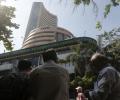
Domestic bourse BSE has approved the acquisition of a 50 per cent stake in index provider Asia Index (AIPL) from equal joint venture partner S&P Dow Jones (SPDJ) Indices for Rs 30 crore. AIPL, the index provider, is responsible for compiling and maintaining the widely followed Sensex, Bankex, and other indices. Passive funds with assets of nearly Rs 2 trillion are benchmarked with indices provided by AIPL.

A little over 2,400 BSE-listed stocks ended with gains in April amid a sharp rebound in the broader markets from the March lows. This was the highest number of stocks that rose during a calendar month, as per data provided on BSE's website. The previous high was 2,322 gainers recorded in January.

Shareholders of industry giants Adani Enterprises, Reliance Industries, and Tata Motors - the latter two are part of the Sensex - will decide on combined related-party transactions of more than Rs 2.68 trillion proposed for this financial year and later. Related-party transactions for BSE 500 companies touched at least a six-year high of Rs 42.1 trillion in FY23, the Capitaline data shows. The Rs 42.1 trillion includes related-party transactions both at balance-sheet and profit-and-loss levels.

Certain foreign portfolio investors (FPIs), which operate as pooled investment vehicles (PIVs), may not be exempt from the additional disclosure mandates by the Securities and Exchange Board of India (Sebi) following an update in the standard operating procedures (SOPs) for custodians. An updated version of the SOPs has specified several conditions to be met for PIVs to benefit from the exemptions granted. These include no segregated portfolios, independent investment manager, and investors having pari-passu (equal) rights in the entity.

People in full-time jobs should especially avoid intraday trading as it results in loss of focus and affects performance.
Quant funds are a unique offering in the MF space as the investment decisions are driven by a blend of active and passive strategies.

'...you evaluate three key factors before committing your money.'
 © 2026 Rediff.com - Advertise with us - Disclaimer - Privacy Policy - Sitemap - Feedback - About us - Terms of use - Grievances