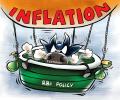
Inflation breached the upper end of the RBI's comfort level of 4 per cent plus-minus two percentage points.

The official data on April-June GDP will be released on August 31.

State Bank of India's house economists on Monday said the recent farm sector reforms reek of parochial thinking and promote lazy farming as they only cater to cereal-producing states. In the recently concluded monsoon session, the government rushed through three legislation to change the way agricultural produce is marketed, sold and stored by dismantling the decades-old APMC (Agricultural Produce Market Committee) mandis.

Welcoming the latest round of stimulus announced by Finance Minister Nirmala Sitharaman on Thursday, experts said the measures will support the economic recovery boosting demand, job creation and by providing funds to the MSME and stressed sectors. The fiscal impact of the stimulus is likely to be around 0.25-0.6 per cent of GDP in the current fiscal, they said.
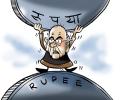
Fiscal deficit in first half of FY19 has already reached 95.3 per cent of full-year budget estimates.

"We believe in the coming months of September and October, the manufacturing growth is likely to remain flat and IIP growth may even continue to remain in the negative territory," SBI Research said in its Ecowrap Report.

RBI has printed 16,957 million pieces of Rs 500 notes and 3,654 million pieces of Rs 2,000 notes as on December 8.

Official data released on Friday said the GDP is estimated to have grown by 5.7 per cent for the April-June period, as against a 4.6 per cent growth notched for the same period year ago.

A CRR cut will help banks to reduce lending rates.
India's manufacturing sector witnessed a modest growth in May, but going ahead "weak demand conditions" may persist.

'You can't take money from Shaktikanta Das (the RBI governor) and give it to Nirmala Sitharaman (the Union finance minister). She will blow it away on Modi.'

Political funding of elections has led to the rise in black money in the economy.

In refusing to accept its failure, the government has sowed the seeds of further damage: by keeping India short of cash; reducing the headroom for responses to seasonal spikes in cash demand; and increasing the chances that groups will panic at temporary cash shortages, says Mihir Sharma.

The theory that all banned notes will come back into the system may not be true. Anup Roy finds out.

Rate-sensitive sectors like banks, realty and auto witnessed heavy selling pressure ahead of the RBI Monetary policy which is scheduled on September 29.
 © 2026 Rediff.com - Advertise with us - Disclaimer - Privacy Policy - Sitemap - Feedback - About us - Terms of use - Grievances