
Domestic equities will be mainly driven by global market trends, foreign institutional investors' movement and developments around new Covid variant Omicron this week, according to analysts. Markets traded under pressure last week following weak global cues and overall investor sentiment remained downbeat throughout the week, they observed. "Global markets, Omicron variant, dollar index and FIIs' behaviour will be key factors to drive the market this week," said Santosh Meena, head of research, Swastika Investmart Ltd. One major event last week was US Federal Reserve's announcement that it will end bond-buying from March, and it also signalled starting rate hike cycle thereafter.

Macroeconomic data, the pace of vaccination and global trends would be the major drivers for the domestic equity markets this week, analysts said. Besides, the progress of monsoon will also be monitored. "This week marks the beginning of the new month also, so participants will be eyeing the high-frequency indicators like auto sales and manufacturing PMI during the week. "Besides, the progress of monsoon will also remain on their radar.

Equity benchmarks Sensex and Nifty ended on a mixed note on Wednesday as the euphoria about the Budget fizzled out, with investors going for profit-taking ahead of the Fed interest rate decision. The 30-share BSE benchmark Sensex climbed 158.18 points or 0.27 per cent to settle at 59,708.08 after it trimmed most of the intra-day gains. During the day, it had zoomed 1,223.54 points or 2 per cent to 60,773.44.

Markets this week would be guided by the ongoing quarterly earnings, macroeconomic data announcement and global trends, analysts said. The government will release industrial production data for June and inflation data for July this week. The RBI has revised its retail inflation forecast to 5.7 per cent, up from the earlier 5.1 per cent due to price pressure on account of supply constraints and high crude oil prices.
Volatility is likely to continue in the stock market this week amid Omicron uncertainty and the RBI monetary policy meeting will be a key driver for benchmark indices going ahead, say analysts. It will be an event-packed week for the markets, with RBI policy and several macroeconomic numbers scheduled to be announced, they added. "Volatility is likely to continue amid Omicron uncertainty, RBI credit policy, and macroeconomic numbers. "There are lots of news flows on the Omicron variant which are causing volatility in the market while on the domestic front we will have the outcome of an important monetary policy of RBI that is scheduled on December 8. "We will also have our IIP and inflation numbers this week however they will be released on Friday after market hours," said Santosh Meena, Head of Research, Swastika Investmart Ltd.

The stock market is likely to continue with its positive momentum but may face bouts of profit-booking amid lofty valuations in this holiday-shortened week, analysts said. The trading sentiment will be guided mostly by global trends in absence of major domestic events, they said. Markets would remain closed on Friday for 'Ganesh Chaturthi'.

Quarterly earnings and global cues will be the major sentiment driver for the equity market this week, according to analysts. Of late, Benchmark indices have been on a record-breaking run. "Quarterly results will dictate market sentiment and will be the talk of this week as they pick up the pace. "D-Street will be all ears to any management insights to forecast the future earnings trajectory.

Global markets trends, inflation, release of industrial output data and quarterly earnings will dictate movement of the equity benchmarks this week, analysts said, adding that volatility might continue amid slew of announcements of macroeconomic data at the global level too. Moreover, foreign fund movement, crude oil prices and trend in rupee would also act as major drivers for the equity market, they added. "The direction of global equity markets along with movement in dollar index and crude oil prices will continue to dominate while inflation numbers of the USA on May 11 and inflation and IIP numbers of India on May 12 will also cause volatility in the market," said Santosh Meena, head of research, Swastika Investmart Ltd.
Stock markets will focus on global trends for further direction in this holiday-shortened week as the earnings season is largely over, analysts said. Trade experts expect the key benchmark indices to move sideways as investors are trying to decode the impact of rising inflation on foreign portfolio investments. Inflation data released by the US and China last week have fanned fears of earlier than expected rate hike and boosted US bond yields.

Inflation data and global trends would be the major driving factors for the equity markets this week which after a record-breaking run took a breather in recent trades, analysts said. The overall market sentiment remains positive, supported by improving economic data and earnings but higher valuations can trigger bouts of profit booking, they said further. During the last week, which the 30-share BSE benchmark rose by 175.12 points or 0.30 per cent.

Global trends, the last batch of Q2 earnings and domestic macroeconomic data will dictate terms in the equity market, which had an extended weekend last week, analysts said. "FIIs' behaviour along with inflation numbers from US and China will remain key factors for this week. After an extended weekend, Indian markets are likely to start a fresh week with a positive note on the global backdrop. "However, there is a risk of selling pressure at higher levels as we are underperforming the global peers where the near-term texture has changed to 'sell on rise' from 'buy on dip'," Santosh Meena, head (research) at Swastika Investmart Ltd, said.
Domestic equity markets are likely to see volatility in a range-bound trade this week amid geopolitical worries and growing expectations of a sharp hike in interest rates, analysts said. Global trends, inflation data and the last batch of quarterly earnings will drive the markets this week, they said. Besides, the rupee movement, FII investment pattern and Brent crude trends would also be watched by investors.

Equity benchmarks extended their decline for the fourth straight session on Wednesday, with the Sensex falling 214.85 points after the Reserve Bank raised the key interest rate by 50 basis points. Continuous foreign fund outflows and surging crude oil prices also weighed on markets. The 30-share BSE benchmark dropped 214.85 points or 0.39 per cent to settle at 54,892.49.

The US Fed interest rate decision, domestic macroeconomic data announcements and ongoing quarterly earnings are some of the major factors that will drive the stock markets in a holiday-shortened week, analysts said. Besides, monthly auto sales numbers and the LIC IPO will also remain in focus, they added. Equity markets will remain closed on Tuesday for Id-Ul-Fitr (Ramzan Id). "The market is likely to kick off this week on a sombre note after a sharp fall in the US market then the focus will shift to the outcome of the US FOMC meeting, which is crucial amid record inflation and growth worries.

The Fed interest rate decision, domestic macroeconomic data announcements and quarterly earnings will be the major sentiment drivers for the equity market in a holiday-shortened week ahead, analysts said. Investors will also take cues from the monthly auto sales numbers to be announced on Monday. Equity markets will remain closed on Thursday for Diwali Laxmi Pujan and on Friday for Diwali Balipratipada.

The strong response for the IPOs, however, has shifted liquidity away from the secondary markets, with the benchmark Sensex falling 1.3 per cent in the previous two trading sessions.
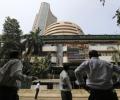
Trading sentiment in the equity markets this week will be guided by global cues, Covid-19 trends and quarterly earnings by market heavyweight TCS, analysts said. Investors will also monitor movement of rupee and crude oil as well as progress of monsoon, they added.

Three stockmarket experts give their best picks for the New Year.

Stock markets are expected to remain under pressure this week due to the overhang of US presidential polls and uncertainty over global growth due to resurging cases of coronavirus, according to analysts.

The IT major is followed by RIL (Rs 795,628.55 crore), HDFC Bank (Rs 624,362.11 crore), Hindustan Unilever (Rs 367,880.69 crore) and ITC (Rs 367,513.78 crore).

Indian equity markets are likely to witness volatility this week due to concerns over rising cases of coronavirus and expiry of derivatives contracts, analysts said. Further, progress surrounding the COVID-19 vaccine, related updates, US stimulus talks and global cues would dictate the market trend, traders said. "Going ahead, the market is likely to be volatile as sentiments oscillate between fear of rising COVID cases globally and optimism over vaccine progress. Investors would closely watch out development over the US stimulus talks," said Siddhartha Khemka, Head - Retail Research, Motilal Oswal Financial Services Ltd.

With the Budget overhang gone, investors are breathing a sigh of relief and are back to make fresh calls.

Investor wealth zoomed over Rs 10.48 lakh crore in two days as the Budget-driven market euphoria continued to charge bulls on Tuesday.

Concerns over economic slowdown, muted earnings, crisis in the auto industry and global trade issues have been weighing on investor sentiment, experts said.
Bajaj Finance was the biggest loser in the Sensex pack, tanking up to 8 per cent, followed by Hero MotoCorp, IndusInd Bank, Maruti and HCL Tech. Axis Bank, ITC, NTPC and M&M were among the top gainers.

Continuing efforts to boost the capital market, Sebi on Wednesday decided to tweak the 25 per cent minimum public shareholding requirement for companies undergoing insolvency process, segregate assets as well as liabilities of mutual funds, and ease norms governing promoter participation in follow-on public offers. For the mutual fund segment, the watchdog also relaxed the profitability criteria and mandated minimum Rs 100 crore net worth requirement for entities to become sponsors of mutual funds. The board of Sebi, at its meeting on Wednesday, also cleared amendment regulations pertaining to market intermediaries to avoid duplication of proceedings before the designated authority and the designated member.

Not surprisingly, equity investors are bidding-up stock prices across sectors and the broader market is now more valuable than pre-Covid levels.

Over the past week, the BSE Sensex ended on a muted note, showing a marginal gain of 2.25 points at 28,114.56.

Keep your mobile number and e-mail updated. When you receive the weekly report on cash holdings, check to ensure there is no discrepancy between the amount you have kept with the broker and what the latter has reported, advises Sanjay Kumar Singh.

Ambani said Jio will offer the world's lowest data tariff
Focus will, however, shift back to corporate earnings, liquidity situation and global events - specially crude price.

This is the fourth straight weekly plunge for both the indices.

TCS is the country's most valued firm with a market capitalisation of Rs 687,123.96 crore

There was broad-based rally with participation across sectors creating enormous wealth for investors but starting 2018, the rally got concentrated into select large-cap companies with under performance in broader markets.
After the rationalisation and categorisation of mutual fund schemes undertaken by the Sebi in October 2017, overnight funds have emerged as a distinct category.

What's required is proper implementation of the rules and better coordination between market intermediaries such as stock exchanges and clearing members who play a key role in monitoring brokerages.

After a sharp sell-off in the past two months, overseas investors were once again seen turning bullish on Indian equities. FIIs bought shares worth Rs 63.5 billion in the past five sessions, their highest weekly investment tally in many months.

Nifty ends above 8,600; Tata Motors, RIL top leaders

The scrip was the worst hit among the front-line companies on both the indices during the day.

'Investors should restrict themselves to a few category schemes with high quality portfolios apart from overnight and liquid funds.'
 © 2026 Rediff.com - Investor Information - Advertise with us - Disclaimer - Privacy Policy - Sitemap - Feedback - About us - Terms of use - Grievances