
RBML - the joint venture of Reliance Industries Ltd and supermajor BP - has told the government that fuel retailing for the private sector in India has become unsustainable after market-controlling public sector firms frequently froze petrol and diesel prices at rates way below the cost, sources said. Despite a surge in oil prices, state-owned Indian Oil Corporation (IOC), Hindustan Petroleum Corporation Ltd (HPCL) and Bharat Petroleum Corporation Ltd (BPCL) first froze petrol and diesel rates for a record 137 days beginning early November 2021 when five states including Uttar Pradesh went to the polls, and last month again went into a hiatus that is now 47 days old. "They (Reliance BP Mobility Ltd) has written to the petroleum ministry over the fuel pricing issue," a highly placed source in the government, who didn't want to be quoted, told reporters.

After Reliance Industries Ltd and its partner bp plc of the UK, Nayara Energy - the nation's largest private fuel retailer - has started selling petrol and diesel at Re 1 less than the fuel sold by state-owned retailers, officials said. While state-owned Indian Oil Corporation (IOC), Bharat Petroleum Corporation Ltd (BPCL) and Hindustan Petroleum Corporation Ltd (HPCL) continue to hold prices despite a drop in international rates, private fuel retailers have started passing on the benefit to consumers. "To further stimulate domestic consumption and cater to local customers better, we have introduced a Re 1 discount in our retail outlets until the end of June 2023," a spokesperson for Nayara Energy said.
bp had last year bought 49 per cent stake in the 1,400-odd petrol pumps and 31 aviation turbine fuel stations owned by RIL for $1 billion.

Global energy supermajor BP plc on Thursday said it is about to open its first 'Jio-bp' branded petrol pump in partnership with Reliance Industries near Mumbai.
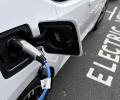
A joint venture of Reliance Industries Ltd and BP of the UK on Wednesday said it has signed an agreement with the Mahindra Group to explore EV and low-carbon solutions, including battery swapping technology options, for electric 3-wheelers. Besides exploring creation of EV products and services, the non-binding MoU signed by Reliance BP Mobility Limited (RBML) and Mahindra Group would look for identifying synergies in low-carbon and conventional fuels, the company said in a statement. "The MoU also covers evaluating charging solutions by Jio-bp for Mahindra vehicles including electric 3 and 4 wheelers, quadricycles and e-SCV (Small Commercial Vehicles - sub 4 ton)," it said.
The ministry of petroleum and natural gas has granted seven authorisations to companies for selling automobile (auto) fuels in the country. These new approvals are under the relaxed guidelines for authorisation to market transportation fuels that were revised in 2019. This is expected to make the competition more intense in India's petroleum retail business. According to a top oil ministry official, a fresh marketing authorisation has been granted to Reliance Industries (RIL) under these norms. This is being done since RIL's existing retail marketing authorisation has been transferred to its subsidiary Reliance BP Mobility

India's traditional companies are now moving full scale into the renewable and alternative energy space that had been dominated by smaller players over the past decade. Companies such as government-owned NTPC and the Adani and the Tata groups restructured their businesses well in time to become major players in the green space. At the same time, other conventional companies, such as Larsen & Toubro and Reliance Industries Ltd (RIL), which have a presence both in the energy sector as well as myriad other activities - construction, technology and retailing - are tying up with new-age companies to hitch a ride to a greener path.
 © 2026 Rediff.com - Investor Information - Advertise with us - Disclaimer - Privacy Policy - Sitemap - Feedback - About us - Terms of use - Grievances