
In the April-June quarter (Q1) of 2023-24 (FY24), growth in sales of FSN E-Commerce Ventures (the parent company of Nykaa) decelerated to 24 per cent year-on-year (Y-o-Y), and 9 per cent quarter-on-quarter (Q-o-Q), compared with 34 per cent in the previous quarter, due to a decline in the beauty & personal care (BPC) and fashion division's gross merchandise value (GMV). But Nykaa claimed it gained market share in both divisions. The earnings before interest, taxes, depreciation, and amortisation (Ebitda) margin of 5.2 per cent expanded 120 basis points (bps) from a year earlier.

Housing sales mostly declined during the first and the second wave of the coronavirus pandemic but prices did not fall in most of the cities but rather increased in some cities, according to the Economic Survey 2021-22. The pre-Budget document also highlighted that the housing demand recovered after both the waves on the back of pent up demand, low interest rates on home loans and reduction in stamp duty by some states. The survey has analysed the National Housing Bank's data on change in housing transactions in Q1FY21 (first COVID-19 wave) and Q1FY22 (second COVID-19 wave) over the pre-pandemic levels of Q1FY20. It also looked into change in housing prices index during this period.

After underperforming its peers in the consumer space in 2022-23, and experiencing a mixed bag in the 2023-24 (FY24) April-June quarter (first quarter, or Q1), brokerages are positive about the medium-term outlook for liquor stocks. Higher raw material costs, concerns regarding increased duties, regulatory changes, and competitive pressures weighed on performance returns in the past quarters. Analysts believe that the sector could experience a reversal of fortunes due to better demand and margin improvements.

'Especially if their investment horizon is over two years.'

'Earnings will be the catalyst for markets to march higher from here on out.'
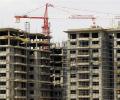
However, both developers as well as analysts are hopeful that these business metrics will pick up once activity resumes.

The country's GDP is likely to grow at 1.3 per cent in the fourth quarter of 2020-21 and may see a contraction of around 7.3 per cent for the full financial year, according to an SBI research report 'Ecowrap'. The e-National Statistical Office (NSO) will release the GDP estimates for the March 2021 quarter and provisional annual estimates for the year 2020-21 on May 31. "Based on our 'nowcasting model', the forecasted GDP growth for Q4 would be around 1.3 per cent (with downward bias) as against NSO (National Statistical Office) projection of a negative (-)1 per cent," the research report said.

The reopening of China has led to an ongoing readjustment of the global metals and commodities markets. China has a massive production capacity surplus to its own domestic demand. At the same time, it also has high domestic demand. China is also becoming carbon sensitive.

The stocks of Mumbai-based real estate companies have been hitting lifetime highs on expectations that launches, steady demand, and price increases in the largest real estate market in the country would boost their financials. Macrotech Developers (Lodha) and Oberoi Realty hit their all-time highs last week, while Godrej Properties came close to its 52-week high last month before witnessing a sharp correction.

Sun Pharmaceutical Industries (Sun Pharma) reported a turnaround in the January-March quarter of the 2022-23 financial year (Q4FY23), declaring a profit after tax (PAT) of Rs 1,984 crore versus a loss of Rs 2,277 crore in Q4FY22. However, that loss in FY22 was due to several exceptional one-time items -- with Rs 3,723.15 crore allocated to settlement of lawsuits in the US and other Exceptional Items adding up to Rs 3,935.75 crore. Adjusted for exceptional items, PAT in Q4FY22 amounts to Rs 2,155 crore, which is a year-on-year (YoY) growth of about 36 per cent.

Strong macroeconomic headwinds causing turbulence in the $245-billion Indian IT industry are yet to calm down. Top Indian IT services companies are likely to post a decline or just marginal growth in sequential revenue in Q1FY24 because of a soft discretionary spending environment. Though the first quarter is seasonally strong for IT firms, "June 2023 will be an exception", according to analysts at Kotak Institutional Equities.

More people working in India's technology industry have lost their jobs in the first six months of 2023 than in the corresponding period in 2022.

'We have not seen too many large deals compared to last quarter.'

State Bank of India's earnings growth may turn lacklustre in the near-term, warn analysts. This, they said, could be due to margin compression and likely lower fee income over the next one year. "While the cost of deposits is repricing sharply across the system, there will be relatively lower yield expansion going ahead as most of the back-book has been repriced and there is a high competitive pressure on yields.
The two IT majors -- Infosys and TCS -- delivered disappointing results for the fourth quarter of the 2022-23 financial year (Q4FY23). Poor macro conditions and weak sentiment in the banking, financial services and insurance (BFSI) space accounted for the miss. For TCS, revenue in constant currency (CC) terms grew at 0.6 per cent on a quarter-on-quarter (QoQ) basis. Weakness was visible in North America, primarily due to deferred discretionary spending.

A likely turnaround in profitability margins in the March quarter (Q4FY23) will not be enough to lift the outlook for paint stocks due to volatile crude oil prices and rising competition in the sector, analysts say. Hence, they advise investors to avoid the sector over the short-to-medium term despite the heavy correction in the stocks since last year. Shares of Asian Paints, Berger Paints, Indigo Paints, Nerolac and Pidilite have shed 6-32 per cent over the last 6 months versus a 3 per cent rise in the benchmark Sensex.

Things are looking up for engineering firms and Siemens is likely to be one of the leading beneficiaries. Apart from the generic revival in activity, which is expected to continue through the 2023-24 financial year (FY24), the Budget has a strong infrastructure thrust, which works in Siemens' favour. The company reported a standalone Ebitda (earnings before interest, tax, depreciation and amortisation) of Rs 550 crore (up 66 per cent year-on-year or YoY) in Q1FY23 (Siemens follows the October-September accounting year).

UltraTech Cement's results for the fourth quarter results of the 2022-23 financial year (Q4FY23) were broadly in line with the Street estimates. The consolidated revenue, operating profit and net profit stood at Rs 18,700 crore, Rs 3,300 crore and Rs 1,670 crore, respectively, which were up 18 per cent, 8 per cent and 13 per cent YoY, respectively.

The Indian equity market has been dancing to the tune of foreign portfolio investors (FPIs) for more than two decades now. Typically, when FPIs are net-buyers on Dalal Street (D-Street) and raise their ownership of Indian equities, the broader market rallies. Conversely, when FPIs turn net-sellers, the stock prices decline. FPIs have been net-sellers on D-Street for five quarters on the trot and the result has been predictable.

In the June quarter, growth in the segment stood at around 4 per cent, with premium collection at Rs 15,724 crore against Rs 15,074 crore in the same period of FY19. This was the lowest growth in the last five quarters, starting from Q1FY19.

The real estate sector might have been caught off guard by the second wave of the Covid-19 pandemic, but large listed developers like Godrej Properties and Prestige Estates Projects soldier on undeterred. They aim to have sales bookings of Rs 10,000 crore in the next few years.

The impact of the banking crisis in the US was visible in IT bellwether Tata Consultancy Services' (TCS) weak performance in the March quarter of fiscal 2023 (Q4FY23). The firm witnessed slower revenue growth in Q4FY23 and failed to meet its FY23 exit Ebit margin of 25 per cent as some clients, especially in the North American region, took to pausing projects and rising onsite costs offset utilisation gains. Sequentially, the company's revenue grew by just 0.6 per cent on a constant currency basis, which was one of the slowest paces in over 11 quarters.

'... as has been happening in the last three weeks, then the foreign exchange reserves will not be comfortable to ensure that the rupee does not fall drastically.'

Indian Oil Corporation (IOC), Bharat Petroleum and Hindustan Petroleum may post a combined loss of Rs 10,700 crore in June quarter on selling petrol and diesel at rates below cost, a report said on Monday. While the raw material (crude oil) prices soared in April-June, petrol and diesel prices were not revised, leading to marketing losses which offset strong refining margins, ICICI Securities said in the report. The three state-owned oil marketing companies -- IOC, BPCL and HPCL -- control 90 per cent of the retail petrol and diesel sales in the country.

India's merchandise exports in June rose by 16.78 per cent year-on-year to $37.94 billion while the trade deficit ballooned to a record $25.63 billion on account of a steep increase in gold and crude oil imports, according to the government's preliminary data released on Monday. The export growth in June moderated from 20.55 per cent in May and 48.34 per cent in June 2021. During the month under review, exports of engineering, pharmaceutical and plastic products recorded negative growth.

Not surprisingly, equity investors are bidding-up stock prices across sectors and the broader market is now more valuable than pre-Covid levels.

Industry players said IT hiring was not as strong as it was in 2022. One reason is the high bench IT firms have due to earlier hiring.

Import segments which recorded negative growth include gold, silver, transport equipment, coal, fertiliser, machinery and machine tools. However, exports of oil seeds, coffee, rice, tobacco, spices, pharma, and chemicals reported positive growth in June.

Investors' wealth jumped Rs 2,93,054.25 crore on Thursday as markets returned to winning ways after falling for three straight sessions. The 30-share BSE benchmark Sensex zoomed 638.70 points or 1.22 per cent to close at 52,837.21. During the day, it gained 668.75 points to 52,867.26. Tracking the bullish trend, the market capitalisation of BSE-listed companies jumped Rs 2,93,054.25 crore to reach Rs 2,33,94,917.25 crore.

If the current restrictions remain in place until the end of May, we estimate that the cumulative loss of activity could amount to around $10.5 billion, or around 0.34 percentage point (pp) of annual nominal gross domestic product, say Barclays economists.

"It went up to 20-odd per cent in 2019 and to 25 per cent a year later. "That's when we decided to pull the plug; it was not sustainable for our business," says Chadha. Madison & Pike, instead, turned to Mumbai-based start-up Thrive, which provides third-party delivery services to restaurants at a much lower commission - three to five per cent.

GST revenue for the month of June stood at Rs 92,849 crore, a 2 per cent increase over the same month a year ago, the Finance Ministry said on Tuesday. The gross GST revenue collected in the month of June 2021 stands at Rs 92,849 crore of which central GST is Rs 16,424 crore, state GST Rs 20,397, Integrated GST Rs 49,079 crore (including Rs 25,762 crore collected on import of goods) and cess is Rs 6,949 crore (including Rs 809 crore collected on import of goods), the ministry said. The GST revenues for the month of June 2021 are 2 per cent higher than Rs 90,917 crore collected in June 2020.


Indirect emissions account for a major chunk of emissions by Indian IT firms. Business travel and commutation, together, are a key reason for it. If travel and daily commuting go down, so does carbon emissions.

Companies don't have to be in the field to nudge people to return money they owe lenders.

After raising interest rate by a cumulative 250 basis points in 11 months, the Reserve Bank of India (RBI) on Thursday unexpectedly kept benchmark rate unchanged as global banking woes added uncertainty to the economic outlook. Five out of six members of MPC voted to remain focused on the withdrawal of accommodation to ensure inflation aligns with target while focusing on growth, RBI Governor Shaktikanta Das said on Thursday. The Monetary Policy Committee of the central bank decided to take a pause after a rate hike seen in previous six consecutive policies.

Even as India's passenger-vehicle sales touched a record high of 3.9 million units in 2022-23, growing 27 per cent over the previous financial year, the country's largest carmaker, Maruti Suzuki India (MSIL), said on Monday uncertainties in the electronic-component supplies might affect production in FY24. MSIL said the shortage of electronic components had some impact on production in FY23. "The company took all possible measures to minimise the impact.
Car market leader Maruti Udyog Limited is opting for a new name. The board of directors, at its meeting in New Delhi on Thursday, approved a proposal to change the company's name to Maruti Suzuki India Limited.
Its total income, as per Indian GAAP, for Q1FY08 surged 54% to Rs 5,873.52 crore (Rs 58.735 billion) from Rs 3,815.49 crore (Rs 38.154 billion) in Q1FY07.
India's economic growth could fall below 5 per cent.
 © 2026 Rediff.com - Advertise with us - Disclaimer - Privacy Policy - Sitemap - Feedback - About us - Terms of use - Grievances