
India's corporate bond market, driven by public sector undertaking (PSU) banks and financial institutions last year, is losing momentum since the second quarter of FY26.

The maximum tenure of CEO and MD of public sector banks has been increased to 10 years, a move that will help the government retain the best talent in the banking sector. As per a government notification dated November 17, 2022, the term for the appointment has been extended to 10 years, from the earlier 5 years, subject to superannuation age of 60 years. Earlier, the MD or executive director of a public sector undertaking (PSU) bank was eligible for a maximum tenure of 5 years or 60 years whichever was earlier.

'Defence, capital goods, engineering, capital market-related stocks, autos, and cement sectors are my bullish bets for Samvat 2082.'

The pace of loan growth among public sector banks (PSBs) has seen a surge in the financial year 2024-25, and this is an exception to the overall moderation in bank credit during FY25. PSU banks' share in incremental credit rose to 57.3 per cent in March from 51.7 per cent a year ago, according to the Reserve Bank of India's (RBI's) Monetary Policy Report (April 2025).

The IBPS clerk application form for 2025 will be released on July 31. The IBPS Clerk preliminary exam 2025 is scheduled to be held on October 4, 5 and 11.

Does the Union government or the RBI see itself as Krishna beheading Shishupal and what will constitute the 101st or indeed the past many sins for which a Sudarshan Chakra will have to be used? More importantly, what are those sins?

'The universe of PSU stocks is huge and diverse.' 'Investors should bet on specific sectors and stocks from the basket as most of them may continue to consolidate after years of outperformance.'

'Investors should not commit fresh money to these stocks right now, unless they can hold for the next three to four years.'

The government on Wednesday ruled out privatisation of PSU banks but asked them to focus on convergence and opt for mergers and acquisitions to become globally competitive.

If they are made accountable, bad loan cases will shrink dramatically, recoveries will rise, and the NCLT process will be more manageable, asserts Debashis Basu.
The finance ministry has directed all state-owned banks to review their gold loan portfolio as instances of non-compliance with regulatory norms have been noticed by the government. The Department of Financial Services (DFS) in a communication addressed to heads of public sector banks has asked them to look at their system and processes related to gold loan. "We have asked banks to undertake comprehensive review of the gold loan business," financial services secretary Vivek Joshi told PTI.

RBI's interest rate decision, macroeconomic data announcements and global trends are the key factors that would dictate the momentum in the equity market this week, analysts said.

The combined market capitalisation of the 21 listed PSU banks declined by about Rs 76,000 crore to Rs 425,800 crore during the month.
PSU bank stocks are witnessing hectic activity these days and are now among the top traded stocks on the bourses.
Even as concerns over PSU Banks' asset quality and growth rates remain, there are few that offer a favourable risk-reward equation.
The government on Tuesday gave greater autonomy to state-run banks, allowing them make domestic and overseas acquisitions without its approval.

Analysts say there is still no visibility of earnings improvement.

This is the first tranche of capital infusion for the fiscal and more funds would be provided in future depending upon the performance of PSU banks.
To boost the economy, the RBI has taken a slew of measures since September last year, including cuts in the cash reserve ratio and short-term lending (repo) rate, to inject funds into the system and signalled a soft interest rate regime. PSU bankers' meeting is being held in the backdrop of the third quarterly review of monetary policy by the Reserve Bank of India.

The overall debt servicing metrics of Indian corporates are weak.

Success in this space demands more than luck, it requires sharp analysis, disciplined execution, and understanding market movers.

'If the markets correct further, PSU stocks could continue to decline.'
Hemendra Hazari of Karvy Stock Broking believes that government banks will be impacted by rising bond yield because they have a much higher proportion of investments and their durations are higher too.

As of June, the gross NPA of nationalised banks was 3.89 per cent and State Bank Group at 5.50 per cent.

'I would say restore the banks to health, get active board composed of professionals, then there will be an ideal situation for merger.'

Subbarao also warned of attrition in PSBs, saying, "PSBs will lose talent to the private sector."
The finance ministry is considering a proposal by Indian Bank's Association to give post allowance to chairmen and executive directors of public sector banks, a key official said on Tuesday.

The rally followed the govt's plan to bolster state-owned lenders.

A section of the public sector banking employees will go on two-day all-India strike from Wednesday to protest against financial sector reforms and outsourcing of jobs.

The Finance Ministry has called a meeting of heads of public sector banks to clear stalled projects.

PNB reported the maximum number of such frauds.

The re-invention that PSU banks have undergone recently is a great story.
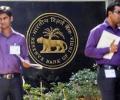
The decision to increase the quantum of capital infusion was taken at a meeting between Finance Minister P Chidambaram, RBI Governor Raghuram Rajan and Economic Affairs Secretary Arvind Mayaram in New Delhi.

Ask rediffGURU and PF expert Milind Vadjikar your insurance, stocks, mutual fund and personal finance-related questions.

Tata Motors was the biggest gainer in the Sensex pack, rallying 2.94 per cent. It was followed by Vedanta, Bajaj Finance, Sun Pharma, ONGC, ICICI Bank, Bajaj Auto, Tata Steel, RIL, HDFC duo, L&T and SBI, rising up to 2.78 per cent.
A major reshuffle of top executives in 11 PSU banks is on the cards with the chairmen of Allahabad Bank, Corporation Bank, Syndicate Bank, Union Bank of India and Vijaya Bank slated to retire between March-July 2006.

These PSU banks also account for the lion's share of bad loans or NPAs plaguing the sector and need crores of rupees in new capital in the next two years to meet global Basel III capital norms.

The country's largest public sector lender State Bank of India on Monday fixed its benchmark lending rate at 7.5 per cent following a Reserve Bank directive, a move that will end the practice of sub-prime loan to corporates.

The World Bank and India have concluded negotiations for loans worth $3.2 billion for recapitalising state-run banks and funding for the India Infrastructure Finance Company Ltd, a state-run lender to infrastructure projects.
