
A year after GST rates were rationalised, retail growth in automobiles has sustained beyond the initial festival surge, led by two-wheelers and passenger vehicles (PVs), with the Fada data showing rural markets emerging as a key driver of the post-GST demand recovery.

The GST Council has approved a proposal allowing pharmaceutical companies to claim Input Tax Credit (ITC) on free samples and goods destroyed or written off due to expiry, effective from the next fiscal year. This move aims to support manufacturing, liquidity, and exports within the sector.

Indian passenger vehicle manufacturers are significantly increasing production and stocking dealerships in anticipation of strong festival season demand, with new launches planned and supply bottlenecks being addressed. However, the industry faces potential moderation in growth during the second half of FY27 due to a high base from last year's post-GST surge, commodity inflation, and elevated inventory levels.

Automobile retail sales rose nearly 18 per cent year-on-year to over 27 lakh units in January, led by continued post-GST momentum, healthy rural cash flows on the back of harvest and weddings, and sustained demand visibility across freight, dealer's body FADA said on Tuesday.

'In the January-August period, the share of hatchback in the overall PV industry sales was about 22.4 per cent. In the September-October period, the share of hatchbacks has come down to 20.4 per cent. In just October, their share was just 20 per cent. This is simple wholesale data from industry body SIAM.'

'We are seeing a lot of people with helmets visiting our showrooms.'

Bajaj Auto reported a significant increase in its consolidated Q4FY26 performance, with profit after tax more than doubling to approximately 3,662 crore, a 103 per cent year-on-year rise, primarily driven by record volumes, an improved product mix, and the strategic consolidation of Bajaj Auto International Holdings AG (BAIHAG).

The small sports utility vehicle (SUV) segment - comprising models less than 4 metres in length - could witness the "maximum" growth among all categories in the coming months following the recent goods and services tax (GST) rate rationalisation, Tarun Garg, chief operating officer of Hyundai Motor India (HMIL), said.

Tata Motors emerged as the biggest gainer in the passenger vehicles (PV) market in the second half of FY25, following a GST rate cut in September, achieving the highest growth among major OEMs and overtaking Mahindra & Mahindra in volumes.

Auto majors Maruti Suzuki, Tata Motors and Mahindra & Mahindra reported robust sales in September as reduced price tags owing to GST rationalisation led to record demand in the Navaratri period. The month also saw Tata Motors and Mahindra & Mahindra settling at number two and three positions, respectively in vehicle wholesales ahead of Hyundai Motor India.
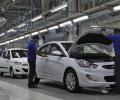
Domestic automobile retail sales in India experienced a significant surge of 26 per cent year-on-year in February, driven by improved affordability and market confidence across various segments, according to FADA.

Data from used-car platforms suggest that buyer preferences have remained broadly stable post-GST, with SUVs retaining their dominance even as price adjustments played out across segments.
A pickup in freight rates, rising fleet utilisation and a long-awaited replacement cycle are breathing fresh life into India's commercial vehicle (CV) market, strengthening the investment case for Tata Motors' CV arm (TMCV). Despite a broadly steady December quarter (Q3) performance, brokerages remain divided on whether the upswing is strong enough to offset margin pressures.

A host of macroeconomic data announcements, global trends and trading activity of foreign investors would dictate investors' sentiment in the stock market this week, analysts said. Besides, auto sales data will be closely tracked, experts noted.

Retail sales of vehicles across categories in India in 2025 grew by 7.71 per cent at 2,81,61,228 units as compared to 2,61,45,445 in 2024, with GST 2.0 helping overcome a subdued start to the year, Federation of Automobile Dealers Associations said on Tuesday.

Tata Motors Passenger Vehicles Ltd expects contribution of SUVs to its overall sales to go beyond 70 per cent with it making foray into the fast growing mid-sized segment with a premium positioning of its Sierra model, according to its Managing Director & CEO, Shailesh Chandra.
Rural India outpaced urban centres in passenger vehicle sales in 2025, recording a growth of 12 per cent compared with 8 per cent in cities.

In an event-heavy week ahead, stock markets' movement would highly depend on macroeconomic data announcements, global trends, RBI's interest rate decision and trading activity of foreign investors, analysts said. India's industrial production data for October 2025 will be released on December 1, an official statement said on Friday.

Maruti Suzuki India plans to localise battery production and other critical components over the next few years as part of strengthening the overall EV ecosystem in the country. The company, which plans to launch its first electric vehicle - e VITARA in the domestic market next year, is looking to instill confidence in the buyers as it looks to strengthen the overall EV ecosystem.

The insurance industry is trying to get to grips with provisions in the proposed Insurance Amendment Bill, which gives additional powers to the Insurance Regulatory and Development Authority of India (Irdai), while there is ambiguity in the very definition of the insurance business, according to industry experts.

While GST on ICE vehicles was brought down significantly, for electric cars it remained at 5 per cent.
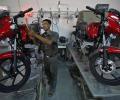
Pune-based two-wheeler major Bajaj Auto posted its highest ever quarterly revenue and profit after tax (PAT) in Q2FY26. Even as consolidated revenues were up 18.8 per cent year-on-year (Y-o-Y) to Rs 15,734.7 crore, PAT zoomed 53.2 per cent to Rs 2,122 crore.

Among Sensex firms, Trent, Tech Mahindra, Hindustan Unilever, UltraTech Cement, Asian Paints, Eternal and ITC were the major laggards. Selling in HDFC Bank and ICICI Bank also dragged the key indices. However, Axis Bank, Bajaj Finance, Maruti and State Bank of India were among the gainers.

Among Sensex firms, Tata Motors, Bharat Electronics, UltraTech Cement, Tech Mahindra, Mahindra & Mahindra, ICICI Bank, Tata Consultancy Services and Axis Bank were the major laggards. However, Power Grid, Hindustan Unilever, NTPC and HCL Tech were among the gainers.

Electric passenger vehicle (PV) retail sales jumped more than twofold in September with Tata Motors (TaMo) leading the pack having over 6,000 registrations and a 40 per cent market share.

Passenger vehicle retail sales shot up 35 per cent year-on-year during the nine-day Navratri period this year, helping the overall registrations last month grow 6 per cent, as offtakes remained muted in the first 21 days of the month and only took off after the roll-out of new GST rates on September 22, dealer' body FADA said on Tuesday.

States will remain "net gainers" of the proposed GST rate rationalisation exercise with their GST revenues, including devolution, estimated to be over Rs 14.10 lakh crore this fiscal, according to an SBI Research report released on Tuesday. It said that, as was evidenced in the earlier exercise of GST rate rationalisation in 2018 and 2019, an immediate reduction in rates can cause a short-term dip of around 3-4 per cent in month-on-month collections (roughly Rs 5,000 crore, or an annualised Rs 60,000 crore), revenues typically rebound with sustained growth of 5-6 per cent per month.

'Indian markets may underperform global peers for the next two quarters.' 'But beyond that, India should catch up and resume its long-term growth path.'

'Peninsular Indians could ask 'Why should we contribute half of India's tax revenues if we account for only a quarter of the seats in the Lok Sabha?'.' 'The rest of the country seems likely to counter that 'democracy means one vote per person irrespective of where that person resides in India'.' 'With no easy answers to this thorny debate, the south's economic ascendancy could end up creating a Hobson's choice.' A revealing excerpt from Nandita Rajhansa and Saurabh Mukherjea's book, Behold the Leviathan: The Unusual Rise of Modern India.

'Otherwise, how is the government going to make more revenue?' 'The most important thing the GST does is to transfer money from the household consumers who are the most productive users of capital to the most unproductive users of capital, namely the government.'

Now, in many cases, they give no old jewellery but the bills they get show gold as provided by them, the jeweller's making charge and the GST on that.

It is fully geared up for the new tax regime and its vehicles will be available under the new prices with immediate effect.

The forthcoming Budget, the last full one before the 2019 Lok Sabha elections, is expected to contain a number of sops and feel-good announcements, especially regarding social sector schemes.

In order to reduce government litigations, the Union Finance Minister Nirmala Sitharaman on Saturday said the GST Council has fixed a monetary limit for filing appeals by the tax department before the various appellate authorities. It has recommended a monetary limit of Rs 20 lakh for GST Appellate Tribunal, Rs 1 crore for the High Court and Rs 2 crore for the Supreme Court for filing of appeals by the department before these legal forums, she said after the 53rd GST Council meeting held in New Delhi.

Across 10 prominent services, revenue to the government reduced by 20 per cent in the first year of GST compared to the last year of the service tax regime. This happened despite tax liability against these services growing by 50 per cent in one year.

Gains in auto shares helped offset losses in select index heavyweights led by Infosys.
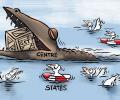
Union Finance Minister Nirmala Sitharaman on Monday said GST compensation to some states is delayed due to non-availability of AG's authenticated certificate, and that Kerala has not sent even a single such certificate since 2017-18. Replying to a supplementary question, she also said that Rs 86,912 crore has been released for the Goods and Services Tax (GST) compensation payable to all states up to May 31, 2022. She said as per law, GST Council decides to whom the GST compensation is to be released, not by the central government.
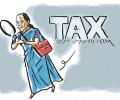
The gross tax revenues have touched 65 per cent of the Budget estimates at Rs 17.81 lakh crore during the first eight months of the current fiscal till November, propelled by corporate and personal income tax mop-up, according to the Economic Survey 2022-23 presented in Parliament on Tuesday. The survey, authored by Chief Economic Advisor V Anantha Nageswaran, said the 'substantial reforms' in India's taxation ecosystem post-2014 and policy reforms have removed the distortionary incentives from the economy. Reforms like GST, reduction in corporate taxes, exemption of sovereign wealth funds and pension funds from taxes, and removing Dividend Distribution tax have reduced the tax burden on individuals and businesses.

Godrej group Chairman Adi Godrej describes in an interview to Viveat Susan Pinto the way forward for the conglomerate after the implementation of the GST.

One of the the biggest tax reforms since Independence, GST will create a national market for goods and services
