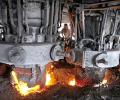
India's industrial production shrunk for the third straight month in December, dragged down by weak investment and consumer demand and pointing to continued sluggishness in Asia's third-largest economy.
.jpg)
The marginal improvement in the index of industrial production was mainly on account of higher power generation and mining sector output, while manufacturing declined.
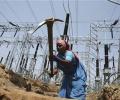
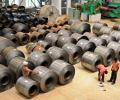
Coal and steel were only two sectors that saw some growth.

A reading below 50 means contraction in the sector.

The services sector growth in India rose to a three-month high in December supported by favourable economic conditions and positive demand trends, a monthly survey said on Friday. The seasonally adjusted HSBC India Services PMI Business Activity Index rose from 56.9 in November to 59 in December, highlighting a sharp increase in output that was the most pronounced since September. In Purchasing Managers' Index (PMI) parlance, a print above 50 means expansion while a score below 50 denotes contraction.

Unlike AI uses for consumers, the next generation technology for enterprises will unfold over several years and the biggest challenge is to unleash AI for next wave of productivity for businesses, Infosys chairman Nandan M Nilekani said on Wednesday. While speaking at 43rd annual general meeting (AGM) of Infosys, Nilekani said the initial AI doomerism has quietened down and people have accepted that, like any other general-purpose technology -- electricity, nuclear energy, the internet etc, gen AI (generative artificial intelligence) has enormous potential for good when advanced within the guardrails of responsibility.

The record contraction in the growth rate of eight core sectors will have its impact on IIP.

While most of his rivals prepared for the 50 kilometre race walk at the 2019 Doha world championships by warming up in full track suits in the 32 degrees Celsius heat, Evan Dunfee did the polar opposite.

The growth of eight key infrastructure sectors slowed to a 14-month low of 3.8 per cent in December 2023, on account of poor performance of sectors like crude oil, electricity, steel and cement, according to the official data released on Wednesday. The core sector (coal, crude oil, natural gas, refinery products, fertiliser, steel, cement and electricity) growth in November was 7.9 per cent. It was 8.3 per cent in December 2022.

George said the boy from Pandikkad suffered a massive cardiac arrest at 10.50 am on Sunday and efforts to revive him failed.

Expecting a better price realisation this year, farmers have gone for pulses in a big way this year.

India's private sector activity contracted further in August, reflecting faster contractions of both manufacturing and services output, amid decline in new orders and tough economic conditions.
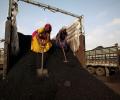
The growth of eight key infrastructure sectors rose to a 14-month high of 12.1 per cent in August 2023 against 4.2 per cent a year ago, mainly due to expansion in production of coal, crude oil, and natural gas, according to the official data released on Friday. The expansion in August is the highest since June 2022, when it was 13.2 per cent. The production of refinery products, steel, cement and electricity also grew in August, the data showed.
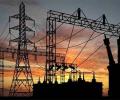
The growth of eight key infrastructure sectors slowed down to a 4-month low of 8.1 per cent in September 2023 against 8.3 per cent a year ago, according to the official data released on Tuesday. The growth rate in the output of refinery products, fertiliser, cement and electricity during the month under review has decelerated, while it was negative in the case of crude oil. The previous low was in May, when the growth rate of these sectors stood at 5.2 per cent.

It grew at an annual 2.6% in the April-February period compared with 5.2% a year earlier.

Analysts polled by Reuters had forecast an annual growth of 0.9 per cent in output.

Capital goods output registered a steep decline of 16.5 per cent in June
The kharif grain output is estimated to have declined 2.48 per cent to 117.96 million tonnes while the rabi grain output has remained flat at 109.92 million tonnes, according to a government release. Output has declined mainly in kharif pulses and coarse cereals while a marginal dip has been projected in the rabi wheat output.

However, predictions that economic conditions will normalise after the elections underpinned optimism regarding the outlook and supported a stronger upturn in employment.

According to the World Bank, economic growth in middle-income countries, including India, is not accelerating. 'In fact, it is slowing down as incomes increase, with the trend becoming more pronounced each decade.'
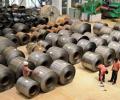
Production at factories, mines and utilities likely rose an annual 2.4 per cent in August, up from July's 0.5 per cent rise, according to the survey of 26 economists.
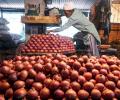
The government on Saturday lifted the ban on onion exports but imposed a minimum export price (MEP) of $550 per tonne, amid ongoing Lok Sabha elections in the country. Last night, the government imposed a 40 per cent duty on export of onions. In August last year, India had imposed a 40 per cent export duty on onions up to December 31, 2023.

India's industrial production growth declined to a three-month low of 3.7 per cent in June mainly due to poor showing by the manufacturing sector, according to the official data released on Friday. The factory output growth measured in terms of the Index of Industrial Production (IIP) stood at 12.6 per cent in June 2022 on account of a lower base effect. The previous low of IIP was at 1.9 per cent in March 2023.

The services sector growth in India fell to a one-year low in November on softer expansions in new work intakes and output, despite receding price pressures, a monthly survey said on Tuesday. The seasonally adjusted S&P Global India Services Business Activity Index fell from 58.4 in October to a one-year low of 56.9 in November. Despite witnessing a month-on-month decline, the rate of expansion was stronger than its long-run average.

Many individual states experienced higher inflation than the all-India figures during the financial year 2023-24 (FY24). Retail inflation figures in Telangana, Haryana, Rajasthan and Dadra and Nagar Haveli have been higher than national numbers every month of this financial year, shows a Business Standard analysis of state-wise figures, after the March inflation data was released on Friday. Experts noted that persistent high food inflation along with differences in the weights of rural and urban indices plays into the regional variation in inflation rates.

High vegetable prices are expected to keep food inflation firm in the months to come.
Industrial output in the April-June quarter too contracted by 0.1 per cent this fiscal, according to the official data released on Thursday.

Production of coal, crude oil, natural gas, refinery products, fertiliser, steel, cement and electricity contracted. The record contraction in the growth rate of eight core sectors will affect the Index of Industrial Production.
China's car output had surged by 83 per cent to 2.02 million units in 2003.

India's services sector activity eased in August but growth rates for new orders remain elevated, as services firms indicated the sharpest upturn in new export business which acted as a catalyst for firms to expand their workforces as well as output, a monthly survey said on Tuesday. Despite falling from 62.3 in July to 60.1 in August, the seasonally adjusted S&P Global India Services PMI Business Activity Index indicated one of the strongest increases in output seen since mid-2010. For the 25th straight month, the headline figure was above the neutral 50 threshold.
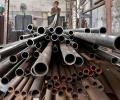
India's leading steel companies hope the Modi 3.0 Budget will continue the massive capital expenditure currently underway, focusing on infrastructure development, manufacturing, and fair trade. The infrastructure segment is the largest steel user, and the government's focus has fuelled steel consumption even as international markets have underperformed. According to provisional statistics, steel consumption grew 13.6 per cent in FY24, reaching 136 million tonnes (mt), according to a CRISIL report.

Smartphones have been a key success story of the government's production-linked incentive scheme, helping India become the second-largest mobile phone manufacturing country, after China.
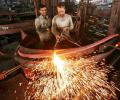
Economists surveyed by Reuters had forecast a 0.5 per cent growth in output
.jpg)
In the fiscal year ended March, infrastructure output grew 3.2 per cent compared with 5 per cent in 2011/12.

India's industrial production rose to 5.2 per cent in May from 4.5 per cent in April 2023, mainly due to good performance by the manufacturing and mining sectors, according to the official data released on Wednesday. The factory output growth measured in terms of the Index of Industrial Production (IIP) stood at 19.7 per cent in May 2022, mainly due to a lower base effect. "The growth rates over corresponding period of previous year are to be interpreted, considering the unusual circumstances on account of COVID 19 pandemic since March 2020," an official statement explained.

India's annual infrastructure output growth slowed to a three-month low of 2.4 percent in Decembe

Frequent weather shocks caused by climate change pose challenges for the monetary policy as well as downside risks to economic growth, a Reserve Bank report said. Global average temperatures are on a rise, with accompanying increase in extreme weather events (EWE), and the economic and social impact of global warming is becoming increasingly evident, said RBI's Monetary Policy Report - April 2024. The report said that climate change has increased the frequency and ferocity of weather shocks, posing challenges for monetary policy.

The two-wheeler segment has shown signs of recovery in the first half (H1) of calendar year (CY) 2024, largely driven by improving performance in rural areas. According to the Federation of Automobile Dealers Associations, rural contribution to two-wheeler sales surged by 57-60 per cent in the April-June quarter of 2024-25, indicating a rising demand in these regions. Experts believe that this trend will continue, supported by a favourable monsoon season and government initiatives aimed at rural development.
The mining sector grew by 4.3 per cent in June as against a dip of 4.6 per a year ago.

Output in the first half of the year was 101.59 million tonnes.
