
Growth in corporate profits needs to be commensurate with wages to boost the economy, Economic Survey 2024-25 said, noting that sharp disparities between the two pose risk to the economy by curbing demand. The document tabled in Parliament on Friday noted that while the labour share of GVA (gross value added) shows a slight uptick, the disproportionate rise in corporate profitsredominantly among large firmsaises concerns about income inequality.

President Xi Jinping has said that no one can ever stop Taiwan's reunification with China as he signed off 2024 amid growing anxieties in the country over the continued slowdown of the economy and the return of Donald Trump, who has threatened to impose punitive tariffs and trade measures against Beijing in his second term.

India's economic growth slowed to near two-year low of 5.4 per cent in the July-September quarter of this fiscal due to poor performance of manufacturing and mining sectors, but the country continued to remain the fastest-growing large economy, data showed on Friday. The gross domestic product (GDP) had expanded by 8.1 per cent in the July-September quarter of 2023-24 fiscal. The previous low level of GDP growth at 4.3 per cent was recorded in the third quarter (October-December 2022) of financial year 2022-23.

The output of eight core infrastructure sectors contracted for the third month in a row by 1.3 per cent in December 2020, dragged down by poor show by crude oil, natural gas, refinery products, fertiliser, steel and cement sectors. The core sectors had expanded by 3.1 per cent in December 2019, according to the provisional data released by the Commerce and Industry Ministry on Friday. Barring coal and electricity, all sectors recorded negative growth in December 2020. During April-December 2020-21, the sectors' output declined by 10.1 per cent against a growth rate of 0.6 per cent in the same period of the previous year.

Following the lacklustre growth numbers in the second quarter (Q2FY25), economists believe the upcoming Union Budget for 2025-26 should focus on reforms that will stimulate consumption, manufacturing and spur employment. India's growth unexpectedly slowed to 5.4 per cent in the second quarter, due to low capital formation, weak consumption, besides adverse weather impact.

Focus on the quality of work and not on the quantity, as one can change the world in 10 hours, Mahindra Group Chairman Anand Mahindra said on Saturday, joining the debate on a 90-hour work week.

In a viral video, Yerunkar alleged a mismatch in the polling data and EVM numbers. He received only two votes at the polling centre where four members of his family voted, he said, questioning the count.
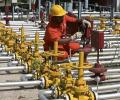
India's natural gas production is projected to jump by 52 per cent to 122 million standard cubic metres per day by 2024 as state-owned Oil and Natural Gas Corporation (ONGC) and Reliance Industries Ltd-BP combine raise output from the KG basin fields. Natural gas production in 2019-20 was 85 mmscmd, which is estimated to have fallen to 80 mmscmd in the following year, HDFC Securities said in a report. The output is projected to rise in the current fiscal that started on April 1 to 93 mmscmd, 107 mmscmd in the following year and 122 mmscmd in 2023-24, the brokerage estimated.

Contracting for the ninth consecutive month, the output of eight core infrastructure sectors dropped by 2.6 per cent in November, mainly due to decline in production of natural gas, refinery products, steel and cement. The production of eight core sectors had recorded a growth of 0.7 per cent in November 2019, data released by the commerce and industry ministry showed on Thursday. Barring coal, fertiliser and electricity, all sectors -- crude oil, natural gas, refinery products, steel and cement -- recorded negative growth in November 2020.

The output of eight core sectors declined by 4.6 per cent in February, the steepest contraction in the last six months which experts said could drag the overall industrial production in the month into the negative territory. All the key segments, including coal, crude oil, natural gas, and refinery products, witnessed a decline in production, according to the official data released on Wednesday. The growth rate of the eight infrastructure sectors -- coal, crude oil, natural gas, refinery products, fertilisers, steel, cement and electricity -- stood at 6.4 per cent in February 2020. Last time in August 2020, the sectors had recorded a negative growth of 6.9 per cent.

The Gross Value Added (GVA) in agriculture and allied activities is projected to clock its best growth in FY23 during the October-to-December quarter, at 3.7 per cent, on the back of a strong kharif harvest, according to the second advance estimates of national income. In the third quarter of FY22, GVA in the sector was 2.3 per cent at constant prices. At current prices, the growth in the third quarter of this financial year is projected at 8.6 per cent, which is almost at the same level in the corresponding quarter of FY22.

India's manufacturing sector activities moderated in December but output remained in the growth territory, amid slower rise in sales and new orders, even as business sentiment was dampened by concerns surrounding supply-chain disruptions, COVID-19 and inflationary pressures, a monthly survey said on Monday. The seasonally adjusted IHS Markit India Manufacturing Purchasing Managers' Index (PMI) eased to 55.5 in December, from November's ten-month high of 57.6. The December data pointed to a "substantial, albeit slower, rises in sales and output", the survey said, adding that the latest quarterly reading was at 56.3, its highest since the final quarter of fiscal year 2020/21.
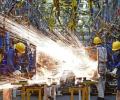
Industrial production declined by 10.4 per cent in July, mainly due to lower output of manufacturing, mining and power generation, as per the government data released on Friday.

Game Changer is underwhelming in the sense that you see the potential being squandered away by timid filmmaking, observes Arjun Menon.

The government has slashed allocation of natural gas used for LPG production, and diverted the low-priced fuel to city gas retailers like Indraprastha Gas Ltd and Adani-Total Gas Ltd to meet a part of their requirement for CNG/piped cooking gas supplies, according an official order. The government had in October and November last year cut supplies of low-priced natural gas coming from old fields such as Mumbai High and Bassein fields in the Bay of Bengal, to city gas retailers by as much as 40 per cent in view of limited output.

Headline growth was quite weak heading into the Covid period but averaged 6.4 per cent and 6.7 per cent in the five years between FY16 and FY20 for GVA and GDP respectively, points out Abhishek Upadhyay.

Barring coal, electricity and steel, all sectors -- crude oil, natural gas, refinery products, fertiliser and cement -- recorded negative growth in September 2020.

Domestic rating agency Icra on Wednesday said India's real GDP growth for the September quarter is likely to decline to 6.5 per cent due to heavy rains and weaker corporate performance. The agency, however, maintained its FY25 growth estimate at 7 per cent on expectations of a pick up in economic activity in the second half of the fiscal.

India's services sector growth quickened in June from May's five-month low, amid a stronger rise in new orders and an unprecedented expansion in international sales, a monthly survey said on Wednesday. The seasonally adjusted HSBC India Services Business Activity Index rose from 60.2 in May to 60.5 in June, pointing to a sharp expansion in output. In the Purchasing Managers' Index (PMI) parlance, a print above 50 means expansion, while a score below 50 denotes contraction.

India's crude oil production fell 2.3 per cent in August but natural gas output rose by more than a fifth on the back of output from KG-D6 fields of Reliance-BP, government data released on Wednesday showed. Crude oil production dropped to 2.51 million tonnes in August as output from fields operated by state-owned Oil and Natural Gas Corp (ONGC) dipped. India is 85 per cent dependent on imports to meet its oil needs and the government has been for long looking at ways to raise the domestic output so as to reduce import dependence.

Industrial production surged by 13.6 per cent in June mainly due to a low-base effect and good performance by manufacturing, mining and power sectors but the output remained below the pre-pandemic level. The manufacturing sector, which constitutes 77.63 per cent of the Index of Industrial Production (IIP), grew by 13 per cent in June this year, according to the data released by the National Statistical Office (NSO) on Thursday. The mining sector output rose by 23.1 per cent in June while power generation increased by 8.3 per cent.

A host of macroeconomic data announcements, the last batch of September quarter earnings, global trends, and trading activity of foreign investors will be the major driving factors for the equity market this week, according to analysts. Equity markets would remain closed on Friday for Guru Nanak Jayanti. "India is set to release CPI and IIP data on November 12, with WPI data expected on November 14.

In a video posted on X, the 42-year-old actor said he wants to assure the grieving family that they are not alone in this painful situation and he will meet the family personally.

The output of eight core sectors grew 8.9 per cent in June, mainly due to a low base effect and uptick in production of natural gas, steel, coal and electricity, official data showed on Friday. The eight infrastructure sectors of coal, crude oil, natural gas, refinery products, fertilisers, steel, cement and electricity had contracted by 12.4 per cent in June 2020 due to the lockdown restrictions imposed to control the spread of coronavirus infections. In May this year, these key sectors had recorded a growth of 16.3 per cent, while it was 60.9 per cent in April.

Global factors and FII activity will dictate trends in domestic equity markets this week while assembly poll results of Maharashtra and Jharkhand may impact stocks on Monday, say analysts. Stock markets witnessed a spirited recovery on Friday with benchmark Sensex and Nifty notching the best single-day gains in more than five months and offering relief after weeks of correction.
India's economic growth slowed to a 15-month low of 6.7 per cent in April-June 2024-25, mainly due to poor performance of the agriculture and services sectors, government data showed on Friday. The gross domestic product (GDP) expanded by 8.2 per cent in the April-June quarter of 2022-23. India, however, remained the fastest-growing major economy, as China posted a 4.7 per cent growth in April-June 2024.

Contracting for the eighth consecutive month, the output of eight core infrastructure sectors dropped by 2.5 per cent in October, mainly due to decline in production of crude oil, natural gas, refinery products and steel. The production of eight core sectors had contracted 5.5 per cent in October 2019, data released by the Commerce and Industry Ministry showed on Friday.

Barring fertiliser, all seven sectors - coal, crude oil, natural gas, refinery products, steel, cement, and electricity - had recorded negative growth in May.

Private consumption is back driven by festive spending, and the medium-term economic outlook remains bullish as the innate strength of the macro-fundamentals reasserts itself, the Reserve Bank Bulletin said on Wednesday. Global economic activity remained resilient during Q4:2024 amidst fragile confidence and rising protectionism, said an article on 'State of the Economy' published in the November Bulletin.

The growth of eight key infrastructure sectors rose to 5.2 per cent year-on-year in March due to improvement in the output of crude oil, cement and electricity, according to official data released on Tuesday. In 2023-24, the growth rate in the output of these eight sectors was 7.5 per cent, marginally down from 7.8 per cent recorded in the year-ago period.

'Son believes India has a significant opportunity in chip design, especially in creating IP that will be uniquely Indian.'

'If weak indicators persist, there is a risk that India could slip into a prolonged slowdown similar to the one experienced between 2014 and 2019,' warns Debashis Basu.

Selectors have recalled pace stalwart Hazlewood for the second ODI after he missed the MCG match to play Sheffield Shield cricket.
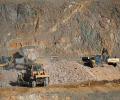
India's industrial production growth accelerated to a four-month high of 5.7 per cent in February 2024, mainly due to the good performance of the mining sector, according to official data released on Friday. The factory output growth measured in terms of the Index of Industrial Production (IIP) was 6 per cent in February 2023. The previous high of IIP was recorded at 11.9 per cent in October 2023, which slowed to 2.5 per cent in November, 4.2 per cent in December and 4.1 per cent in January 2024.

Goldman Sachs expects gold to reach $3,150 per ounce in the international market by December 2025, up around 19.1 per cent from its current level of $2,645, according to a recent report in Business Standard. Domestically, gold is trading at Rs 76,018 per 10 grams after delivering a remarkable 21.9 per cent return in the past year.
The government has held back the release of complete data of the Index of Industrial Production (IIP) for April, as was done for the same month last year due to the COVID-19 lockdown. Last year in June, the National Statistical Office (NSO) had held back the release of complete IIP data due to the effect of the nationwide lockdown on factory output. This year too industrial production was hit due to lockdown restrictions imposed by states to curb the second wave of the pandemic.

India's manufacturing sector growth eased slightly in July, on softer increases in new orders and output, while cost pressures and demand strength led to the steepest increase in selling prices since October 2013, a monthly survey said on Thursday. The seasonally adjusted HSBC India Manufacturing Purchasing Managers' Index (PMI) moderated slightly from 58.3 in June to 58.1 in July.

Barring fertiliser, all seven sectors -- coal, crude oil, natural gas, refinery products, steel, cement and electricity -- recorded negative growth in July.
Factory production expanded by 1.3 per cent on an annual basis in January on account of better performance by mining and manufacturing sectors, though capital goods segment remained in contraction mode, as per government data released on Friday. The Index of Industrial Production (IIP) had contracted by 0.6 per cent in January 2021. The growth was 0.7 per cent in December 2021. As per the data released by the Ministry of Statistics and Programme Implementation, the growth in the mining sector was 2.8 per cent against a contraction of 2.4 per cent in January 2021.

India's services sector growth eased slightly in April but growth of new business and output remained sharp and among the fastest in 14 years amid favourable economic conditions and strong demand, a monthly survey said on Monday. The seasonally adjusted HSBC India Services Business Activity Index fell from 61.2 in March to 60.8 in April, highlighting one of the strongest growth rates seen in just under 14 years. Survey members attributed the latest upturn in output to favourable economic conditions, demand strength and rising intakes of new work.
