
Among Sensex firms, Bajaj Finserv and Bajaj Finance fell by over 4 per cent each. Nestle, Infosys, Tata Consultancy Services, Wipro, UltraTech Cement, HCL Technologies, Larsen & Toubro and Hindustan Unilever were the other major laggards. Bharti Airtel, State Bank of India, Sun Pharma and NTPC were among the gainers.

Titan Company, Axis Bank, NTPC, Tata Motors, ITC, Tech Mahindra, Bajaj Finserv, ICICI Bank, HDFC Bank and Bajaj Finance were the other laggards. Bharti Airtel, Power Grid, Infosys and Larsen & Toubro were among the gainers.

The market capitalisation of BSE-listed companies jumped to a lifetime peak of Rs 404.18 lakh crore on Thursday helped by a five-day rally in benchmark indices, making investors richer by Rs 11.29 lakh crore. Recovering after a sell-off in early trade, the 30-share BSE Sensex climbed 486.50 points or 0.66 per cent to settle at 74,339.44 on Thursday. During the day, it surged 718.31 points or 0.97 per cent to 74,571.25.
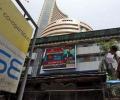
Among the Sensex constituents, as many as 16 stocks closed with losses with Nestle India, Kotak Mahindra Bank, IndusInd Bank, Bajaj Finserve, Titan and JSW Steel being the major laggards. Index major Reliance, Hindustan Unilever, Maruti and Tata Steel also declined due to selling pressure. In contrast, NTPC, TCS, Tech Mahindra, Bajaj Finance bucked the trend and ended the day in green. Axis Bank, Bharti Airtel, Mahindra & Mahindra and Tata Motors also defied the trend.

'We emphasise the importance of not basing investment decisions solely on electoral outcomes.' 'Instead, focusing on investing in high-quality businesses capable of prospering regardless of the political landscape is paramount.'
Heavy offloading by foreign portfolio investors also weighed on the rupee

Foreign Portfolio Investors (FPIs) have pulled out over Rs 10,000 crore from Indian equities in the first three weeks of September, primarily due to rising US interest rates, recessionary fears, and overvalued domestic stocks. Before the outflow, FPIs were incessantly buying Indian equities in the last six months from March to August and brought in Rs 1.74 lakh crore during the period. Mayank Mehra, smallcase, manager and principal partner at Craving Alpha,believes that strong economic growth prospects, attractive valuations, and government reforms could support foreign investment flows in the next month.

The Reserve Bank on Monday warned that India's foreign exchange reserves mostly comprise borrowed funds and the country is vulnerable to sudden outflow of funds.

The auction of radio waves used for mobile services saw a muted opening on Tuesday, with five rounds attracting bids worth about Rs 11,000 crore from telecom companies. The government has put over 10,500 Mhz spectrum in eight frequency bands -- 800 MHz, 900 MHz, 1,800 MHz, 2,100 MHz, 2,300 MHz, 2,500 MHz, 3,300 MHz and 26 GHz, valued at Rs 96,238 crore at base price, for auction.

But the government will present a second tranche of Supplementary Demands for Grants during the Budget session of Parliament in February, when it can seek additional spending.

The growth of corruption and India's underground economy contributes significantly to illicit financial flows from the country.

Even as net flows into smallcap funds in March turned negative, for the first time in 30 months, they remained a big draw for new investors. The smallcap fund category saw a net of 360,000 investment accounts, or folios, getting added last month, the second-most among all active equity categories. Smallcap funds' continued traction could be driven by their strong performance across timeframes, say experts.

In addition to regulatory actions against small and midcaps, tighter liquidity conditions are another headwind that stocks are facing this month. Market observers say advance tax outflows and capital gains-related adjustments will weigh on the markets in the near term.

Among the Sensex firms, Bajaj Finance, Mahindra & Mahindra, UltraTech Cement, Bajaj Finserv, Asian Paints, Hindustan Unilever, Tata Motors and JSW Steel were the major laggards.

The NBFCs, which filed for ECB in January with the Reserve of India (RBI), include REC (over $500 million), Tata Motors Finance ($200 million), L&T Finance Holdings ($125 million), and Shriram Finance ($750 million), according to the RBI data. A senior executive with State Bank of India (SBI) said overseas borrowing by Indian companies, including highly rated NBFCs, was likely to grow because hedging costs were low and there was a softening bias in global interest rates.

Top losers in the Sensex pack included TCS, Yes Bank, ITC, Sun Pharma, Reliance, Coal India, Asian Paints, SBI, Maruti, HUL, HCL Tech and ICICI Bank, falling up to 2.91 per cent.

The improvement in the performance of actively managed mutual fund (MF) schemes is acting as a key tailwind for the nearly Rs 50 trillion industry, Kotak Institutional Equities (KIE) said in a report. The report adds that the two largest listed asset management companies (AMCs) - HDFC and Nippon India - are likely to be the biggest beneficiaries. "The industry has a solid track record of delivering alpha on 10-year returns (70-80 per cent of assets under management (AUM) beat the benchmark), with shorter duration performance also on an upswing.

Among the Sensex firms, Bajaj Finance, JSW Steel, Reliance Industries, Mahindra & Mahindra, ITC, Tata Consultancy Services, Wipro, HDFC Bank, Larsen & Toubro and Bharti Airtel were the major laggards. Sun Pharma, NTPC, State Bank of India, IndusInd Bank and Axis Bank were the major gainers.

Christine Lagarde warned of a repeat of high market volatility.

In a remarkable comeback, foreign portfolio investors (FPIs) have pumped Rs 1.7 lakh crore into the Indian equity markets in 2023, propelled by confidence in the country's robust economic fundamentals amid a challenging global landscape. The year 2023 has witnessed massive investment by FPIs, thanks to the sharp uptick in inflows of Rs 66,134 crore in December. Going forward, FPI flows are expected to be robust.

The stock of Apollo Hospitals Enterprise (AHEL), India's largest listed health care services company, fell 4.6 per cent on Monday (April 29) and slipped another 0.34 per cent to close at Rs 5,946.20 on Tuesday (April 30). The share declined due to a lower valuation for subsidiary Apollo HealthCo (AHL) and an aggressive valuation for Keimed, a promoter-owned drug wholesaler that is merging with AHL.

Stock markets would take cues from the biggest event of the week -- the US Fed interest rate decision, besides tracking the trends in global markets and trading activity of foreign investors, analysts said. Last week, a heavy decline in smallcap, midcap firms, foreign fund outflows and elevated crude oil prices in the international market dented investors' sentiments. Experts said equity markets may remain volatile in the near-term amid a host of global central bank's monetary policy decisions lined up during the week.

The banking system's liquidity slipped into deficit for the first time in the current financial year (2023-24) due to the imposition of the Incremental Cash Reserve Ratio (I-CRR) for banks and outflows from goods and services tax (GST) payments, according to dealers. Reserve Bank of India (RBI) data shows it injected Rs 23,644 crore on August 21. The last time liquidity was in deficit was on March 27, when the RBI injected Rs 45,575 crore.

Severe skilled, unskilled shortage threatens to pull emergency brakes on India's industrial engine.
The Reserve Bank of India is expected to do a balancing act by further liberalising limits on the foreign exchange outflow to tackle the capital inflow and its impact on inflation. The central bank was likely to raise the limit on corporate investment abroad and the ceiling on individual remittances overseas. RBI has liberalised limits on the overseas investment by companies from 200% to 400% of their networth. Liberalisation is proposed since India has good forex situation.

The banking system liquidity bounced back to surplus mode after three weeks, the Reserve Bank of India (RBI) data showed. This was due to government spending, according to dealers. The liquidity situation could further ease with the disbursement of the last tranche of incremental cash reserve ratio (I-CRR) worth Rs 50,000 crore on Saturday.

Among the Sensex firms, Kotak Mahindra Bank, UltraTech Cement, Mahindra & Mahindra, Larsen & Toubro, ICICI Bank, IndusInd Bank, Wipro and Hindustan Unilever were the major laggards. Sun Pharma, Bajaj Finance, Bharti Airtel, Reliance Industries, Bajaj Finserv and Titan were among the winners.

'The Budget will be positive, continuing on the path of growth taken so far.'

From the Sensex basket, Tata Motors, State Bank of India, Tata Steel, Power Grid, NTPC, Bajaj Finserv, Bajaj Finance and Asian Paints were the major laggards.

Among the Sensex firms, Mahindra & Mahindra, Bharti Airtel, ICICI Bank, IndusInd Bank, Reliance Industries, Axis Bank and HDFC Bank were among the major laggards. Titan, Kotak Mahindra Bank, Asian Paints, HCL Technologies, Tech Mahindra, NTPC, Nestle and Power Grid were the major gainers.

India ranks number one among all countries in respect of both the inflow and outflow of expatriate executives, according to a survey of global firms conducted by leading financial journal The Economist.

The mutual fund (MF) industry added a record Rs 10 trillion to its total assets under management (AUM) in 2023, taking the cumulative tally past the Rs 50 trillion mark for the first time, in December. This 20 per cent growth in AUM last year was fuelled by a robust rally in the equity markets and a record Rs 1.62 trillion net inflows into active equity schemes. In another first, the AUM linked to systematic investment plans, too, hit Rs 10 trillion by the end of 2023.

State Bank of India (SBI) and Housing Development Finance Corporation (HDFC) will see maximum inflows from passive trackers on account of the quarterly rebalancing exercise of the National Stock Exchange Nifty Bank Index. IndusInd Bank and AU Small Finance Bank could see maximum outflows. The rejig of the Nifty CPSE Index will result in inflows in Oil and Natural Gas Corporation, NTPC, and Coal India and maximum outflows in Bharat Electronics, according to Brian Freitas, a New Zealand-based analyst with Periscope Analytics.

Overseas investors have pulled out a net Rs 1,14,855.97 crore from the Indian markets in the current year so far, amid heightened geopolitical tensions and inflation concerns. Foreign portfolio investors have sold domestic equities worth Rs 48,261.65 crore so far this month, taking the year-to-date tally this year to a massive Rs 114,855.97 crore, according to depositories data. The exodus of foreign investors was largely owing to inflationary pressures and deepening global macroeconomic conditions following the Russia-Ukraine war, experts said.

Equity mutual fund (MF) schemes have raked in Rs 46,200 crore in net lump-sum inflows in the past six months (ended February 2024), almost thrice the inflow in the previous six-month period.
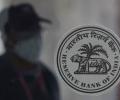
The Reserve Bank of India (RBI) on Monday did a four-day variable rate reverse repo (VRRR) auction to reduce liquidity in the banking system as the overnight money market rates fell below the repo rate, said market participants. The repo rate is 6.50 per cent. Banks parked Rs 18,750 crore at the auction against a notified amount of Rs 50,000 crore at a weighted average rate of 6.49 per cent.

'The more educated a young person is, the higher the chances of him or her remaining unemployed.'
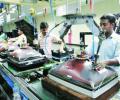
'The government expects demand for electronic products to reach $400 billion by 2023-24. This would be a huge foreign exchange outflow, which may further widen our trade deficit with other nations. Hence, the government plans to push local electronics manufacturing to cut down on their import bill.'

The liquidity in the banking system could ease in the coming week due to an increase in government spending - a development that would be the key for the Reserve Bank of India (RBI) to decide whether to extend the incremental cash reserve ratio (I-CRR) mandate for banks. There are signs of improvement in the liquidity scenario as banks parked Rs 25, 833 crore with the RBI on Thursday. Market participants expect liquidity to gradually improve by the end of the month or during the first week of September, aided by government spending.

Net inflows into two of the 'lower risk' equity funds - largecaps and flexicaps - outpaced the flows into smallcap funds during January 2024 for the first time in 17 months. This is an indication that investors may now be shifting to the relatively safer largecap stocks after a sharp run up in the mid and smallcap spaces. Net inflows into large and flexicap funds were at Rs 3,730 crore last month against Rs 3,260 crore by smallcap schemes.
